

IE-SOAR Fuel Cell Systems: Revolutionizing Drone Flight Durability
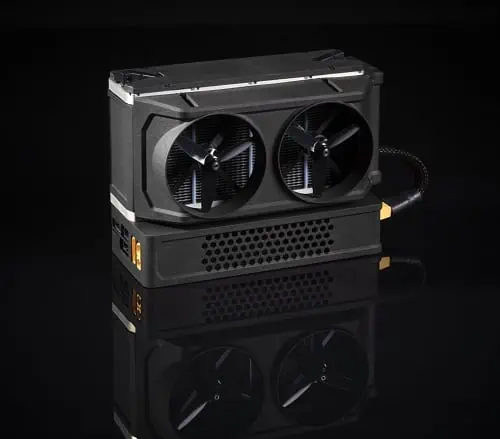
Bright Energy stands at the forefront of developing PEM (proton exchange membrane) fuel cell technology tailored for drones and Unmanned Aerial Vehicles (UAVs).Our lightweight and high-efficiency UAV fuel cell modules empower users to transcend the limitations of conventional battery systems, dramatically enhancing flight durations and distances while delivering clean DC power in a compact, easily refuelable format.
The IE-SOAR drone fuel cell power modules (FCPMs) are perfectly suited for a variety of professional applications, such as offshore inspections, search and rescue missions, aerial photography, mapping, and precision agriculture, among others.
- Facilitate new operational possibilities – your enterprise is no longer limited by flight duration.
- Enable BVLOS operations – fuel cells provide the necessary range for beyond Visual Line of sight operations.
- Enhance operational productivity – stay airborne three times longer and accomplish more.
Discover more about our Fuel Cell Technology >
Fuel Cell Power Modules (FCPM)
Hydrogen Fuel Cells for Drones and UAVs
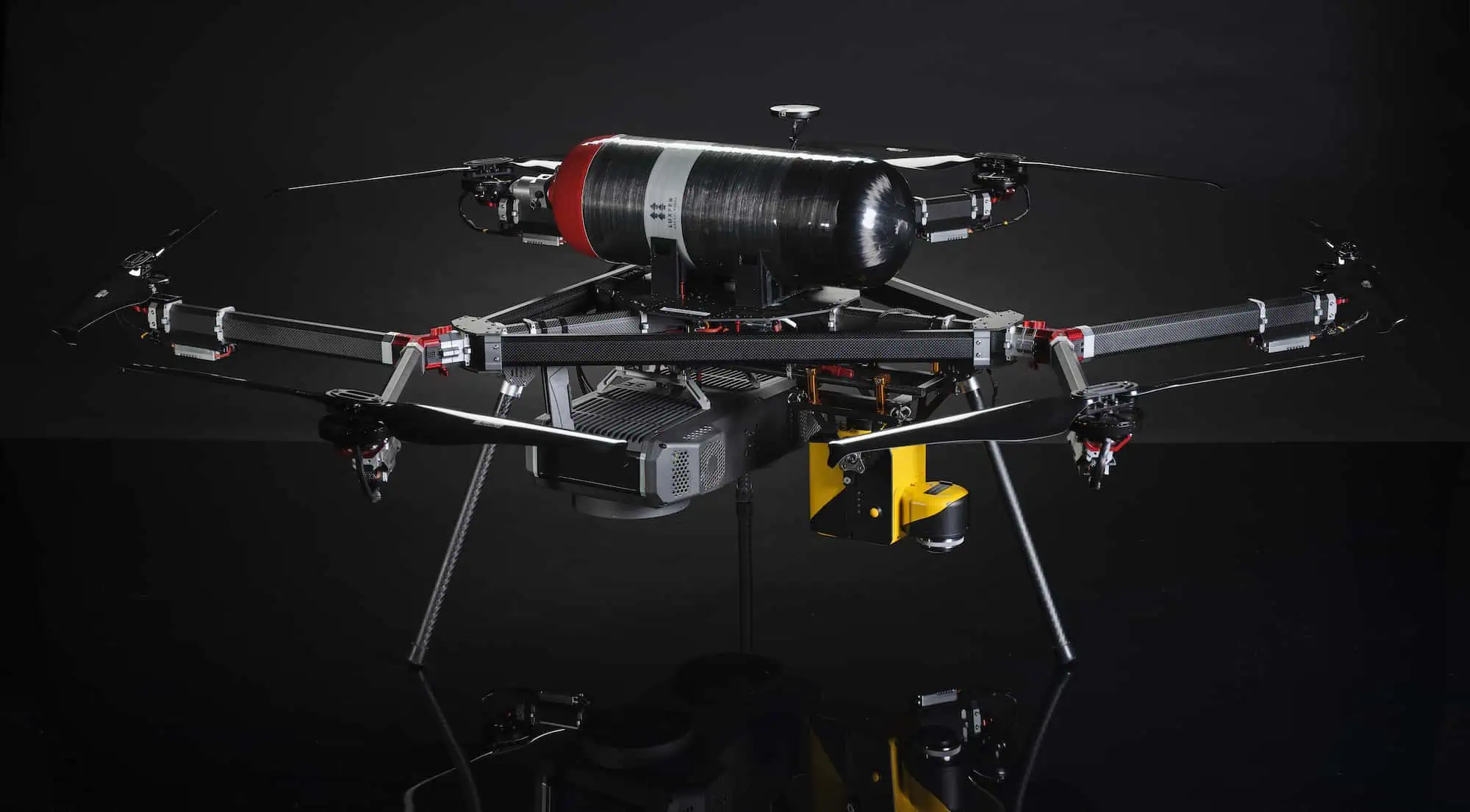
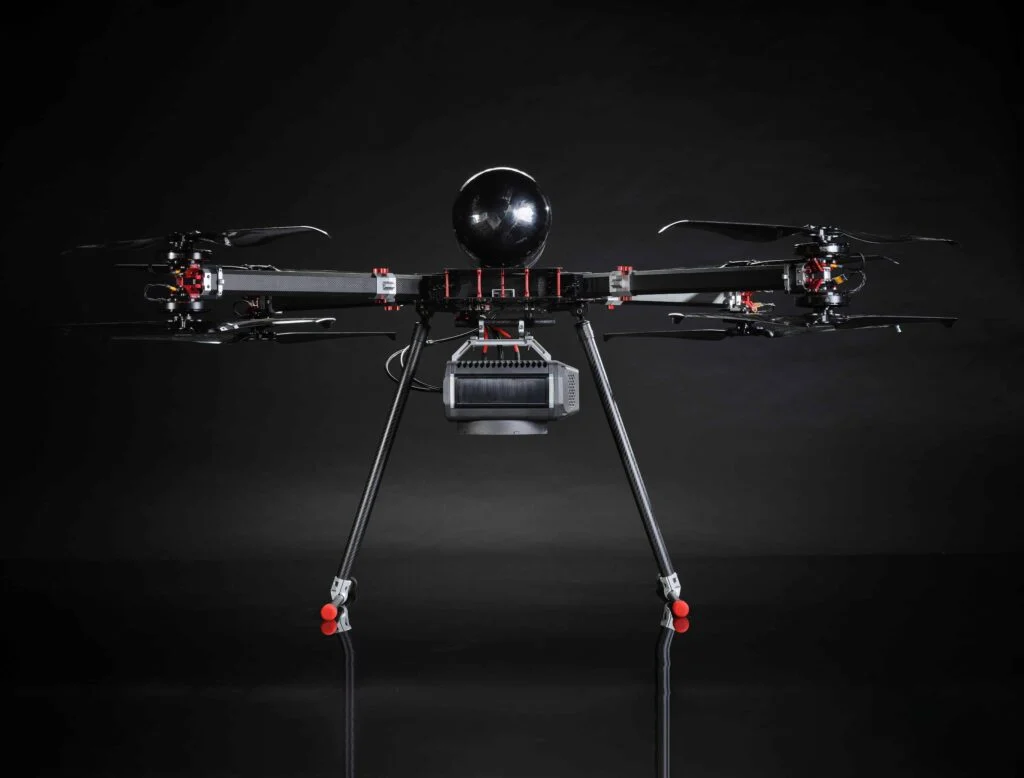
Our Fuel Cell Power Modules (FCPMs) harness hydrogen and ambient air to generate clean, efficient DC power, producing zero emissions. With a superior energy-to-weight ratio compared to conventional batteries, hydrogen fuel cells can extend the flight endurance of commercial UAVs by over threefold, enabling greater productivity and reduced downtime in a single flight.
Key advantages of IE-SOAR:
- Direct battery substitute – compatible with 12S to 16S configurations, automatically adjusting to load demands like a battery.
- Engineered for safety and dependability – designed to tolerate single-point failures and includes built-in power system redundancy.
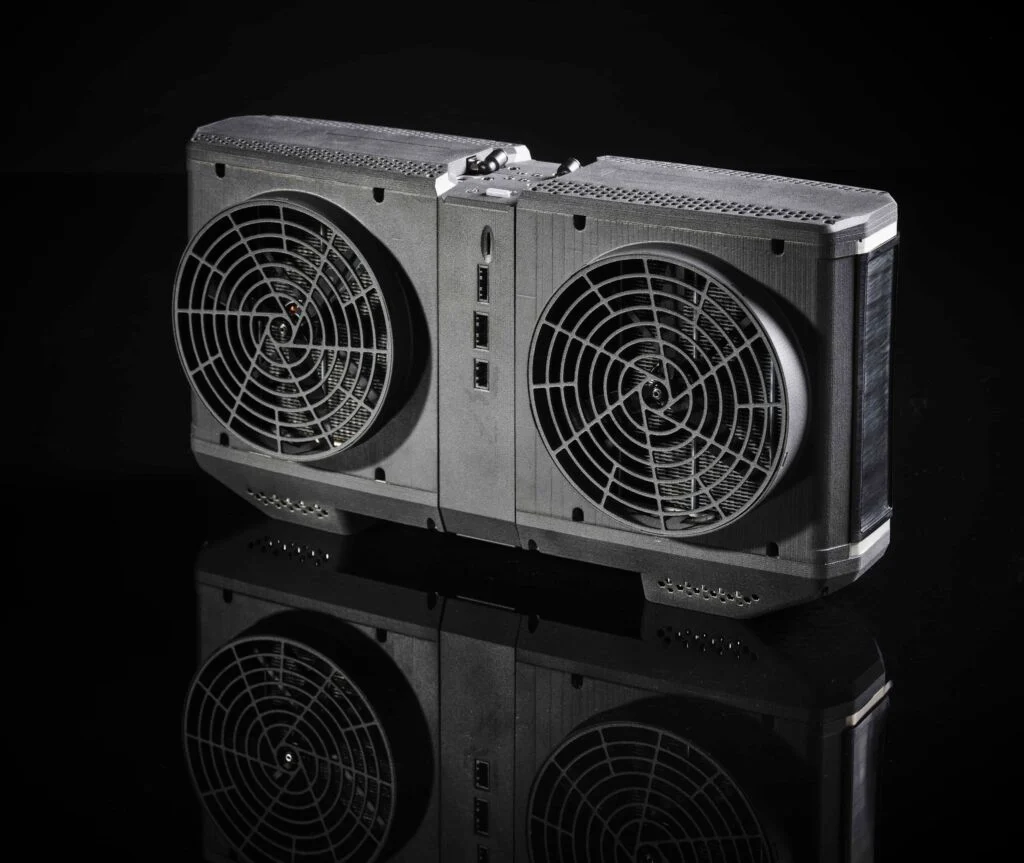
- Modular design – systems can be combined in parallel for outputs of 2.4kW or 4.8kW.
Fly Further | Fly Longer | Boost Productivity
Hydrogen cylinders can be quickly refueled or exchanged, with sizes tailored for specific flight durations and UAV payload capacities. Both the FCPM and the cylinder offer multiple mounting options, ensuring maximum adaptability for various UAV designs and missions. custom cylinders can be developed for optimized flight times.
FCPMs are hybridized with a small battery to support peak power production and provide redundancy. The system operates without vibrations, ensuring stability for drone cameras and other sensitive equipment.
Fuel Cells vs. Internal Combustion Engines
- Environmentally friendly & zero emissions.
- near-silent operation.
- lower maintenance with no moving parts; no tuning required.
- Vibration-free for optimal stability.
Fuel Cells vs. Batteries
- extended flight durations.
- Rapid refueling capabilities.
- Integrated power system redundancy.
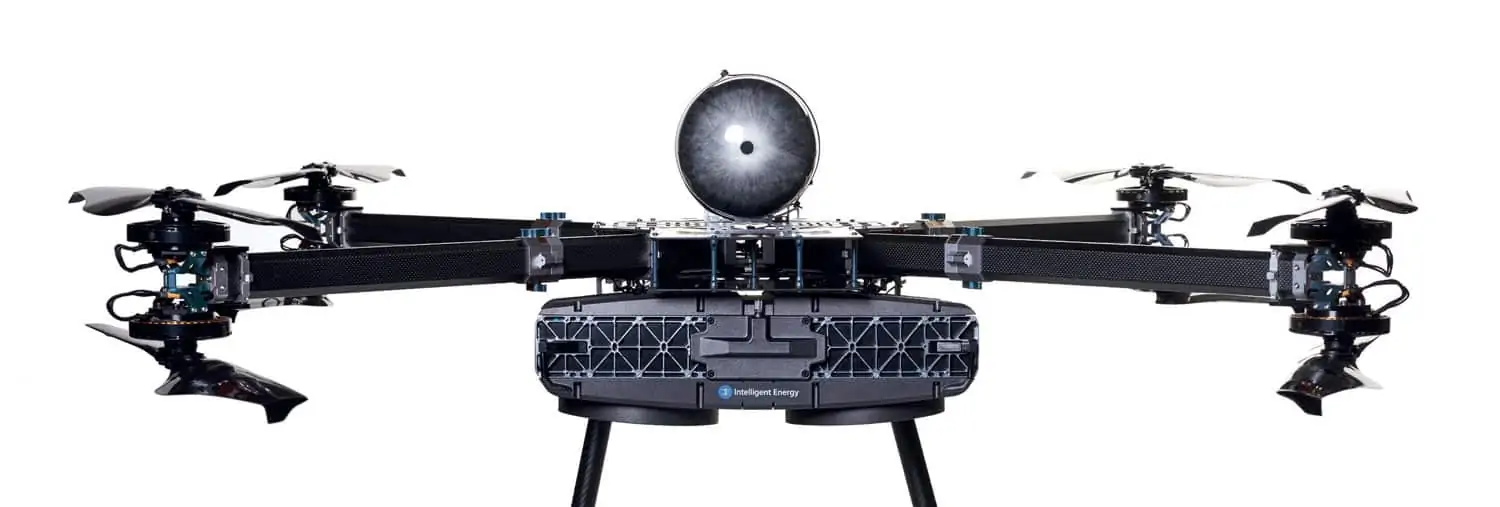
Our FCPMs are available in power outputs of 800W, 1.2kW, and 2.4kW. Hydrogen fuel cells can be seamlessly integrated into various multi-rotor and fixed-wing UAV platforms, often serving as direct replacements for existing batteries in numerous drone applications.
Two 2.4kW power modules can be connected in parallel to deliver up to 4.8kW of power without requiring additional hardware. The FCPM consistently supplies power to the UAV and is hybridized with a small battery to handle peak loads.
Specifications:
|
|
|
|
|
| 2.4 kW Fuel Cell Module | 1.2 kW Fuel Cell Module | 800W Fuel Cell Module | |
| Maximum continuous power | 2400W | 1200W | 800W |
| maximum peak power | 8000W | 8000W | 7500W |
| Output voltage (configurable between) | 48-70V | 48-70V | 22-50V |
| FCPM mass | 4800g | 2700g | 1450g |
| FCPM dimensions | 128 x 430 x 233mm | 128 × 246 × 233mm | 210 × 105 × 105mm 195 × 90 × 40mm |
| regulator mass | 315g | 315g | 315g |
| Maximum regulator pressure | 350 bar/5000 psi | 350 bar/5000 psi | 350 bar/5000 psi |
| Default battery mass | 1070g | 1070g | 300g |
| Battery dimensions | 120 x 35 x 45mm | 135 × 40 × 40mm | 120 × 35 × 40mm |
| Default battery capacity | 3300mAh | 3300mAh | 1800mAh |
| Operating temperature range | -5 to 40°C | -5 to 40°C | 5 to 40°C |
| Maximum altitude | 3000m | 3000m | 3000m |
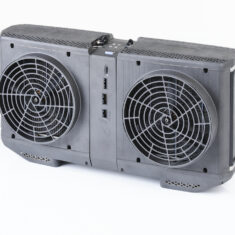
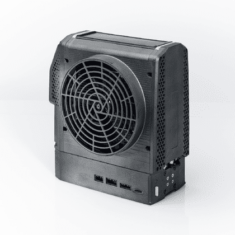
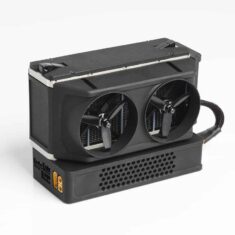
Explore further: UAV Fuel Cell Power Modules (FCPM)
IE-FLIGHT Fuel Cell Systems
Hydrogen Fuel Cells for Heavy-Lift Drones and Urban Air Mobility
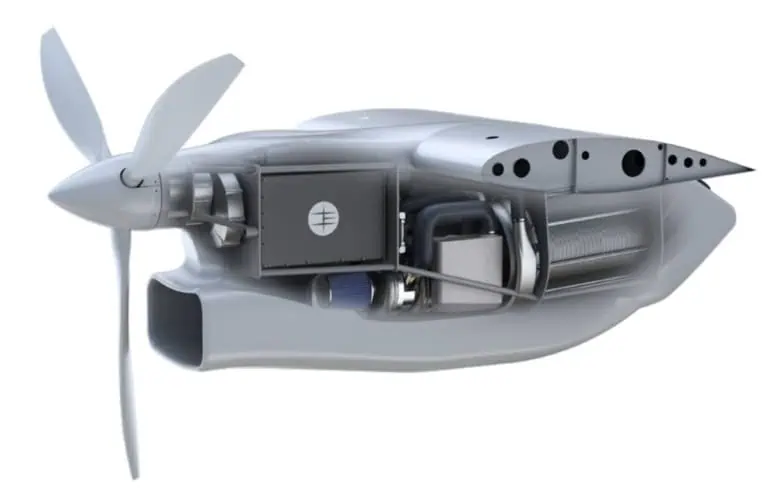
We have also introduced a high-capacity fuel cell product line aimed at facilitating zero-emission flights for larger platforms, including heavy-lift cargo drones, eVTOL aircraft, and Urban Air mobility (UAM) vehicles.
delivering outputs ranging from 200kW to several megawatts, the IE-FLIGHT series boasts extraordinary transient response and high current and power densities. These advanced fuel cells utilize a patented direct water injection cooling system that eliminates the need for external humidification, along with a high-temperature design that allows for smaller heat exchangers, resulting in a more compact unit.
Learn more >> IE-FLIGHT Fuel Cell Systems
Understanding Drone Fuel cell Technology
Fuel cells generate electricity through electrochemical reactions without combustion. Hydrogen fuel cells merge hydrogen with oxygen from the atmosphere, producing only heat and water as by-products. They are more efficient than internal combustion engines and, unlike batteries, do not require recharging, operating continuously as long as fuel is supplied.
PEM Fuel cells Explained
Fuel cell technology is both scalable and modular, allowing for easy stacking of cells to achieve the desired power output. PEM fuel cells, which utilize a proton-conducting solid polymer membrane as the electrolyte, offer the highest power densities, making them especially suitable for UAV applications where size, weight, and power (SWaP) constraints are critical.

Our drone fuel cells are designed to be air-cooled, with heat from the fuel cell stack transferred to cooling plates and dissipated through airflow channels, resulting in a simplified and cost-effective power solution.