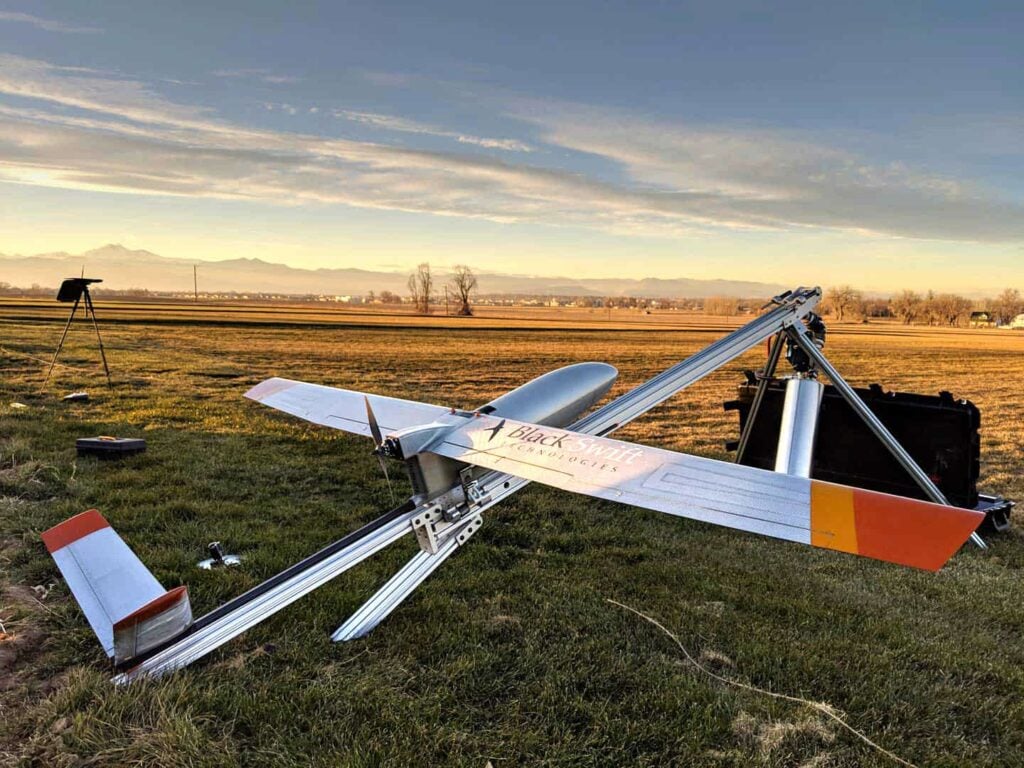


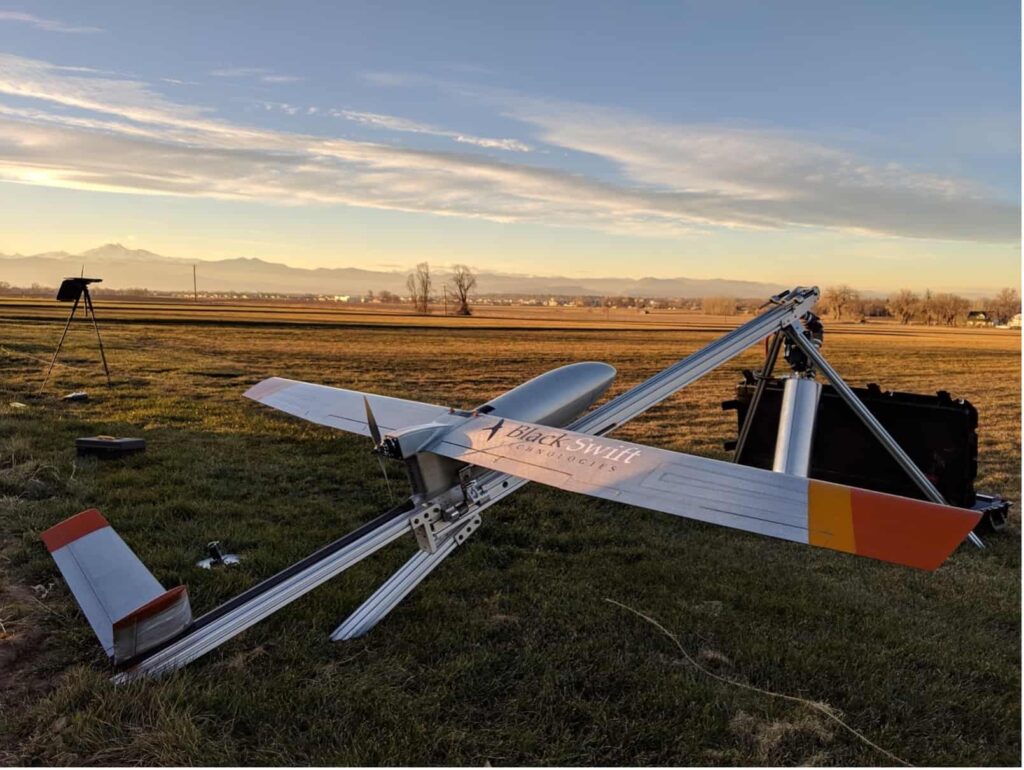
black Swift S2 prepared for launch from its pneumatic launcher
Jack Elston, the CEO of black Swift technologies (BST), engaged in a conversation with UST about the hurdles, achievements, adn significant influence that BST’s unmanned aerial systems (UAS) are making in the realm of scientific and academic research globally:
what primary obstacles do users of Black Swift Technologies (BST) unmanned aerial systems encounter?
Scientific atmospheric studies are seldom conducted in controlled settings. Clients of Black Swift require UAS platforms that can function dependably and efficiently in challenging conditions. The Black Swift S2—BST’s durable,fixed-wing UAS specifically crafted for atmospheric sampling and remote sensing—has demonstrated its capabilities in demanding data collection missions from polar regions to tropical areas.
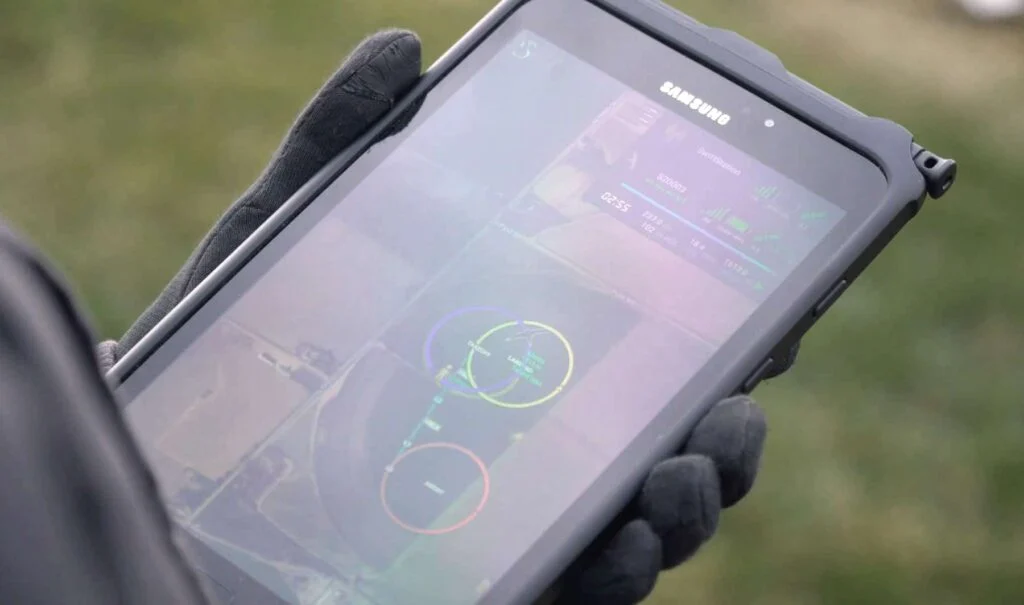
With numerous researchers facing financial limitations, the necessity of “achieving more with less” has become apparent. Our SwiftCore™ Flight Management System (FMS) is a sophisticated, comprehensive avionics solution that empowers users to manage, communicate, and command their Unmanned Aerial System for fully autonomous operations. These advanced control systems offer industry-leading sensor-based management of the UAS, reducing operator workload while enhancing the quality of collected data by autonomously adjusting the flight path based on sensor feedback. Proven in real-world applications, the SwiftCore FMS is designed to fulfill the needs of mobile scientific field campaigns in extreme environments.
our aircraft and avionics are utilized for significant scientific endeavors by NASA, deployments by NOAA, and an expanding roster of commercial users, including engineering and surveying professionals, construction and mining supervisors, and also environmental monitoring by scientific and academic institutions worldwide.
What distinguishes Black Swift Technologies’ unmanned systems in the industry?
Black Swift Technologies provides a range of UAS platforms tailored to meet the specific needs of our clients, including both fixed-wing and multi-rotor aircraft. All of BST’s unmanned aerial systems are designed, manufactured, and serviced in the USA—a claim that few UAS manufacturers can make.
BST is renowned for producing reliable, robust, and highly precise UAS capable of carrying scientific payloads in challenging atmospheric conditions (high-altitude, arctic, desert, corrosive particulates, and turbulent environments). Our specialized scientific aerial platforms are employed globally for various atmospheric research missions in extreme conditions, including monitoring and evaluating wildfires, volcanoes, tornadoes, and hurricanes.
BST is among the few companies that develop our own avionics, control systems, payload interfaces, payloads, aircraft designs, user interfaces, and ground stations. This vertical integration allows us to be more agile in responding to the evolving landscape and innovate wherever necessary.
swiftcore avionics system by Black Swift Technologies
Our SwiftCore avionics system is also one of the few (if not the only) truly modular avionics systems relying on networked nodes connected through a robust bus. This architecture enables several key features, including redundancy, straightforward field maintenance, automated part lifetime tracking, expandability, and seamless integration of third-party components.
unique capabilities offered by BST include:
- GPS-Denied Navigation – essential for enabling BVLOS operations
- Safe-To-Land Technology – machine vision-based automated hazard mitigation
- Sensor-Directed Flight Management Systems – SwiftCore FMS
- Augmented Onboard Intelligence – anticipates failures before they occur
- Modular-By-Design – field-swappable payload system
Can you provide examples of your UAS solutions being utilized in specific scientific missions?
Our specialized drones enable scientists to safely observe volcanoes, hurricanes, wildfires, and other natural threats, thereby mitigating health, safety, and economic repercussions.
NASA JPL and Black Swift volcano research UAS
Volcano Monitoring – For instance, BST’s recent pioneering volcano research missions over Alaska’s Aleutian Islands captured high-resolution imagery that revealed significant changes due to recent volcanic activity. It also showcased the ability of gas sensors to identify the characteristic volcanic gases that indicate the potential onset of hazardous volcanic activity.
“These flights demonstrated that the S2 UAS can not only endure the harsh conditions surrounding stratovolcanoes but can also autonomously make mission-critical decisions to keep the aircraft safe,” stated Jack Elston, CEO of Black Swift Technologies.
The S2 operated flawlessly under challenging flight conditions: headwinds exceeding 50 knots and downdrafts above 1600 ft/min in near-freezing temperatures.
The operation was conducted from a base located 25 km away from the volcano,without a string of observers or specialized ground equipment. This marked one of the first genuine demonstrations of BVLOS (Beyond Visual Line of sight) flight.
Such research empowers scientists to promptly alert local and aviation communities about impending dangers.
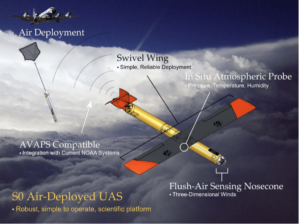
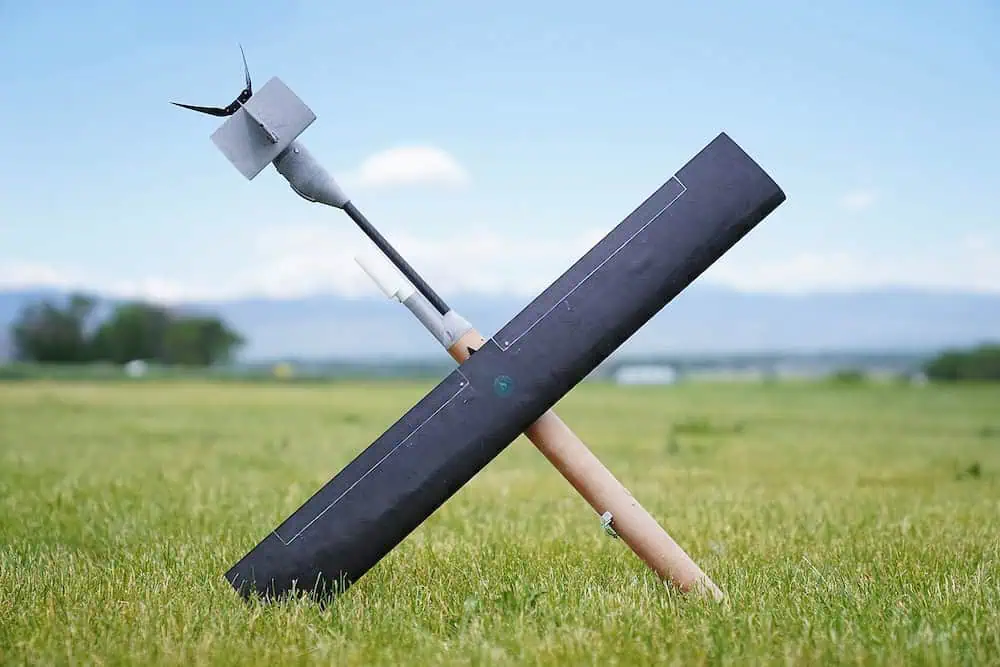
The tube-launched version of the Black Swift S0
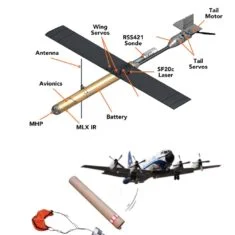
Hurricane Observations – In collaboration with NOAA, Black Swift engineered a UAS designed to collect 3D wind measurements along with pressure, temperature, and humidity data for boundary layer observations in tropical cyclones or hurricanes. The resulting aircraft, the Black Swift S0, will be launched from a P3 aircraft. The objective is to provide data that enhances the prediction of hurricane paths and intensities,thereby extending warning times before landfall.
wildfire Measurements – Black Swift Technologies plays a crucial role in NOAA’s Nighttime Fire Observations eXperiment (NightFOX). The S2 UAS is employed to assess nighttime combustion efficiency,smoke,fire perimeter,and fire radiative power at high spatial resolution,aiding in the testing and betterment of fire weather forecasting.
The Black Swift S2’s payload capacity and modularity are ideally suited to accommodate multiple sensors capable of research-quality measurements of CO2, CO, aerosol, relative humidity, pressure, and temperature in wildfire plumes, as well as high-resolution multispectral maps of wildfires.
NightFOX utilizes operational fire and smoke observations to provide incident commanders with critical details promptly.the ultimate aim of nightfox is to conduct nighttime in-situ measurements of wildfire plumes and remote assessments of wildfire characteristics, using the collected data to enhance fire weather forecasting.
Extreme Altitude Aerial surveying – Black Swift Technologies UAS have successfully executed mapping operations at high altitudes (over 14,000 ft.MSL). BST has demonstrated flights in elevated locations to capture highly detailed 3D orthophotos, including various sites in Colorado and Central America. The resulting geo-referenced digital aerial images provide actionable insights for areas inaccessible to vehicles, all while ensuring the safety of surveyors and their equipment.
What is the future outlook for Black Swift Technologies in the unmanned sector in 2022 and beyond?
BST is acknowledged for pioneering advanced technology in the unmanned systems domain. This dedication to pushing the boundaries of safe and effective UAS operations will continue to be a defining characteristic of BST.
Research and product development will persist in several key areas, including:
- BVLOS operations in GNSS-denied environments,
- Utilizing machine learning and onboard intelligence to foresee failures before they occur,
- Creating machine vision and artificial intelligence to enable aircraft operating beyond visual line of sight to land safely without causing harm to peopel or property in the event of a catastrophic failure,
- Simplifying and enhancing flight control systems necessary for next-generation scientific operations, and
- developing and deploying advanced sensor suites.
Black Swift Technologies’ Range of Unmanned Aerial Systems
Black Swift S2™ UAS
Modular by design and precise by nature, BST’s flagship aircraft, the Black Swift S2, is a fixed-wing platform featuring a modular design and a large interchangeable payload nose cone that can be swapped in the field. The S2’s expansive nose cone can accommodate various sensor packages (up to 5 lbs) in single, dual, or triple configurations, including RGB cameras, EO/IR cameras, multispectral cameras, hyperspectral cameras, and atmospheric monitoring systems. BST has also developed a unique soil moisture measurement package with a radiometer integrated into the S2’s payload nose cone, a sensor package not available elsewhere.
At full payload capacity, the Black Swift S2 can maintain a speed of 40 knots for 90 minutes at 6,000 ft MSL. Its avionics are modular and fully integrated, with each component linked to an smart board over a robust onboard bus system. This allows for easy system configuration through plug-and-play of additional components, redundancy, and monitoring of subsystems/sensors with lifetime tracking and updates.
Learn more about the Black Swift S2™ UAS
Black Swift E2™ UAS
The Black Swift E2 was designed from the ground up for autonomous structural and industrial inspections. With its advanced navigation technology, the Black Swift E2 enables highly accurate, close-up inspections of infrastructures, even in extreme environmental conditions. Leveraging advancements in computer vision and machine learning, the Black Swift E2 is an intelligent UAS capable of fully autonomous flights.
The Black Swift E2 ensures precise, reliable, and safe navigation around complex structures while providing real-time actionable data to its operator. Built for commercial applications, the E2 can be easily adapted for DOD missions. It is engineered for rugged use in demanding field conditions, including operation in adverse weather.
Key design features of the E2 include:
- Field-swappable payload capability with the potential to integrate various sensors.
- Forward-mounted payload allows operators to achieve a full field-of-view (even looking up).
- Utilizes custom battery packs with specific chemistry for extended duration.
- Battery pack is easily replaceable and adjustable based on payload weight.
- E2 quickly folds down and fits into a custom carrying case for easy transport, protecting the aircraft from potential damage during transit.
- Operators can confidently deploy the E2 with minimal training while collecting essential data in diverse environments.
Learn more about the Black Swift E2™ UAS
Black Swift S0™ UAS
the Black Swift S0 is a compact, rugged, and reliable aircraft available in two configurations: a tube-launched version and a fixed-wing VTOL-capable UAS.
The tube-launched variant of the S0 is a cost-effective, modular, electric fixed-wing UAS designed for air deployment from a P-3 Orion “Hurricane Hunter” aircraft. This purpose-built autonomous flight aircraft provides critical thermodynamic measurements in the lower part of the atmospheric boundary layer near the eyewall of a hurricane.
The Black Swift S0-VTOL is a small, ruggedized UAS designed for vertical takeoffs and landings (VTOL), offering a high degree of flexible deployment options. The S0-VTOL can carry various sensors designed for observing atmospheric thermodynamics, but it can also be modified to accommodate other sensor suites, such as those used for trace gas measurement or lightweight EO/IR cameras. Its design makes it more economical to build, operate, and maintain than manned or larger UAS, and its 85-knot dash speed and 90-minute endurance provide superior capabilities compared to multi-rotor solutions.
BST’s clientele includes government agencies such as NASA, NOAA, and USGS, along with leading research universities and institutions worldwide.
Learn more about the Black Swift S0™ UAS