

The Importance of Long-Term Environmental Observation
SubC imaging emphasizes that grasping long-term ecological changes is vital for understanding ecosystems, biodiversity, and the effects of climate change.Though, the task of consistently monitoring dynamic underwater environments is fraught with challenges, including limited access and resource constraints. Timelapse imaging emerges as a viable solution, capturing high-resolution images at predetermined intervals to document gradual ecological changes. This technology reduces the need for constant human oversight, allowing researchers to monitor shifts with enhanced precision and efficiency.
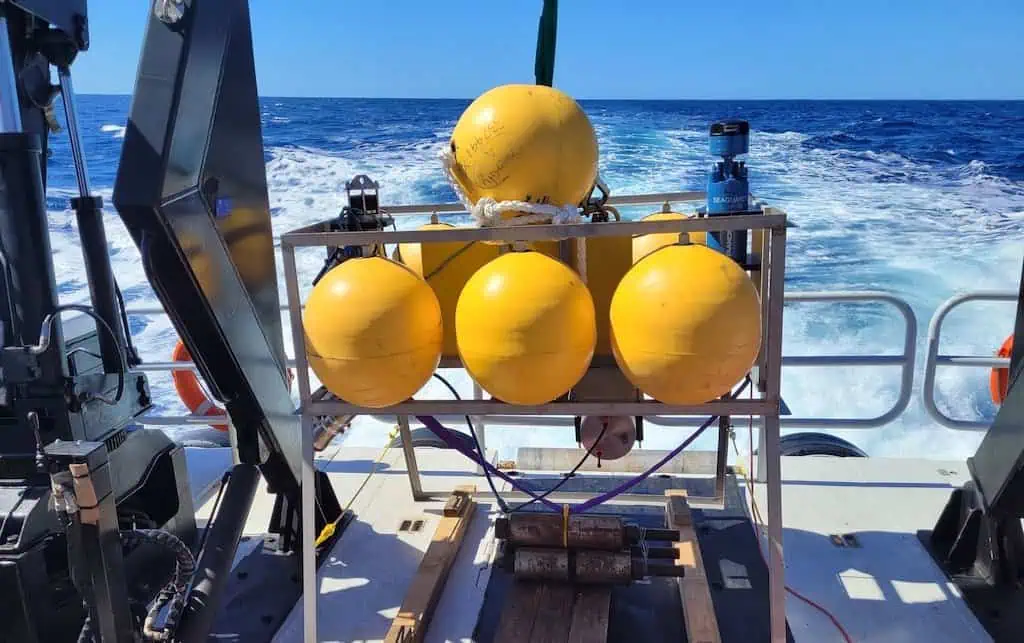
At the forefront of this innovation is SubC Imaging’s Autonomous Timelapse System, designed specifically for long-term subsea monitoring. This system is robust enough to endure harsh underwater conditions,providing scientists with reliable tools for gathering essential visual data over extended periods.
This article delves into the expanding role of timelapse technology in environmental monitoring, the challenges it mitigates, and how advanced imaging solutions, such as SubC’s system, are transforming the study of oceanic changes.
The Necessity for Ongoing Environmental Surveillance
Marine ecosystems are in a constant state of flux,with changes unfolding over weeks,months,or even years. Critical processes like coral bleaching, deep-sea vent activity, and coastal erosion evolve too slowly for customary observation methods to capture effectively. Conventional monitoring techniques can be expensive, require frequent maintenance, and are often limited by power constraints that restrict deployment durations. These challenges create data collection gaps,complicating the understanding of long-term environmental trends.
Timelapse technology addresses these issues by automating image capture at scheduled intervals, providing a continuous flow of visual data. This capability enables researchers to discern patterns and identify environmental changes that might otherwise go unnoticed, leading to a more comprehensive understanding of ecosystem dynamics.
Enhancing Research Through Timelapse Imaging
Timelapse cameras, by capturing images over extended periods, unveil environmental changes that are not perceptible during real-time observation. This method is particularly beneficial for:
-
Observing seasonal shifts in marine ecosystems
-
monitoring habitat degradation and changes in biodiversity
-
Investigating coastal erosion and sediment transport
-
Documenting deep-sea biological activities
In deep-sea environments where direct human observation is unfeasible, timelapse imaging becomes an essential research tool, enabling scientists to document remote and extreme conditions with minimal disruption to marine life.
Innovative Tools for Extended Monitoring
The success of timelapse monitoring hinges on the use of robust and versatile imaging systems. SubC imaging’s Autonomous Timelapse System offers a state-of-the-art solution designed for prolonged deployments in challenging underwater environments.
Equipped with high-definition 4K video and 12.3 MP digital stills, the system guarantees outstanding image quality, even under varying underwater conditions. Adjustable exposure settings and white balance optimization enhance clarity, while an intuitive visual script builder allows researchers to customize capture schedules without needing programming skills.
A notable feature of SubC’s system is its hibernation mode,which significantly prolongs battery life by powering down between imaging events. This energy-efficient design enables deployments to last for months or even years without maintenance. Researchers can tailor capture intervals to their specific study requirements, ensuring efficient energy use while maximizing data collection.
To maintain image clarity during long-term missions, the system includes optional biofouling control features such as UV lighting and mechanical wipers, preventing marine growth from obstructing the lens. Additionally, its flexible power configurations allow for operation via battery packs or integration with external power sources, making it adaptable to various deployment scenarios.
Real-World Applications: Timelapse Technology in Action
Monitoring Hydrothermal Vents in the Pacific
One of the most compelling uses of timelapse imaging is in the study of deep-sea hydrothermal vents. Situated along tectonic boundaries, these extreme environments host unique ecosystems reliant on chemical energy rather than sunlight. Understanding their evolution is crucial for studying deep-sea biodiversity and geochemical cycles.
SubC Imaging’s camera system has been employed for long-term monitoring at the Axial Seamount, an active submarine volcano in the Northeast Pacific. By capturing high-resolution still images every 30 minutes, researchers have documented the emergence of new vent structures and the adaptations of deep-sea organisms. These time-series images provide invaluable insights into how these ecosystems respond to geological activity and environmental changes.
Deep-Sea Biodiversity Research in Australia
The University of Western Australia utilized SubC’s Autonomous Timelapse System in a deep-sea biodiversity project at depths of 4,300 and 5,100 meters. Over an 18-month period, the system captured high-resolution images every 12 hours, revealing seasonal variations in marine life and environmental conditions.
this ability to document slow, subtle transformations has revolutionized the analysis of deep-sea ecology, providing a rare insight into life at abyssal depths.
The Future of Timelapse Technology in Marine Science
the integration of artificial intelligence and automation is poised to further enhance timelapse technology. Future advancements may include AI-driven image analysis for automatic species identification and detection of environmental anomalies.
Improved battery efficiency and real-time data transmission could facilitate even longer and more accessible monitoring missions. These innovations will broaden the applications of timelapse imaging, making it an essential tool for climate science, conservation, and renewable energy research.
As the demand for continuous environmental monitoring escalates, reliable timelapse solutions will be vital in documenting gradual ecosystem changes.SubC Imaging’s Autonomous Timelapse System meets these challenges with its long deployment capabilities, high-resolution imaging, and user-friendly design, enabling researchers to gather high-quality data with minimal maintenance.
by providing a clear visual record of environmental changes, timelapse technology empowers scientists to make informed decisions, assess human impact, and contribute to global conservation efforts. As ocean monitoring continues to advance, innovations in timelapse imaging will play a crucial role in enhancing our understanding of the underwater realm.
For more information, read the original article or visit the SubC Imaging website.