
Black Swift Technologies explores the innovative use of its Black Swift S0 UAS by the National Oceanic & Atmospheric Administration (NOAA) for boundary layer studies of tropical storms.
Investigating the dynamics of the lower boundary layer in tropical storms is vital for the National Oceanic & atmospheric Administration (NOAA) Atlantic Oceanographic and Meteorological Lab. A lightweight aircraft weighing just three pounds may hold the key to enhancing hurricane predictions.
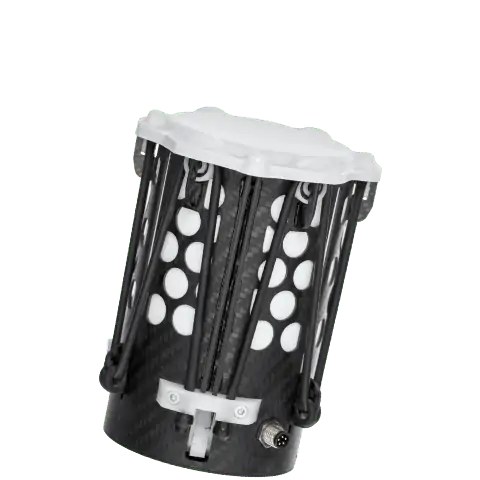
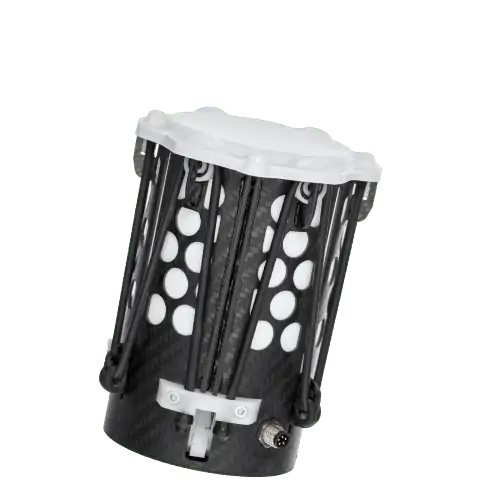
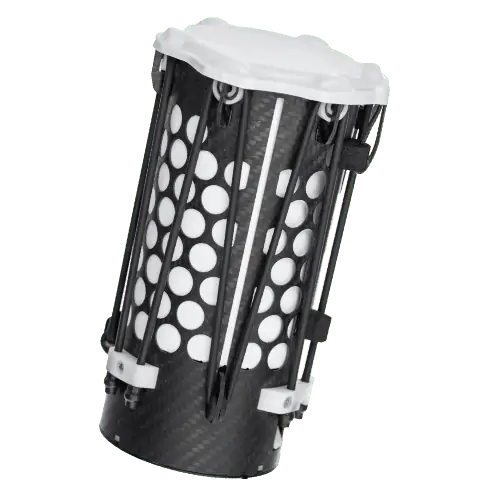
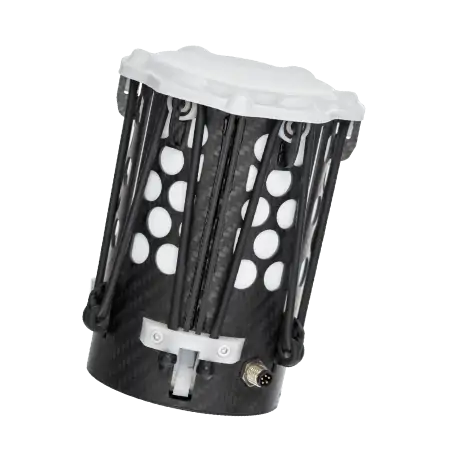
In March 2023, NOAA expanded its hurricane research capabilities with the prosperous deployment of the Black Swift S0 UAS (Uncrewed Aircraft System), specifically engineered for boundary layer observations in turbulent conditions (Figure 1).
Figure 1: Black Swift S0 UAS
Since the 1970s, NOAA has depended on manned aircraft like the Lockheed WP-3D Orion turboprop (Figure 2) to gather crucial meteorological data, aiming to enhance their forecasting models.
Figure 2: NOAA’s Lockheed WP-3D Orion “Hurricane Hunters” are essential for collecting data critical to tropical cyclone research and forecasting.
However, this method has its drawbacks. Joseph Cione, Lead Meteorologist for New Technologies at NOAA’s Atlantic Oceanographic and Meteorological lab, explains, “With our P-3s carrying crew, we cannot operate in the strongest winds or most turbulent conditions—below ten thousand feet. We will never risk flying a P-3 at such low altitudes.”
So,how does NOAA plan to address this limitation?
“We utilize technology,particularly drones capable of enduring extreme conditions and sampling the storm’s lowest regions for extended periods (over an hour),” Cione states.
The interaction between the atmosphere and ocean is crucial for understanding storm mechanics, energy acquisition, and momentum transfer to the sea. UAS or drones are emerging as the preferred platform for gathering this data. Cione elaborates, “our objective is to create a technological toolkit that allows us to deploy the most suitable UAS platform for each situation.”
“This is a gradual process,” Cione remarks. “Advancements in emerging technologies take time. The challenges faced by developers are significant.”
One of the initial hurdles is ensuring safe separation,meaning the UAS must be launched without damaging either the drone or the P-3. The UAS must endure ejection at speeds exceeding 200 knots and deploy as intended. While this may seem straightforward, having a sub-4-pound UAS operate under such extreme conditions is a notable achievement. In their first flight test,Black Swift Technologies demonstrated the aircraft’s capability.
Next, the aircraft must effectively capture and transmit vital data to the P-3 in real-time. Black Swift addressed this by relaying essential data to a system that emulates the Advanced Vertical Atmospheric Profiling System (AVAPS)—a real-time data system extensively used by NOAA with their dropsondes.
Can the UAS maintain flight for the expected duration? The target for the Black Swift S0 was one hour. In recent clear air tests, the S0 remained airborne for 83 minutes, with the last 20 minutes at an altitude of just 10 meters (30 feet) above the ocean.
Lastly, can the UAS operate and transmit data at a considerable distance from the host aircraft? The Black Swift S0 met expectations in initial flight tests, achieving a range of 35 miles.
“I was very satisfied with the performance we observed,” Cione reports. “We’ve moved beyond the initial stage. We’re standing and walking. We’re not running yet, but I’m confident we’ll reach that point.”
A Transformative Approach to Data Collection
The success of the S0 UAS platform hinges on Black Swift’s ability to simplify and lighten the vehicle compared to existing platforms, achieving a significant reduction in cost while maintaining endurance and performance quality.
The design of the Black Swift S0 allows for fully autonomous,high-resolution atmospheric thermodynamic measurements at altitudes up to 15,000 feet AGL. The aircraft’s sensor suite enables rapid and precise capture of 3D wind profiles, air and sea temperatures, wind speed and direction, dew point, and atmospheric pressure at various atmospheric levels.
A crucial element of the sensor package on the black Swift S0 is the multi-hole probe developed by Black Swift Technologies. The swiftflow 3D Wind Sensor captures differential pressure measurements, while its magnetometer and Inertial Measurement Unit (IMU), combined with fusion algorithms, provide a complete wind vector solution. This integrated multi-hole probe and wind velocity measurement device accurately records airspeed, altitude, angle of attack, side-slip, ambient temperature, and relative humidity for a thorough assessment of the wind habitat and aircraft performance.
“We created two versions of our SwiftFlow Wind Sensor,” explains Jack Elston, Ph.D., Founder and CEO of Black Swift technologies. “What’s remarkable about this probe is that it features a wind sensor flush with the nosecone of the aircraft (no protruding tips), allowing for high-frequency (100Hz) 3D wind measurements, including vertical wind speed, which is frequently enough inaccurately estimated. Moreover,we’ve ensured it operates effectively in all weather conditions.”
“I was so impressed with BST’s multi-hole probe that I recommended they adapt this unique technology for other platforms. To my knowledge, this probe is the smallest and most cost-effective multi-hole probe available,” Cione noted. “Now, we have Black Swift’s multi-hole probe on both the Altius and the S0, showcasing the synergy between these two teams.”
The Physics Behind the Measurements
To grasp the importance of the measurements taken by Black Swift’s S0 UAS,one must understand the physics underlying computer models. Researchers need to determine how energy is transferred from the ocean and how the resulting momentum is conveyed from the storm to the ocean or land upon landfall. This process can be better understood by examining quantities known as fluxes—both momentum and heat and moisture fluxes. In computer models, these fluxes cannot be directly measured, so they are estimated using transfer coefficients, which introduce significant uncertainty. One of NOAA’s ongoing project goals is to minimize this uncertainty. Historically, capturing and accurately measuring this details has been challenging, making transfer coefficients a difficult aspect for researchers to define.
“With the turbulence probes developed by Black Swift, we have the prospect to measure atmospheric fluxes directly using eddy covariance techniques that eliminate the need for transfer coefficients,” Cione explains. “To measure fluxes directly near the surface, turbulent quantities must be obtained within a few hundred feet of the ocean surface, where winds can exceed 150 miles per hour. Until the introduction of these two UAS platforms equipped with specialized sensors, ther has been no effective way to gather this unique data.”
“If we can measure these fluxes directly in high-wind storm conditions, we may substantially reduce the uncertainty associated with these coefficients,” Cione clarifies. “If the platforms can withstand extreme storm conditions and collect the necessary data, it could enhance future forecasts regarding intensity changes—how strong a storm is highly likely to become. This represents a significant breakthrough in boundary layer, high-wind tropical cyclone research. Personally, I find this to be one of the most thrilling advancements in this field.”
Data from small uncrewed aircraft can greatly enhance scientists’ understanding of perilous and hard-to-observe areas within a tropical cyclone. Comprehending the interactions between air and sea is essential for researchers to better understand storm mechanics, energy acquisition from the ocean, and how storm momentum is transferred back to the sea.Near-surface wind observations collected from these platforms can significantly improve situational awareness and the efficacy of future operational forecasting models. understanding how the near-surface environment of a hurricane extracts energy from the ocean can aid scientists in better predicting the development of a tropical cyclone, possibly saving lives and mitigating the economic repercussions of these storms.
Equipping for Success
Cione and his team at NOAA have developed several research modules,including one called the RICO SUAVE (Research In Coordination with Operations of Small Uncrewed Aircraft Vehicle experiment). This module involves an inflow experiment requiring two to three hours of flying in a spiral pattern into the storm, ultimately reaching the eyewall. The Altius is particularly suited for this type of deployment. Another method, referred to as the Eyewall Experiment, involves the UAS maintaining a center fix in the storm’s eye, circling the eyewall for up to an hour and a half—a task well-suited for the S0.
“These are just two examples where one platform excels in one area while the other platform may perform slightly differently,” Cione notes. “There are numerous applications for both systems. This diverse toolkit provides us with multiple options and contingencies.”
“Our aim is to create a technological toolbox,” Cione adds. “Currently, the Altius can fly longer, with an endurance of up to four hours, while the S0 is lighter, smaller, and more cost-effective. The S0 measures turbulence differently due to its compact size. You never know which platform will perform best in specific situations, which is why we continue testing both aircraft.”
“Having multiple platforms is always preferable to relying on a single one, as a failure of one small UAS leaves you with nothing,” Cione elaborates. “These systems serve as excellent backups for each other and fulfill different needs.”
Technology will increasingly influence NOAA’s hurricane research. Whether advancements are in airframes, guidance systems, sensor suites, or emerging technologies, the status quo is never sufficient. NOAA’s objective of gathering the data necessary for emergency managers to make informed evacuation decisions before tropical cyclones make landfall can save lives and lessen the economic impact of these storms.
Cione envisions transitioning small UAS technology into routine hurricane operations, akin to the dropsondes used for decades.
“Ultimately,we aim to regularly conduct sUAS missions into tropical cyclones,” Cione elaborates. “We’re not there yet, and it will take a few more years, but I’m confident we will achieve this vision.”
Even though not yet designated for regular use, the S0 is poised to influence hurricane forecasts starting in fall 2023. Data collected during flights will be transmitted in real-time from the P3 to the National Weather Service and integrated into their models.
“It has taken several years to develop this capability, and we are incredibly excited to see it make an impact,” elston states. “We envision a future where multiple S0 UAS can be launched together, self-organize, and autonomously fill data gaps using model-based flight control. Until then, even this single generation of vehicles requiring operator oversight has a genuine chance of providing data that has never been regularly collected before. this could lead to longer lead times and ultimately save lives.”
Black Swift Technologies will be present at Xponential 2023 – visit them at Booth 3616 to learn more.