

This article by Tyto Robotics explores techniques for measuring drone propeller thrust, including the use of thrust test stands, to assess a drone’s carrying capacity.
Modern drones and electric vertical takeoff and landing (eVTOL) vehicles can transport significant weights, including passengers and cargo. But how do we accurately assess a drone’s load-bearing capability?
The primary factor influencing a drone’s carrying capacity is the thrust generated by its propellers.
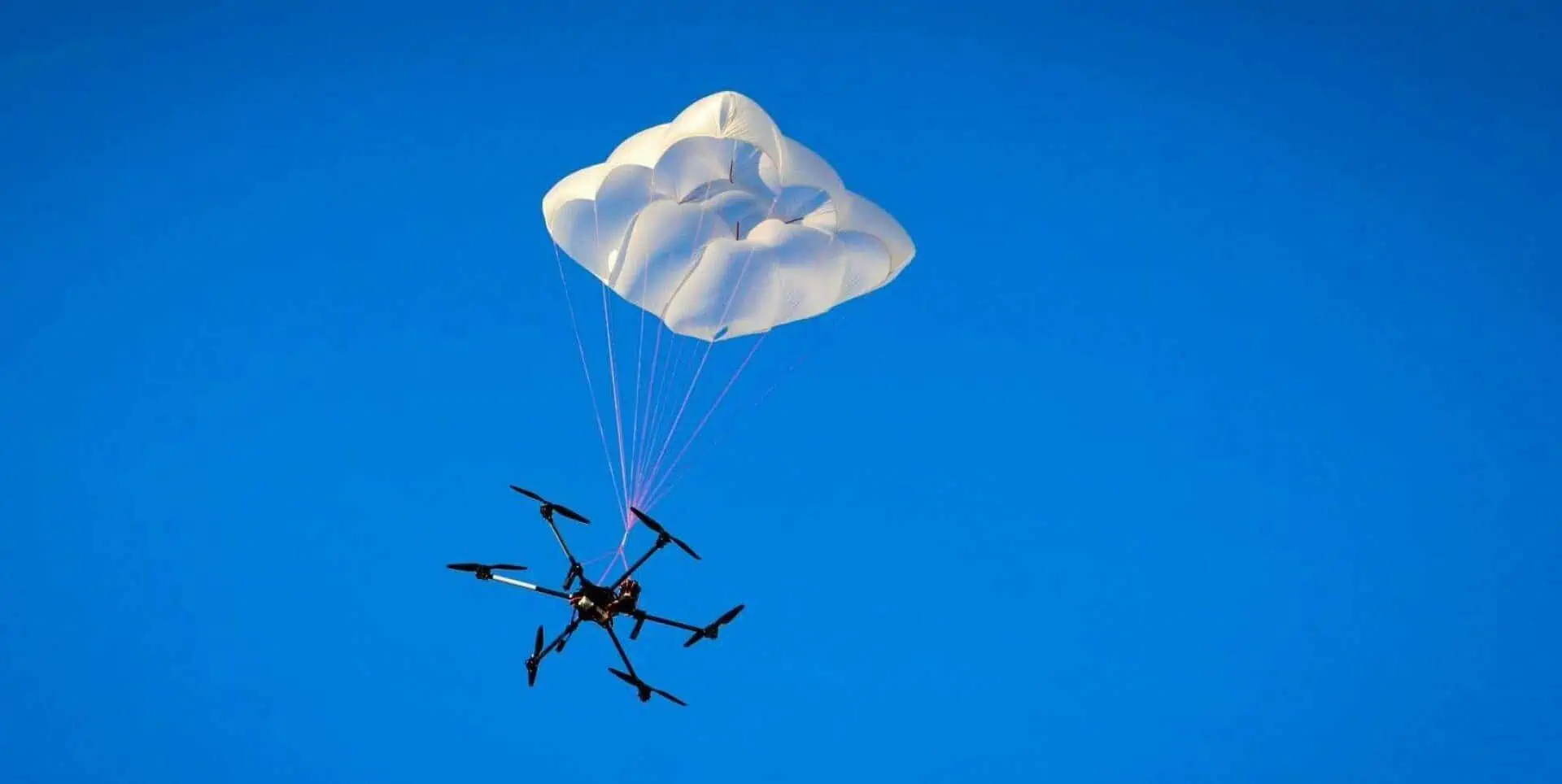
Figure 1: A drone designed for cargo transport
Understanding Thrust-to-Weight Ratio in Drones
When a drone is stationary in the air (in calm conditions), the thrust produced equals its weight:
Weight = mass x gravity (9.81 m/s²)
For instance, if the drone’s mass is 35 kg:
Weight = 35 x 9.81 = 343 N
Thus, the drone’s propellers must generate 343 N or approximately 35 kgf of thrust to maintain a hover. In the case of a quadcopter with four propellers, this translates to about 86 N or roughly 9 kg per propeller.
however, this calculation is simplified; in reality, the drone must also account for takeoff and maneuvering, which necessitates additional lift and acceleration.
Thrust Requirements for Basic Drone Functions
A general guideline suggests that for most drones, achieving twice the thrust required for hovering will provide adequate control for various operations. Therefore, if you’re designing a drone for tasks like surveillance or aerial photography, this principle is quite useful.
For our 35 kg drone, each propeller would need to generate around 18 kgf of thrust to ensure stable control.
Figure 2: IF1200 heavy Lift Drone (image for illustrative purposes, not directly related to article data)
Assessing Drone Payload Capacity
If we intend for our drone to carry additional weight beyond its own, we need to calculate the total mass to lift and ensure the propellers can provide sufficient thrust.
Assuming we want our 35 kg drone to carry a 5 kg payload, the total weight becomes 40 kg.
Using the same formula as before:
Weight = 40 x 9.81 = 392 N or 40 kgf
This means our quadcopter must generate 40 kgf of thrust to hover, or 80 kgf for stable control. Divided among four propellers, this results in 20 kgf per propeller.
Next, we need to verify that our UAV can indeed produce 20 kgf of thrust per rotor, which can be accomplished through various methods.
Methods for Calculating Propeller Thrust
There are several approaches to determine if our propellers can generate the necessary thrust:
- Consult the propeller database for thrust specifications.
- Conduct a test using a thrust stand.
- Utilize a propeller thrust calculator—Mejzlik provides tools for estimating both static and dynamic thrust on their website.
We will explore all three methods to gather our data.
Consulting the Propeller Database
We maintain a comprehensive, free database of drone motor and propeller specifications, contributed by users who have tested their propellers using our thrust stands.
To identify a propeller capable of producing 20 kgf of thrust, we navigate to the “Test Data” section, apply filters, select “Data,” “Powertrain data,” and choose “Thrust (kgf)” from the dropdown menu, followed by “≥” and entering 20 in the final box. we click “Apply Filters.”
Figure 3: Filter settings to identify propellers capable of generating at least 20 kgf of thrust
These settings will display all tests conducted with propellers that achieved a minimum of 20 kgf of thrust.
In the resulting table, we can examine the “Propellers” column, which provides details on the diameter and pitch of suitable propellers. For further insights, we can click on individual tests for more comprehensive data.
As an example, a 62” propeller shows it can produce over 20 kgf of thrust:
Figure 4: Propeller data table from the database
However, this propeller generates substantially more thrust than required, indicating it may be larger than necessary.
We can explore other options to find a propeller that meets our thrust needs without excess capacity. A 40” propeller with a pitch of 10 is a suitable choice, as it produces thrust close to 20 kgf without exceeding it significantly, ensuring we avoid unnecessary weight.
Figure 5: Propeller thrust graph for a 40” propeller
Testing the Propeller with a Thrust Stand
Once we select a promising propeller,we can validate its thrust output using a thrust stand. This allows us to measure its efficiency and compare it with other propellers to identify the most effective option.
For smaller propellers up to 5 kgf, a thrust stand like the Series 1580 is suitable, but for our needs, measuring up to 20 kgf per propeller, the Flight Stand 50 is more appropriate.
Figure 6: Flight Stand 50 with a 40” propeller
Based on our database findings, we’ve chosen a 40” propeller that appears to meet our requirements. We mount the motor and propeller on the Flight Stand 50 and conduct a
controlled test
using the Flight Stand Software, gradually increasing the throttle to check if we achieve the necessary thrust of 20 kgf.
Figure 7: Data plots from the 40” propeller test using Flight Stand software
This test confirms that the selected propeller can deliver the required thrust. We can repeat the process with different propellers of similar dimensions,pitch,and material to determine which is the most efficient within our operational range of 10 to 20 kgf.
Using a Propeller Thrust Calculator
Our partners at Mejzlik have developed two propeller thrust calculators: one for static tests and another for dynamic tests, both available for download on their website.
By entering the specifications of our 40” propeller into the static thrust input table, we can obtain performance estimates, including thrust and efficiency:
Figure 8: Mejzlik propeller thrust calculator interface displaying results for a 40” propeller
The resulting graphs indicate that our 40” propeller can function effectively at both hover and maximum thrust levels, and it demonstrates commendable efficiency at hover thrust, where the drone will spend a significant portion of its flight time.
Final Thoughts
a drone’s carrying capacity is influenced by several factors, with the thrust produced by its propellers being the most critical.
While there are various methods to estimate whether your propellers can generate adequate thrust—such as consulting a database or using a thrust calculator—the only definitive way to confirm this is through rigorous testing.