

Mark Byfield, the Business Development Director at Chess Dynamics, emphasizes that in the expansive ocean, the stakes are incredibly high, and accuracy is vital.
While the marine landscape may seem tranquil, it is indeed anything but, which is where passive surveillance systems come into play, serving as the unseen protectors of naval vessels.
In an habitat where conventional surveillance radars can reveal your location, high-quality, long-range optical surveillance emerges as the ideal solution. when combined with fire control capabilities, the enemy’s first indication of danger will be the swift approach of projectiles.
Fundamentally, fire control systems encompass the processes of detection, tracking, ballistic calculations, predictions, and the direction and engagement of targets—be they enemy ships, aircraft, drones, or incoming missiles.
Contemporary fire control systems are designed to process data in real-time, delivering precise multi-targeting details. They typically integrate a focused fire control radar with optical systems that facilitate visual target identification and confirmation.
The fire control tracking radar enhances tracking capabilities compared to optical systems, especially in adverse weather, and provides accurate range measurements. The narrow beam of the fire control radar can be challenging to detect, notably if it operates at low power, resulting in a low probability of interception (LPI). This characteristic helps safeguard the position of the observing and firing vessel.
Successfully navigating the vast and unpredictable oceans has always posed challenges for mariners. While satellite navigation provides location awareness, the increasing volume of shipping traffic necessitates effective collision avoidance. The introduction of radar and advanced optical surveillance is making maritime navigation safer.
Utilizing technology that can penetrate fog, rain, and darkness without emitting signals, optical surveillance has significantly advanced, offering clear visibility even in the most perilous conditions.
In naval warfare, where a single error can lead to catastrophic outcomes, electro-optical fire control systems are the unsung champions. They provide the necessary advantage to maintain dominance at sea, ensuring that naval forces can defend thier interests and respond to threats with unparalleled accuracy while remaining undetected.
Electro-Optical Fire Control applications in Maritime Defense
In the rapidly changing landscape of maritime defense, speed and precision are paramount. accurate targeting conserves ammunition and minimizes collateral damage. Operating in radio-silent environments is becoming increasingly common.
Enter electro-optical fire control systems, a crucial yet often overlooked element of modern naval warfare. These sophisticated systems combine advanced optics, sensors, stabilization, precise motion control, and computing power to deliver real-time targeting and tracking capabilities, revolutionizing how naval forces detect, track, and engage threats.
These systems have become indispensable in contemporary maritime operations, significantly enhancing the precision and effectiveness of naval missions.
Key applications include:
1.Target Detection and Tracking: Electro-optical systems can concurrently detect and track multiple targets, including surface vessels, aircraft, and missiles. They utilize high-resolution cameras and thermal imaging to provide clear visuals in various weather conditions.Key components include:
- Thermal Imagers: These devices enable 24-hour target identification by detecting infrared radiation, particularly useful in low-visibility scenarios.
- Daylight TV Cameras: High-resolution cameras facilitate visual confirmation and tracking of targets during daylight operations.
- Laser Rangefinders: Essential for measuring the precise distance to a target, crucial for accurate targeting and engagement.
2. Weapon Control: These systems integrate with naval guns and missile systems to deliver precise fire control solutions.
3. Surveillance and Reconnaissance: Electro-optical systems provide continuous 24-hour surveillance capabilities, enabling ongoing monitoring of maritime environments. They can automatically scan horizons or specific sectors,enhancing situational awareness.
4.search and Rescue Operations: These systems support search and rescue missions by offering detailed imagery and tracking capabilities, aiding in locating vessels or individuals in distress.
5. Navigation and Collision Avoidance: electro-optical systems enhance navigation by providing clear visuals of the surroundings, day and night, facilitating safe passage through congested or hazardous waters.
6.Integration with Combat Management Systems: These systems can be incorporated into broader combat management and bridge systems, allowing for coordinated and efficient responses to threats.
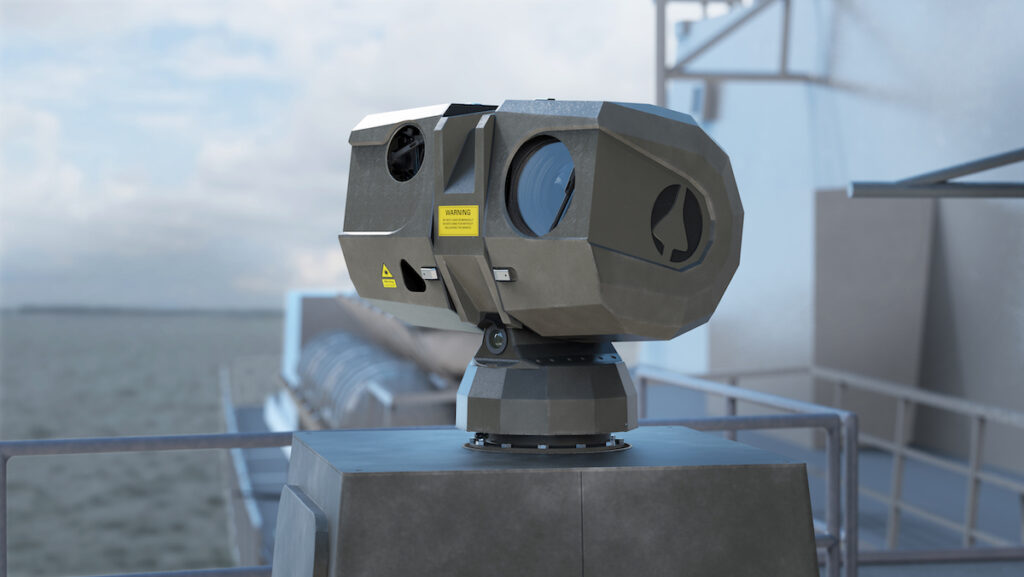
As a notable example, Chess Dynamics’ SeaEagle Fire Control Electro-Optical (FCEO) system is utilized by 11 navies globally, including the Royal Navy. It features advanced capabilities such as automatic target acquisition, precise tracking, and fire control, along with high-resolution thermal and TV sensors and a laser rangefinder.
Chess Dynamics Ltd – SeaEagle FCEO
The SeaEagle FCEO solution from Chess Dynamics is a stabilized electro-optical fire control system designed for the management of naval weapons against air, surface, and shore targets. It can control any operational naval gun, providing 24-hour detection, acquisition, tracking, identification, and engagement of air and surface targets through its thermal and TV sensors, with target range steadfast by a high-repetition laser rangefinder.
“We take pride in our SeaEagle FCEO advanced surveillance and electro-optical fire control system. It is currently in service with 11 navies, including the Royal Navy, on their Type 23 frigates and River-class Batch 2 offshore patrol vessels. The first installation was on HMS Somerset in 2006.
“It has demonstrated exceptional reliability, requiring servicing only every five years, depending on operational conditions. Some units have returned for service still functional after 10 years at sea, showcasing its durability and reliability.”
The FCEO serves as a vital asset for security, search and rescue, navigation, and mine avoidance. It can automatically track multiple targets, providing real-time, accurate fire control solutions to direct various weapons and effectors.
Features and Advantages
- 24-hour surveillance with high-accuracy tracking and fire control
- automatic slewing to radar, ECDIS, EW, or other CMS contact target indications
- Automatic acquisition and tracking of multiple surface and air targets
- Gunfire control for asuw, AAW, and NGS engagements with various ammunition types
- Designed for operation via a dedicated stand-alone console or multi-function consoles, fully integrated with a CMS or IBS
- Modular architecture allowing the use of nearly any desired sensors
- Gyro-stabilized
- Daylight (low-light) TV camera, Thermal Imager, and 10Hz Laser Range Finder (LRF)
- Camera wipers
Low maintenance, high reliability, long service life, and low cost of ownership
The importance of continuous situational awareness, visual target tracking, and weapon fire control has never been more critical in contemporary naval warfare. High-resolution cameras ensure consistent, enhanced performance both day and night. The integrated tracking, targeting, and situational awareness capabilities are essential for effective target identification and engagement.
The Chess Dynamics SeaEagle FCEO-A is the established analogue version of the FCEO, with over 140 systems delivered. Utilizing HSD-HD sensors, it boasts remarkably low latency and has proven effective for accurate gun control.
The SeaEagle FCEO-D represents the digital iteration of the FCEO, featuring all the key attributes of the FCEO-A but equipped with UHD sensors, a fully digital architecture, and an Ethernet interface.
Fire Control Radar in maritime Operations
Fire control radars are integral to modern maritime operations, delivering the precision necessary for effective naval engagements. These systems frequently enough integrate electro-optical capabilities with radar to detect, track, and engage targets with high accuracy.
Here’s a look at their applications and importance:
Core Components and Technologies
- FMCW Doppler Radar: Frequency-Modulated Continuous Wave (FMCW) doppler radar is utilized for its ability to acquire and precisely track multiple targets. It offers a low probability of interception and high resistance to electronic countermeasures (ECM) through minimal transmitter power and frequency agility.
- Ku Band/X Band Radar: Commonly used for their capacity to acquire and accurately track multiple targets at extended ranges, typically through higher transmitter power, more sensitive larger receiver antennas, coherence, and pulse compression. They usually feature frequency agility.
- Phased Array Radar: This higher-cost technology enables rapid beam steering and multiple target tracking, enhancing the system’s responsiveness and accuracy.
Applications in Maritime Operations
1. Surface Warfare (ASuW): Fire control radar and/or electro-optical systems are vital for detecting and engaging surface threats, with EO systems facilitating positive identification.
2. Naval Gunfire Support (NGS): Electro-optical systems, along with radar, are employed to provide precise naval gunfire support for ground forces. The ability to accurately target shore positions from the sea is crucial for supporting amphibious operations and coastal bombardments.
3. Anti-Air Warfare (AAW): These systems can be optimized to track and engage aerial threats, including drones, aircraft, and missiles. The integration of radar and optical sensors ensures accurate detection and tracking, even in challenging environments, with the added benefit of positive identification.
Chess Dynamics has developed innovative systems capable of controlling naval guns against air, surface, and shore targets, offering a versatile solution for various combat scenarios.
Technological Innovations
- Automation and AI: Modern fire control systems increasingly incorporate automation and artificial intelligence to alleviate the workload on operators. These technologies facilitate automatic target identification, acquisition, and tracking, enhancing response times and engagement success rates.
- Integration with Combat Systems: Electro-optical fire control radar systems can function as stand-alone systems but are typically integrated with combat management systems, allowing for seamless coordination between all sensors and weapons with command. This integration ensures that all available data is utilized for informed and timely targeting decisions.
Challenges and Countermeasures
- Environmental Factors: The performance of electro-optics can be influenced by weather conditions, possibly reducing surveillance range. In such cases, surveillance radars or other assets can be employed.
- Electronic Warfare: Adversaries may deploy electronic countermeasures (jamming) to disrupt radar signals. Modern systems counter these threats with features like frequency agility and low probability of intercept transmissions. The electro-optical system remains unaffected by jamming.
While a full phased array radar system can perform the functions of a fire control radar, they are typically large, heavy, and costly. Moreover, positive visual identification of the target is still necessary.
In situations where airborne assets may not be available for identification, an electro-optical surveillance system, with its precision, reliability, and other capabilities, becomes an essential tool in modern naval operations and engagements. With ongoing advancements in technology and AI, these systems will continue to evolve and play a crucial role in naval warfare.
SeaEagle FCRO
Chess Dynamics’s SeaEagle FCRO (Fire Control radar Optical) is a stabilized radar and electro-optical fire control system optimized for managing naval weapons against air, surface, and shore targets. It can control any operational naval gun, providing 24-hour detection, acquisition, tracking, and engagement of air and surface targets using an advanced Ku-band radar, with target identification supported by a thermal imager and daylight TV camera.
Features and Advantages
- Ku-Band Doppler radar enables acquisition and precise tracking of targets
- Low probability of interception and high resistance to ECM through minimal transmitter power and frequency agility
- 24-hour target identification via high-performance IR and TV cameras
- Automatic slewing to search radar contact indications
- Automatic target acquisition and tracking in both radar and EO
- Gunfire control for ASuW, AAW, and NGS engagements with various ammunition types
- Can operate as a stand-alone system or be integrated with a combat management system.
Conclusion
Fire control transcends merely launching missiles or firing weapons; it represents the integration of precision and technology, merging radar with optical and weapon systems to ensure that every shot is effective.
Discover more about the SeaEagle Fire Control Electro-Optical (FCEO) system >>