
Cellen and Phase one Collaborate to Revolutionize Drone Aerial Imaging
This partnership merges Cellen’s innovative hydrogen-powered H2-6 multirotor drone with Phase One’s P3 ultra-high-resolution aerial camera,creating a formidable platform that enhances flight endurance and imaging capabilities for commercial drone users.
The H2-6 drone, fueled by hydrogen, is engineered for industrial applications that require extended flight times and considerable payload capacity. Manufactured in the USA, this drone can carry loads of up to 10 lbs (4.5 kg), boasts a flight range of 20 km, and operates for over 2 hours on a single 12-liter hydrogen tank. It supports autonomous mission planning through software like QGroundControl or Mission Planner and is managed via a Herelink Ground Control Station (GCS). The H2-6 offers operators a quiet, zero-emission platform, substantially minimizing the number of flights needed for extensive mapping and inspection tasks.
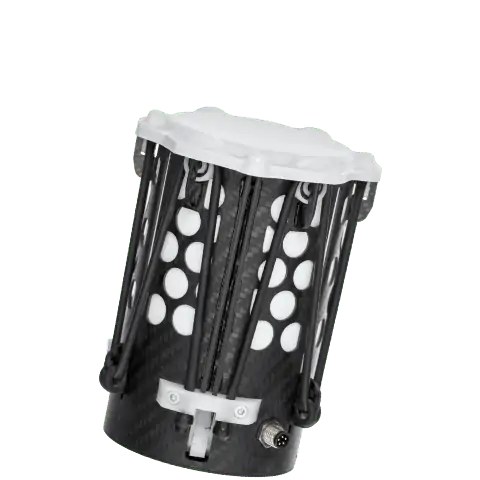
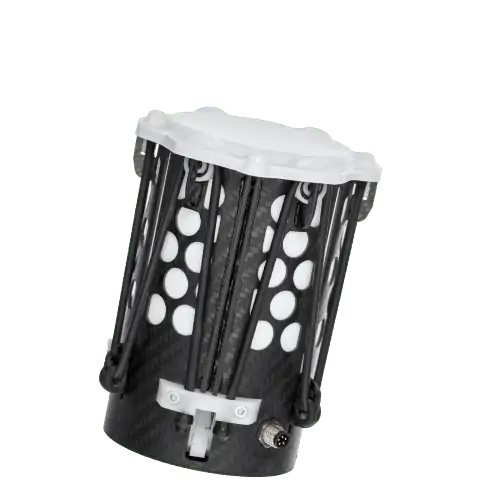
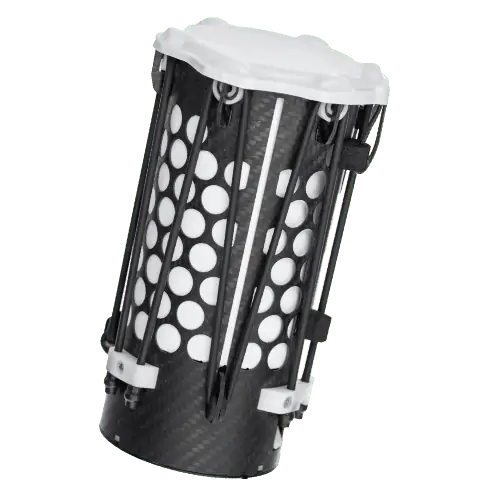
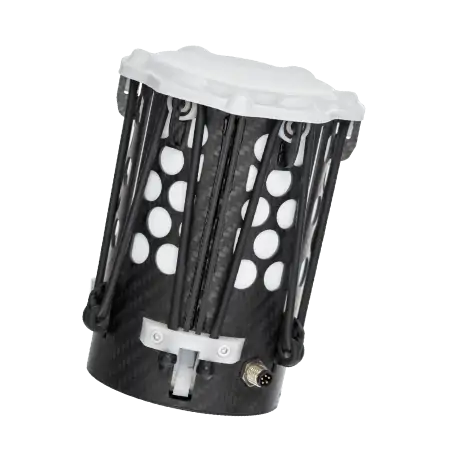
The P3 payload features a professional imaging system centered around the iXM-GS120 camera. With a 120 MP medium-format sensor and compatibility with RSM lenses such as the 80 mm, the P3 provides extraordinary image quality and detail. Its large sensor allows for higher altitude flights without compromising resolution, capturing more ground area per image and thus reducing the total number of photos needed. The P3 integrates flawlessly with the H2-6’s flight systems, enabling precise control and automated image capture during missions.
Case Study: mapping Mission
In a recent case study, Cellen and Phase One conducted a mapping mission over a vast 2,000-acre solar farm to assess performance.The objective was to obtain high-resolution images for panel inspection and site documentation at a ground sample distance (GSD) of 0.12 inches.The DJI M350, equipped with a P1 sensor and a 35 mm lens, operated at an altitude of 80 ft AGL with 80% forward and 70% side overlap, achieving a flight duration of 39 minutes. In contrast, the H2-6, carrying the P3 (GS120) with a 35 mm lens, flew at 101 ft AGL with the same overlap and maintained a continuous flight for 2 hours.
| Platform | Camera | Altitude | Overlap (F/S) | GSD | Flight Endurance | Area Covered per Flight | Total Flight Time | Flights Required |
| DJI M350 | P1 (35mm) | 80 ft | 80% / 70% | 0.12″ | 39 min | ~75 acres | 17.5 hours | 27 flights |
| Cellen H2-6 | P3 (35mm) | 101 ft | 80% / 70% | 0.12″ | 2 hours | ~250 acres | 16 hours | 8 flights |
Considering sensor capabilities and altitude, the M350 was estimated to cover around 75 acres per flight, necessitating 27 flights to complete the project. Conversely, the H2-6 was projected to cover approximately 250 acres per flight, accomplishing the same mission in just 8 flights.
Although the H2-6 has slightly less total flight time, its reduced number of takeoffs and landings leads to fewer mission disruptions, more reliable data collection, and considerable time savings in logistics and ground operations.
The synergy between Cellen’s hydrogen drone and Phase One’s cutting-edge aerial imaging technology opens up new possibilities for drone operations. Operators can now undertake high-resolution, large-area missions with fewer takeoffs, diminished operational risks, and enhanced efficiency. This solution streamlines on-site time, simplifies logistics, and guarantees clients receive top-quality data. For drone service providers aiming to expand their operations or stand out in the market, the H2-6 paired with the P3 is a game-changing asset.
Cellen is currently showcasing their innovations at XPONENTIAL 2025 in Houston. Visit Booth 4306 to meet the team!