

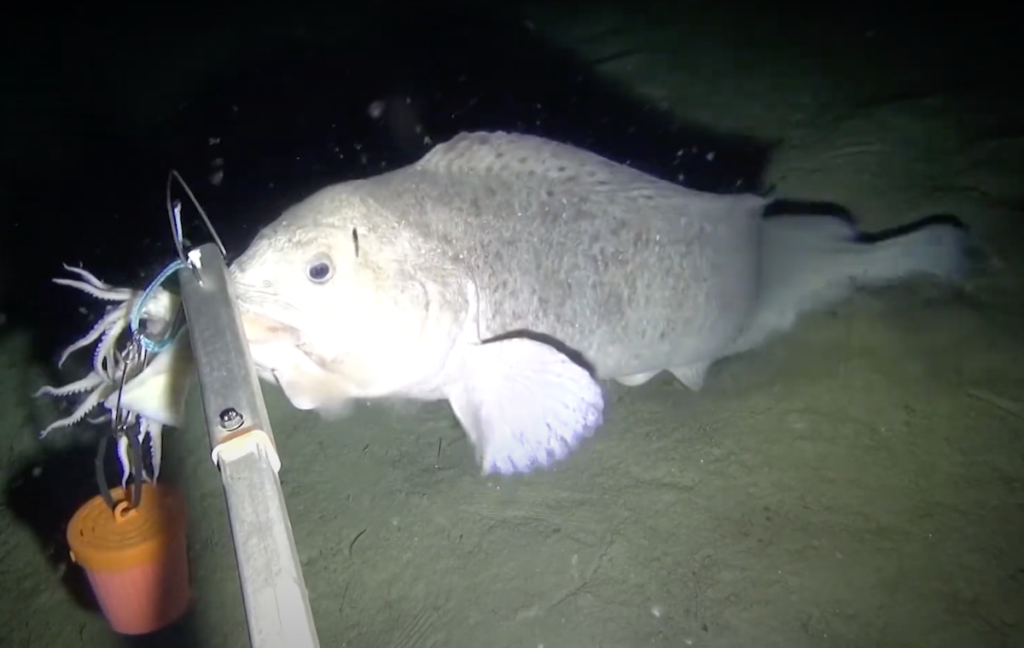
SubC Imaging has forged a robust partnership with the Department of Fisheries and Oceans Canada (DFO), aligning their missions to safeguard marine ecosystems while fostering growth in the marine and fisheries sectors.
For several years, SubC Imaging’s underwater cameras and technology have been instrumental in delivering dependable data that supports the vitality and sustainability of aquatic habitats.
The autonomous underwater camera system from SubC has substantially aided DFO’s biophysical and ecological evaluations of the Labrador Sea Frontier Area (LSFA). Findings from the LSFA reveal that it is a year-round habitat for migratory marine mammals and various fish species.
Many of these species are at risk of conservation, while others are particularly vulnerable to human activities. At the time of the assessment, data regarding the region was scarce.
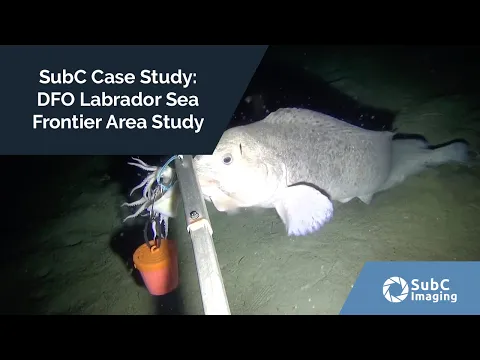
Innovative Subsea Technology from SubC Imaging
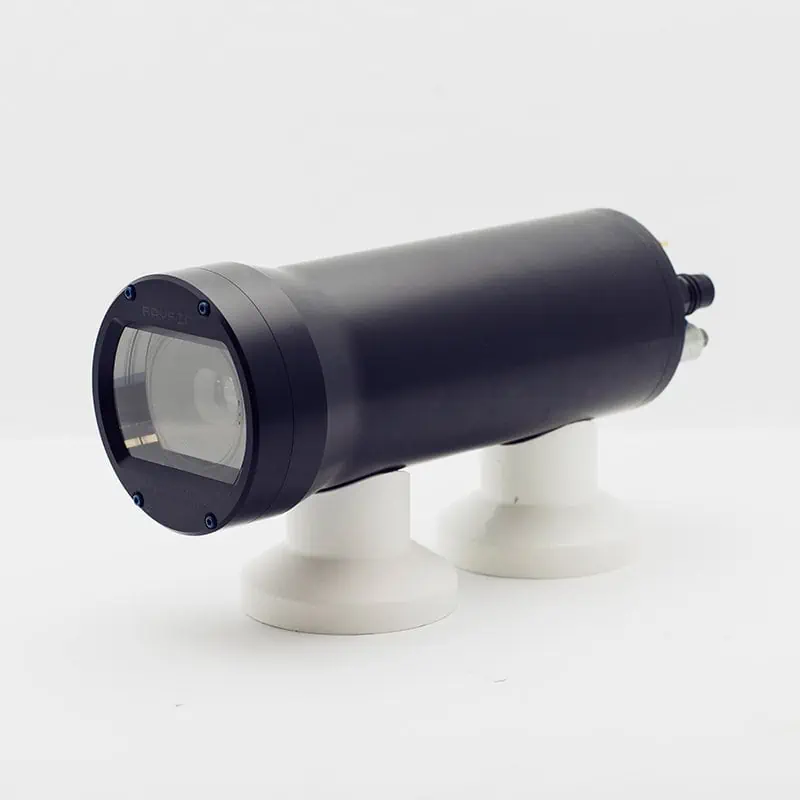
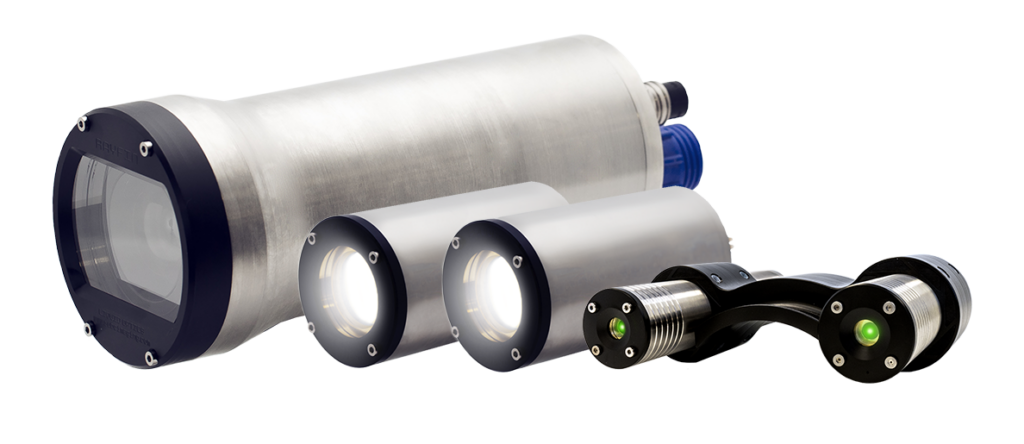
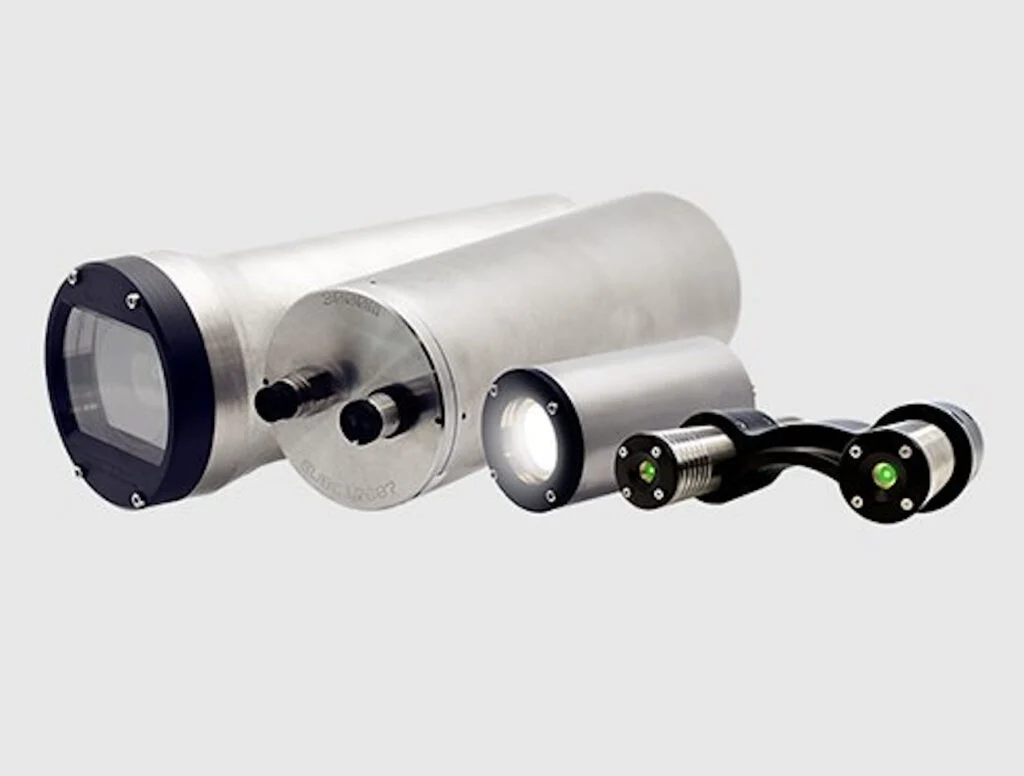
SubC’s autonomous underwater camera system features a high-definition video camera capable of capturing time-lapse footage and high-resolution still images, equipped with LED lights mounted on a bait trap.
The camera is programmable, and the entire setup operates on a low-power battery, allowing for prolonged deployments at sea without the need for real-time control.
Due to the limited prior knowlege of the area, extensive data collection was essential for a thorough ecosystem assessment to aid in conservation strategies.
SubC’s technology enabled research that filled critical data voids for the LSFA, allowing scientists to gather essential information on mesopelagic and demersal fish populations, as well as benthic community structures.
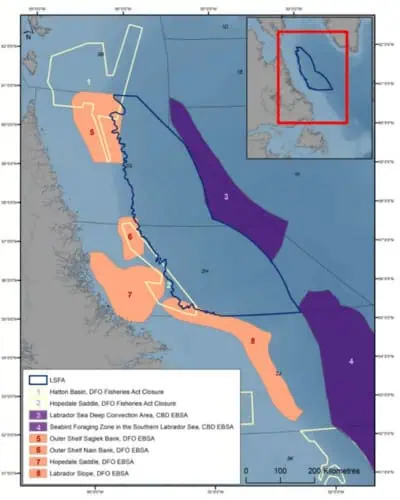
The Labrador Sea Frontier Area (LSFA)
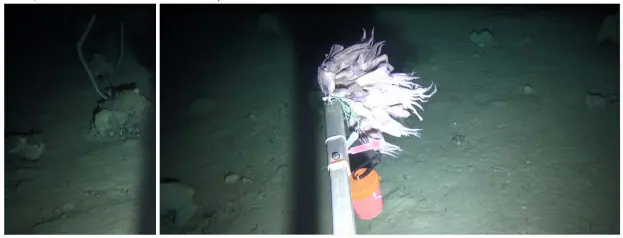
Footage captured by DFO revealed the presence of brittlestars (Ophiurida) and shrimp (Caridea) at depths exceeding 2,000 meters. Remarkably, there are over 2,000 species of brittlestars, with more than half residing at depths greater than 200 meters.
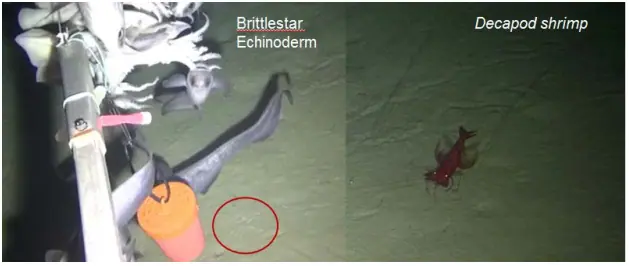
Baited video captures of a brittlestar (ophiurida; red circle, left panel) and an Aristeidae shrimp (right panel) in the Labrador Sea Frontier Area.
Recognizing Indicators of Climate Change
Bamboo coral,another species documented during the baited camera trap deployment,serves as a crucial environmental indicator for long-term climate change research,with some specimens believed to be over 4,000 years old.
Though, deep-sea corals are particularly susceptible to the impacts of bottom trawling. Additional species observed in the footage included krill,red shrimp,wolf fish,and hagfish.
Bamboo corals (left panel) and sponge fields (right panel) observed during baited camera surveys in the Labrador Sea Frontier Area.
Cost-Effective Research Solutions
Researching in the challenging surroundings of the Labrador Sea necessitates affordable and efficient equipment. Operating within budgetary limits, it is crucial to utilize tools that yield high-quality data.
SubC Imaging’s autonomous camera system streamlines operations by minimizing the need for intricate cabling and infrastructure, as it can be deployed using a straightforward wire winch.
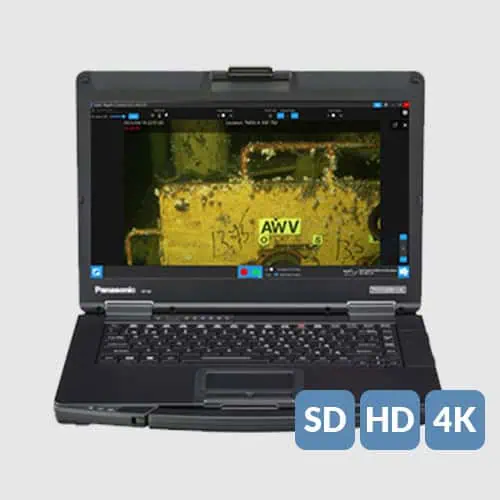
The integrated scripting feature of SubC’s 4K and HD underwater cameras allows them to function autonomously without the need for an external computer or additional personnel to issue scheduled commands.
Read the original article >>