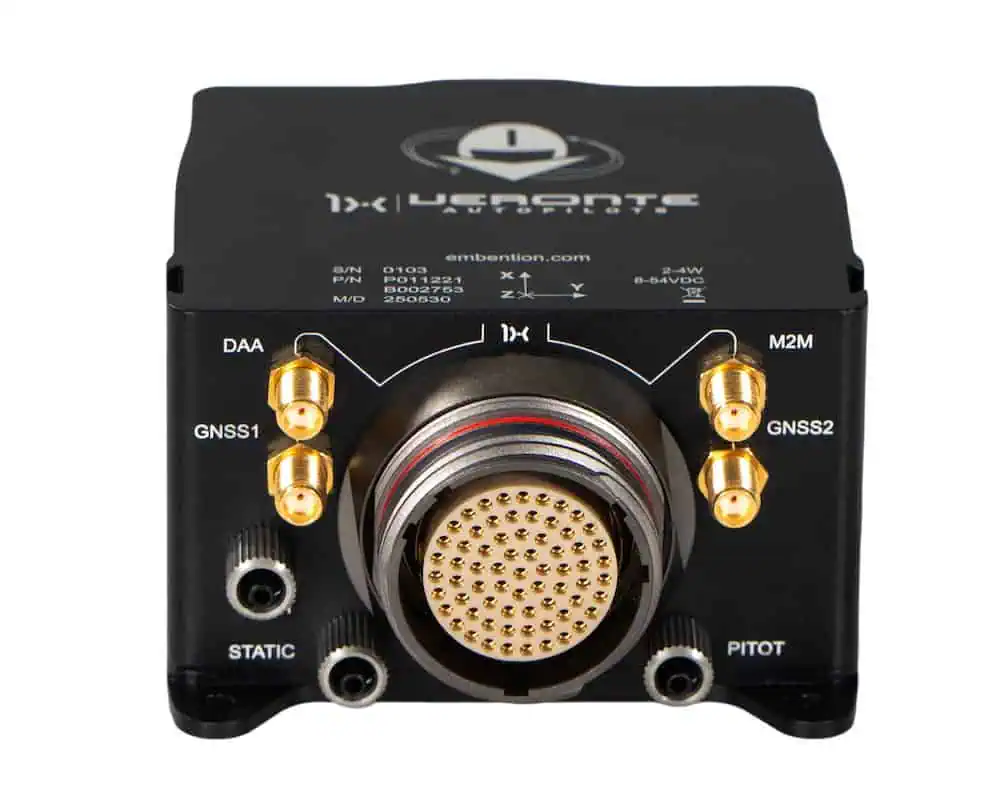



Embention Unveils Enhanced veronte Autopilot 1x 4.12 for Unmanned Aerial Vehicles
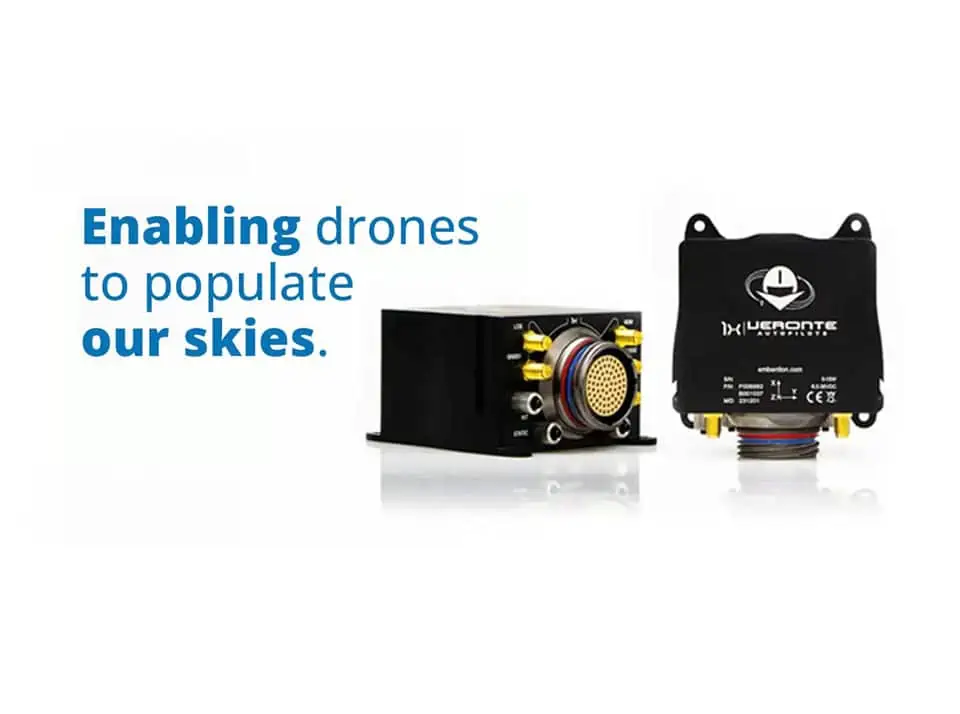
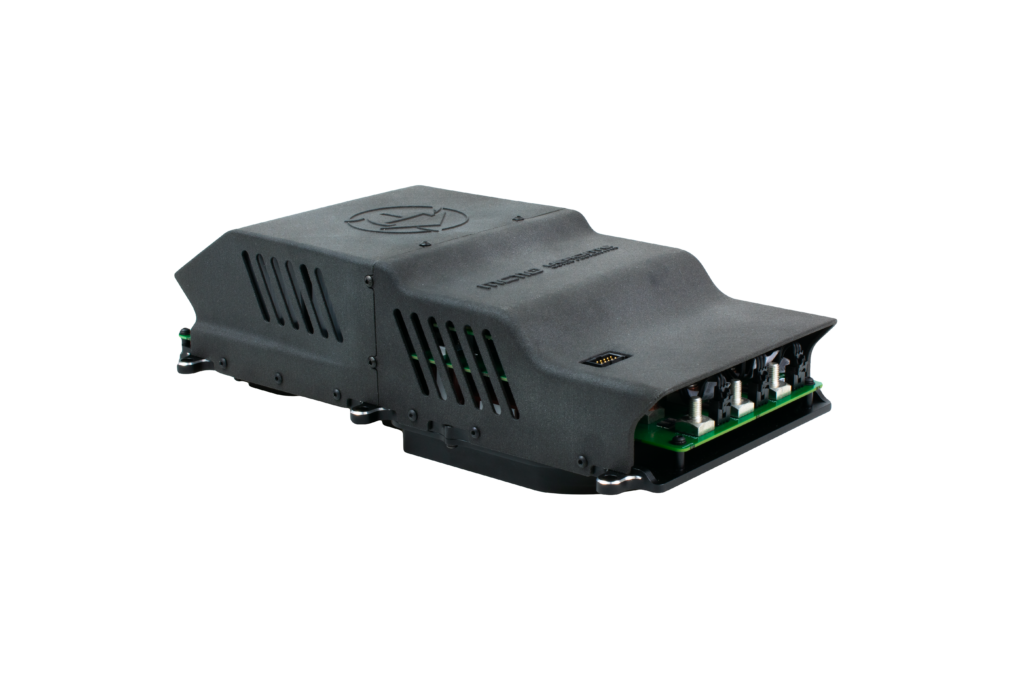
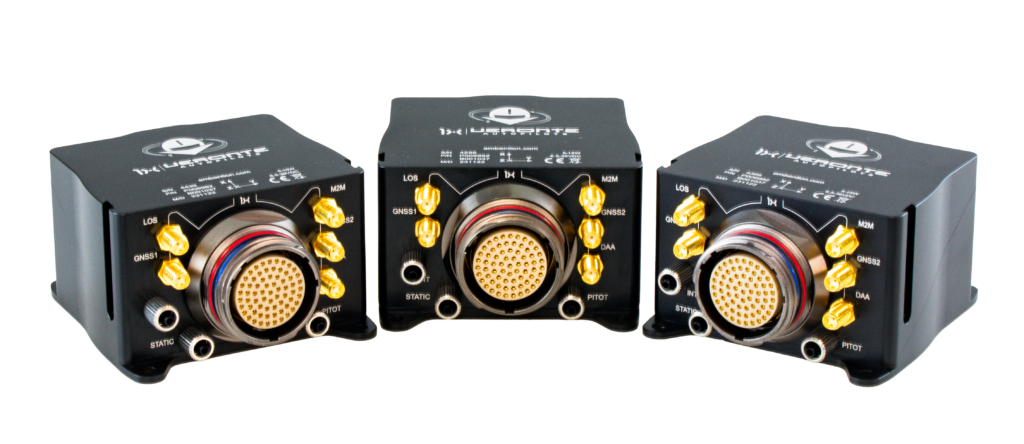
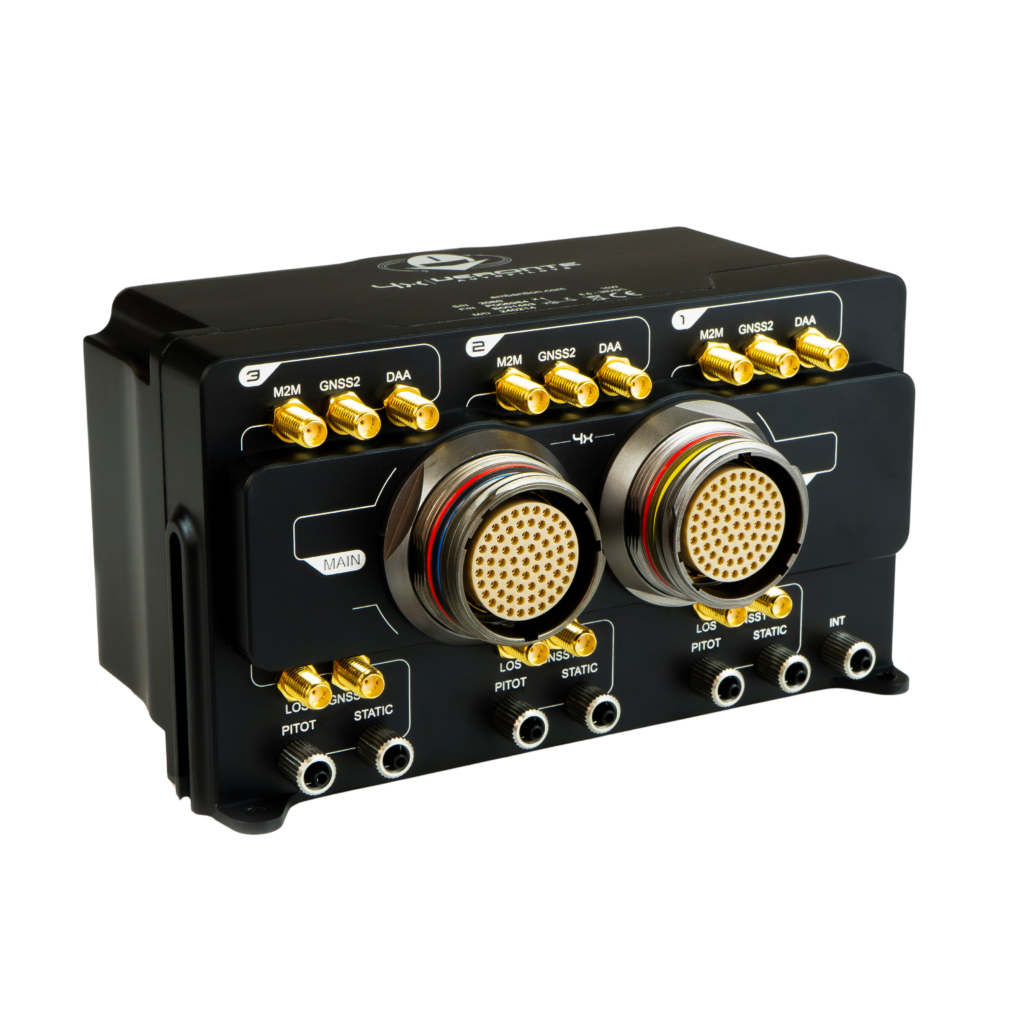
Embention has launched the Veronte Autopilot 1x 4.12, a cutting-edge flight control system that brings ample improvements in sensor precision, communication capabilities, processing efficiency, and overall system reliability.
Advancements from Previous Versions
Following the successful introduction of version 4.8 in 2022, this latest iteration highlights Embention’s dedication to enhancing the safety, accuracy, and functionality of unmanned aerial systems, all while maintaining a compact form factor.
Revolutionary Sensor Suite
The core of the 4.12 upgrade features a redesigned sensor suite that promises outstanding accuracy and durability in challenging operational settings. The Global navigation Satellite system (GNSS) performance has seen significant enhancements, including better error reporting, refined jamming detection, and upgraded Real-Time Kinematic (RTK) capabilities for centimeter-level positioning. A newly added third GNSS module, compliant with TSO C199 standards, enhances redundancy and precision, while an improved magnetometer design minimizes interference, ensuring reliable heading data even in electromagnetically active environments.
Enhanced Safety Features
Safety-critical operations have been bolstered with an upgraded independent safety Microcontroller (SuC), which now accommodates flight termination system (FTS) triggers in response to critical failures or manual commands. Fully compliant with Light-UAS.2511 containment standards, this subsystem includes a dedicated power supply, an independent datalink input, and built-in self-diagnostic tests to continuously monitor the main processor. The SuC can activate the FTS based on customizable parameters, enhancing operational safety in high-stakes scenarios.
Versatile Communication Architecture
the Veronte Autopilot 1x 4.12 introduces a more adaptable communication framework, facilitating seamless integration into both Line-of-sight (LOS) and Beyond Visual Line-of-Sight (BVLOS) systems.An internal 4G LTE M2M module guarantees reliable connectivity, while the previous internal LOS module has been replaced with a dedicated I/O channel, allowing users to select and configure external LOS or BLOS modules via Ethernet or serial connections.
Boosted Processing Power
To cater to the evolving demands of elegant UAV applications, the 4.12 release features a revamped computing architecture that offers a 1.3x increase in processing power and double the RAM capacity. These upgrades result in a 25% overall enhancement in system performance, enabling quicker data processing, reduced latency, and support for advanced onboard functionalities and real-time control logic.
Flexible I/O Configuration
The new Veronte 1x also boasts a more versatile and powerful I/O setup. The number of RS232 and RS485 ports has been increased to two each, and the CAN Bus interface now supports both CAN 2.0 and CAN FD. USB connectivity has been replaced with Ethernet for faster and more reliable data transfer.General-purpose inputs/outputs (GPIO/PWM) have been updated to accommodate higher voltage levels (now 8 channels at 5V), while the analog-to-digital converter (ADC) inputs now support expanded voltage compatibility, including 36V inputs for demanding applications.
Durability and Electrical Protection
Significant improvements have also been made in durability and electrical protection. The 4.12 unit features reinforced construction for enhanced shock and vibration resistance, along with advanced inrush current protection and reverse polarity safeguards on all inputs. Internal isolation has been optimized to bolster overall system stability, and the integrated GNSS module now meets TSO standards, facilitating certification in regulated airspace environments.
Seamless Upgrade for existing Platforms
Despite the extensive array of new features and performance enhancements, the Veronte Autopilot 1x 4.12 retains the same physical dimensions and weight as its predecessor. This ensures that existing UAV platforms can transition to the new version with minimal reconfiguration,making it an attractive upgrade for operators looking to enhance their systems.