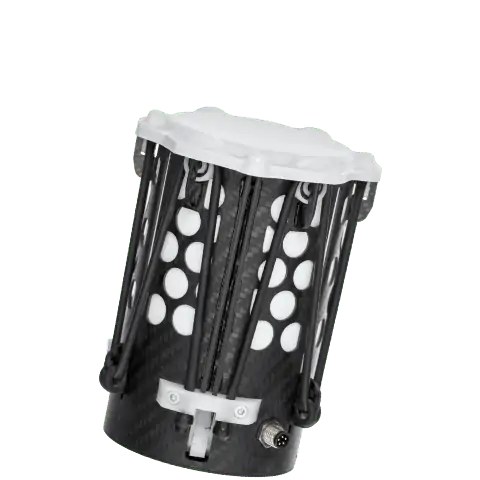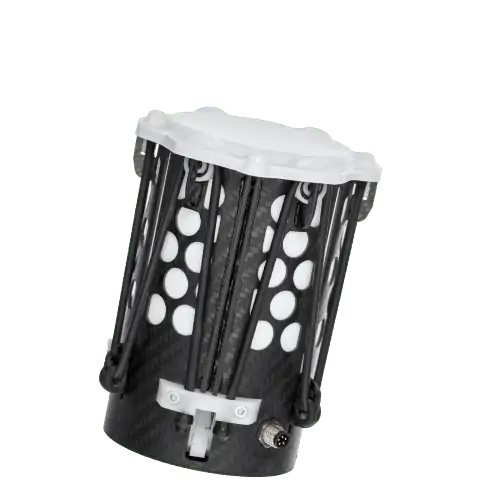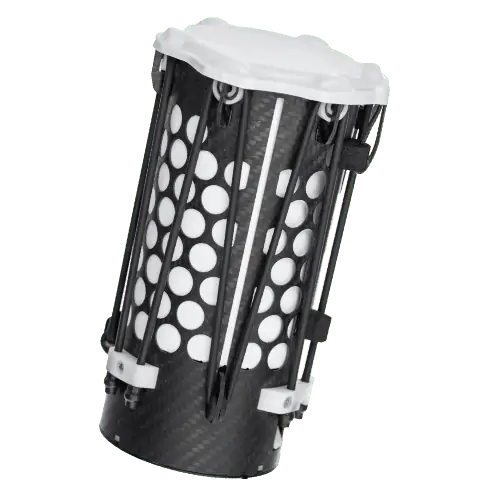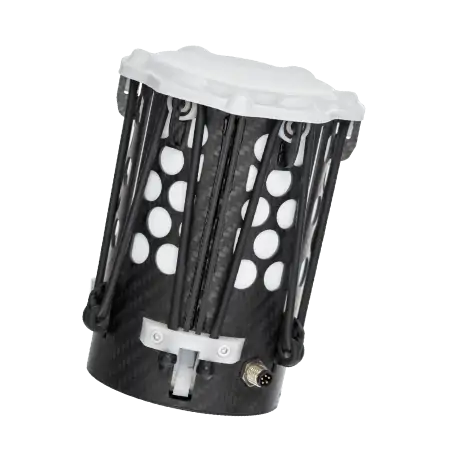

Advanced Navigation has published a comprehensive whitepaper demonstrating the capabilities of its Hydrus autonomous underwater drone in effectively gathering data and coordinates from a shipwreck site.
The Hydrus drone exhibited its advanced features during a mission at the rottnest ship graveyard located off the coast of Western Australia. the primary goal was to accurately identify the position of an unidentified shipwreck and to capture high-resolution imagery for the progress of a digital twin.
Access the complete whitepaper here > >
Mission Summary
Mapping the Wreck Site
In the initial reconnaissance phase, Hydrus followed a spiral flight path starting from the last known coordinates of the wreck. Operating at a stable altitude of 3 meters above the seabed, Hydrus utilized its integrated systems to navigate through moderate currents without anchoring, thereby preserving the integrity of the site and its surroundings. This phase was successfully completed in a mere 90 minutes.
Comprehensive Site Scanning
Following the initial data analysis to confirm the wreck’s location, the team utilized Hydrus’ intuitive mission planning software to conduct a thorough survey. The drone was redeployed, employing a “lawn mower” pattern to ensure extensive coverage of the wreck site. This phase underscored its autonomous capabilities, allowing for precise data collection without manual intervention.
Micro AUV Hydrus Captures Shipwreck by Advanced Navigation on Sketchfab
Supplementary Survey for Enhanced Data
Experts from Advanced Navigation have pinpointed several areas that warrant further investigation.By leveraging the mission planning software alongside the geo-referenced data collected, the team can accurately replicate follow-up missions to these targeted areas of interest.
The information gathered facilitated the creation of high-fidelity 3D photogrammetry models, allowing for an in-depth analysis of the shipwreck within its ecological setting and providing valuable insights into its past context. This study also highlights the adaptability of Hydrus for various applications, including geohazard assessments and site investigations.
The whitepaper further explores:
-
Comparative Analysis with Divers and ROVs – evaluate the efficiency and effectiveness of Hydrus in comparison to traditional divers and remotely operated vehicles (ROVs).
-
Eliminating Barriers to Entry – learn how Hydrus simplifies the process by reducing costs and complexities.
-
Cost-Benefit Analysis of Site Investigations – discover the financial advantages of utilizing Hydrus as illustrated in the case study.
Access the complete whitepaper > >
Join the Advanced Navigation team this week at Oceanology International, Stand K350.