

LCR Embedded systems, a prominent innovator in integrated systems, chassis, and backplanes for unmanned aerial vehicles (UAVs) and other autonomous systems, highlights a notable increase in the aerospace and defense industries’ demand for 100Gb connectivity.
This rising demand stems from the growing requirements for real-time data transmission, improved dialog, signal intelligence, operational efficiency, and enhanced cybersecurity measures.
In response, semiconductor manufacturers have rapidly introduced new SOSA-compliant 3U and 6U payload modules that support 100 GbE (100GBASE-KR4) and PCI Express® (PCIe) Gen-4 protocols across various processing units, FPGAs, and switching devices.
This evolution necessitates backplanes that can handle data rates of 25Gbps per lane, a substantial upgrade from the earlier 10Gbps standard.
This advancement is made possible by several key innovations in networking technology, such as enhanced signal processing methods, faster transceivers, and high-speed connectors.
These technological breakthroughs have enabled the integration of 100Gb connectivity into rugged embedded computing applications, particularly in the challenging environments of aerospace and defense.
to ensure the high signal integrity required for these applications, new high-speed PCB laminates are now utilized. These laminates support the 25Gb per lane data rates essential for 100Gb connections, which are vital for the reliability and performance of defense systems. LCR’s 100Gb SOSA-compliant VPX systems exemplify solutions that harness these advanced technologies to address the evolving demands of the defense sector.
harnessing 100Gb Connectivity
The implementation of 100Gb connectivity effectively resolves long-standing bandwidth constraints in military operations, where existing systems have faced challenges due to limited bandwidth and high latency.
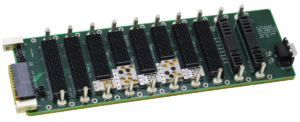
This technological leap allows command centers to access real-time situational awareness data, coordinate troop movements, and communicate with deployed forces more efficiently. the capability to transmit information and locations instantaneously is crucial, as it can significantly impact outcomes on the battlefield.
Enhancing Remote Operations
In remote and opposed settings,the success of missions increasingly relies on high-speed,real-time remote control,telemetry,and data transmission for both manned and unmanned systems.
This level of connectivity supports a variety of essential functions in battlefield management, including situational awareness, reconnaissance, surveillance, weapons control, and the safeguarding of deployed personnel.
The secure and dependable communications enabled by 100Gb connectivity are vital in these scenarios, ensuring rapid responses to evolving operational challenges.
Discover more about LCR Embedded Systems’ AoC3U-821 ATR Chassis for VPX and SOSA-compliant cards >>
Strengthening Cybersecurity
The enhanced bandwidth provided by 100Gb connectivity significantly bolsters cybersecurity operations by facilitating the implementation of advanced encryption and security protocols. Five years ago, while certain encryption technologies were in development, their effectiveness was limited by the lower bandwidth of 10Gb systems.
The transition to 100Gb connectivity has made it feasible to deploy these robust security measures, effectively addressing the evolving digital threats with greater efficiency. This progress ensures improved protection of sensitive data and critical infrastructure in today’s high-speed network environments.
Advancements in Signals Intelligence
Signals intelligence, which depends on the swift transfer of intercepted signals, also benefits significantly from 100Gb connectivity.
Rapid data transfer enables quicker signal processing and analysis, which are essential for maintaining strategic and tactical advantages in intelligence operations. This capability ensures timely decision-making and enhances the effectiveness of electronic countermeasures.
Revolutionizing Electronic Warfare
In the realm of electronic warfare, a diverse range of frequency bands (from 30 KHz in the VLF range to 3GHz in the UHF range) is utilized for various applications such as communication, surveillance, radar, jamming, and countermeasures.
The digitization of these signals generates vast data streams,often likened to a “firehose” of information,which must be efficiently processed and distributed by embedded systems.
VPX systems equipped with 100Gb capabilities are crucial in managing these demanding data processing requirements, enabling high-performance computing in military applications.
The integration of 100Gb connectivity in VPX systems represents a significant advancement in embedded computing for defense. It facilitates faster data transfer, improved performance, and enhanced scalability, ensuring that military personnel receive actionable, real-time information essential for mission success.
Read the original article >>