
Black Swift Technologies Partners with NASA for Advanced Volcanic Research
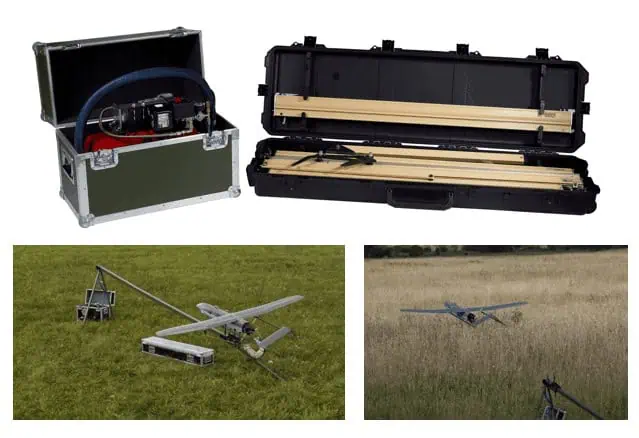
Black Swift Technologies (BST) has secured a contract with NASA to create a specialized scientific platform aimed at studying volcanoes. This initiative is designed to enhance air traffic management systems and improve the precision of ashfall measurements. BST will provide NASA with a comprehensive small unmanned Aerial System (sUAS) that integrates an airframe, avionics, and sensors tailored to monitor specific gases and atmospheric conditions, including temperature, pressure, humidity, and three-dimensional wind patterns, along with advanced metrics like particle sizing and trace gas analysis.
Engineered for Extreme Conditions
The SuperSwift XT, based on BST’s commercially available SuperSwift airframe and SwiftCore flight Management System, is meticulously designed to handle the challenges of high-altitude flights, notably in turbulent winds and hazardous airborne particulates that are common in demanding scientific fieldwork.
“Agencies like NASA require outputs that are both precise and dependable,” states Jack Elston, Ph.D., CEO of Black Swift Technologies. “The SuperSwift XT will be optimized for data collection in extreme environments, thereby enhancing the capabilities of NASA’s Airborne Science fleet.”
Broad Applications for Atmospheric Research
Organizations involved in NASA’s Airborne Science Program will benefit from the data generated by this system across various atmospheric conditions. The design allows for easy interchangeability of sensor payloads, enabling the sUAS to provide targeted, in situ observations from previously unreachable areas. This capability is crucial for advancing NASA’s mission of promoting safe and efficient growth in global aviation by facilitating the collection of scientific data that informs predictive Volcanic Ash transport and Dispersion (VATD) models, which are essential for air traffic management.
Streamlined Mission Planning and Data Collection
Utilizing BST’s proprietary Mission Planning Software, scientists can quickly program the SuperSwift to assess specific areas and initiate data collection for immediate analysis.The flight planning process is user-friendly, featuring a tab-driven interface, while mission monitoring and mapping can be conducted via a handheld Android tablet equipped with BST’s swifttab software. Gesture-based controls allow users to operate the SuperSwift with minimal training, enabling data collection across diverse geographical landscapes.
Enhancing data Calibration and Validation
The introduction of a sUAS capable of routinely carrying essential instruments through challenging environments considerably contributes to the calibration and validation of data gathered from ground and satellite sources. The SuperSwift XT’s operational capabilities and robust design will enable researchers to obtain data that was previously inaccessible through conventional methods. This includes critical datasets from volcanic plumes shortly after eruptions, such as particle size-frequency distribution, vertical ash concentration, and sulfur dioxide (SO₂) flux.
Expanding Scientific and Commercial Applications
The innovative features of the SuperSwift XT,including its comprehensive sensor suite,can be leveraged for scientific research by federal and state agencies,as well as state-funded laboratories. This technology is poised to collect data on various atmospheric phenomena,including smog,volcanic plumes,wildfire smoke,and forest humidity. Additionally, ther are commercial opportunities for private industries, such as using the SuperSwift XT to evaluate the composition and potential hazards of chemical fires at refineries or to analyse the emissions from smokestacks.