
Innovative Partnership for Eco-Amiable USV Production
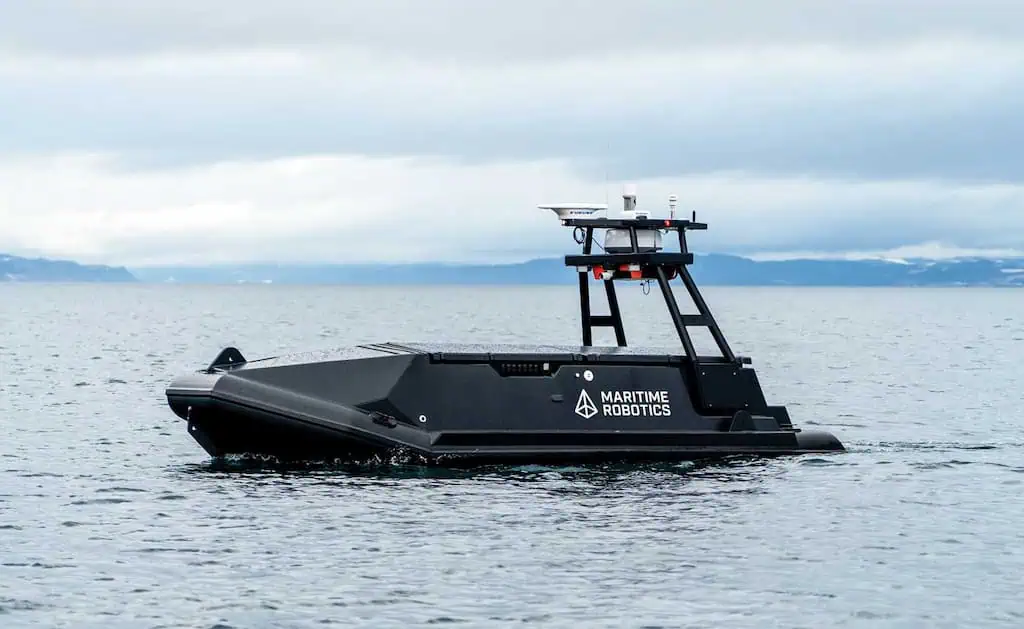
On Earth Day, Maritime Robotics announced a important collaboration with AKVA group Helgeland Plast, marking a pivotal move towards sustainability by utilizing climate-neutral materials for the hulls of their Mariner Uncrewed Surface Vessels (USVs).
Commitment to Sustainable Practices
AKVA group has recently achieved the ISSC PLUS certification, which recognizes their commitment to incorporating bio-based and recycled materials in their plastic manufacturing processes. This certification ensures that all boat hulls will now be crafted from these environmentally friendly materials.
A Long-Standing Collaboration
The partnership between these two Norwegian firms has been ongoing for several years, focusing on the production of Uncrewed Surface Vessels (USVs). This transition from conventional fossil-based materials to sustainable plant-derived alternatives allows for the creation of climate-neutral boat hulls without sacrificing quality or safety. Both Maritime robotics’ Mariner USV and AKVA group’s Polarcirkle boats are known for their reliability and durability, making them ideal for challenging maritime conditions while also promoting a greener approach.
Voices from the Industry
Børge Sørlie of Maritime Robotics emphasized the importance of collaboration in their growth strategy: “As we expand rapidly, strong partnerships are essential for scaling sustainably. Our collaboration with AKVA group Helgeland Plast enables us to deliver products that enhance safety and lower CO2 emissions for our clients in a more environmentally friendly manner.”
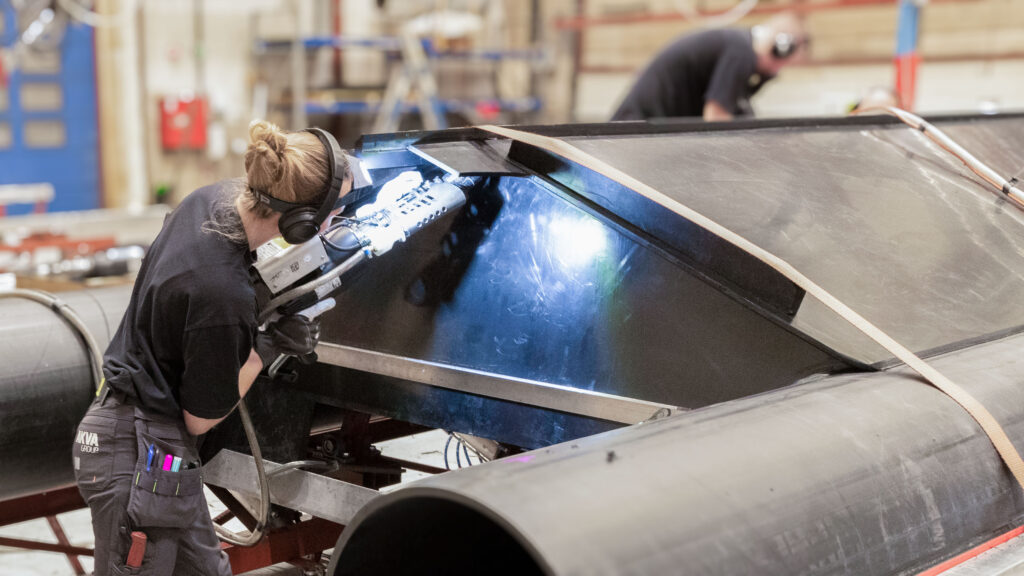
Freddy Bakken from AKVA group Helgeland Plast remarked on the importance of Earth Day for their initiatives: “this day serves as an excellent reminder of our commitment to minimizing plastic waste, a cause that resonates deeply with us.”
He further stated, “With our recent ISCC PLUS certification and the shift towards bio-based and recycled materials, both Helgeland Plast and Maritime Robotics are making significant strides towards a more sustainable maritime technology landscape.”
Bakken concluded,“This partnership exemplifies how two industry leaders can collaborate to develop innovative products that not only address current demands but also pave the way for a more sustainable future.”