

Advanced Navigation Expands Horizons with Vai Photonics Acquisition
Advanced Navigation has recently completed the acquisition of Vai Photonics, a spin-off from the Australian National university (ANU) that specializes in cutting-edge photonic sensors designed for high-precision navigation.
Shared Vision for Autonomous Technology
Both companies are united by a common goal: to advance technology that propels the autonomy revolution. By integrating Vai Photonics into its operations, advanced Navigation aims to transform innovative research into practical applications for autonomous systems across various domains, including land, air, sea, and space.
Strategic Growth Initiative
This acquisition, finalized in April 2022 after meeting standard closing conditions, is a key component of Advanced Navigation’s broader strategy to enhance its offerings in deep technology sectors. The Vai Photonics team has now become part of Advanced Navigation’s research and advancement division, which is based in a newly established facility in Canberra.

Innovative Technology for the Future
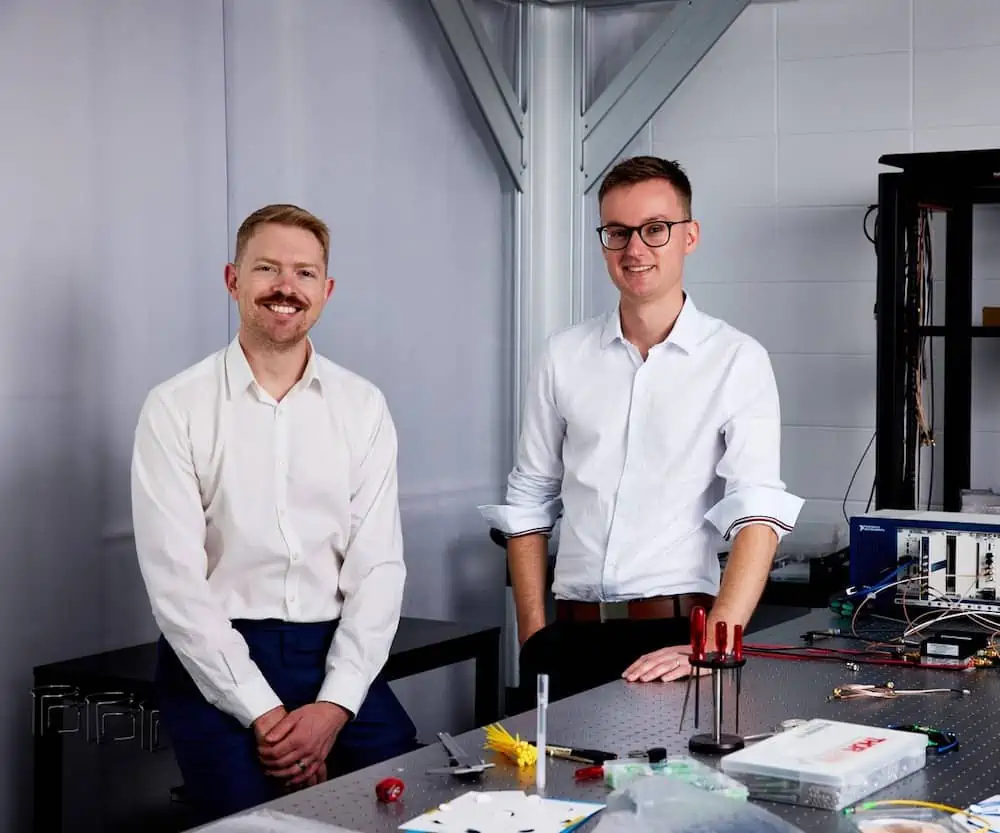
Xavier Orr, CEO and co-founder of Advanced Navigation, emphasized the meaning of vai Photonics’ technology in the evolving landscape of autonomy. “The collaboration between our teams will position us at the forefront of robotic and autonomous technologies.Photonic innovations are essential for ensuring the safety, reliability, and overall success of these systems. We are eager to introduce the next generation of autonomous navigation and robotic solutions to the global market,” he stated.
James spollard, CTO and co-founder of Vai Photonics, highlighted the challenges of precision navigation in environments where GPS is unreliable. “Our advanced photonic sensing technology will provide positioning and navigation capabilities that are significantly more stable and accurate than current solutions. By integrating laser interferometry and electro-optics with sophisticated signal processing and real-time software, we can determine a vehicle’s speed in three dimensions, allowing us to accurately track its movement and location,” he explained.
Applications Across Multiple Sectors
Having been in development for over 15 years at ANU, this technology is poised to address complex challenges in various fields, including aerospace, automotive, meteorology, space exploration, and logistics.
As an example, aircraft equipped with electric Vertical Take-Off and Landing (VTOL) systems, such as flying taxis, will greatly benefit from this technology. Vai Photonics sensors will ensure safe and reliable autonomous takeoffs and landings in all conditions.
Moreover, the complexities and risks associated with space travel make this technology invaluable for space missions, positioning Advanced navigation as a leader in space-qualified navigation systems.

Transforming Research into Reality
Professor Brian Schmidt,Vice-Chancellor of ANU,remarked on the significance of Vai Photonics as a prime example of how essential research can lead to impactful technologies. “The innovations driving Vai Photonics’ advanced navigation systems originated from the quest to detect gravitational waves—subtle ripples in space-time caused by monumental cosmic events like colliding black holes,” he noted.
“The team has leveraged over a decade of research in ultra-precise laser measurements, digital signals, and quantum optics to develop their groundbreaking navigation technology. We are proud to have supported Vai Photonics thru our Center for Gravitational Astrophysics and commercialization initiatives. It’s thrilling to witness their progress,” he added.
Dr. Lyle Roberts, CEO and co-founder of vai Photonics, expressed enthusiasm for the partnership: “This collaboration with Advanced Navigation is a notable milestone for our team. It allows us to expedite our product launch and gain access to top-tier research facilities and distribution networks. We are excited about the future and look forward to navigating it alongside Advanced Navigation.”