

The Federal Aviation Administration (FAA) has recently revised its Part 107 Waiver Safety Explanation Guidelines (WSEG) and Guiding Questions, notably incorporating the concept of Detect and Avoid (DAA).
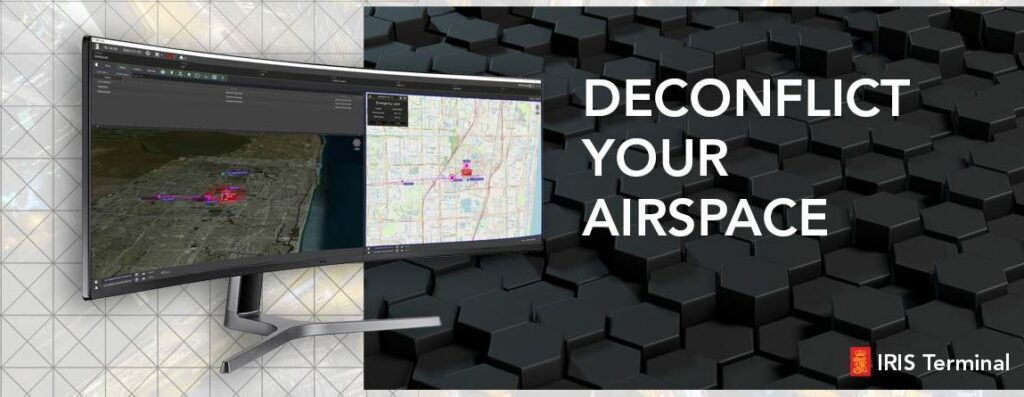
This article from Kongsberg Geospatial explores how its airspace visualization and conflict resolution software, IRIS Terminal, addresses several inquiries outlined in section 107.31, particularly in relation to integrating DAA with Concept of Operations (CONOPS) for waiver submissions.
Understanding Visual Line of Sight Operations Under 107.31
Section 2 b. 1) What type of DAA system will be utilized? Radar, acoustic, or visual?
IRIS Terminal is designed to be compatible with various DAA hardware sensors. It seamlessly integrates with leading unmanned aerial systems (UAS) sensors,such as Echodyne EchoGuard,IRIS automation Casia G,and Thales SQUIRE,while also supporting a range of industry standards. This ensures future compatibility with emerging sensors (e.g.,Asterix CAT021,048,JSON,REST,MQTT). additionally, IRIS Terminal can visualize outputs from multiple sensors at once, overlaying them on a single interface and correlating duplicate tracks when multiple sensors detect the same aircraft.
Section 2 b. 4) Is there sufficient low-altitude DAA coverage for ground-based systems?
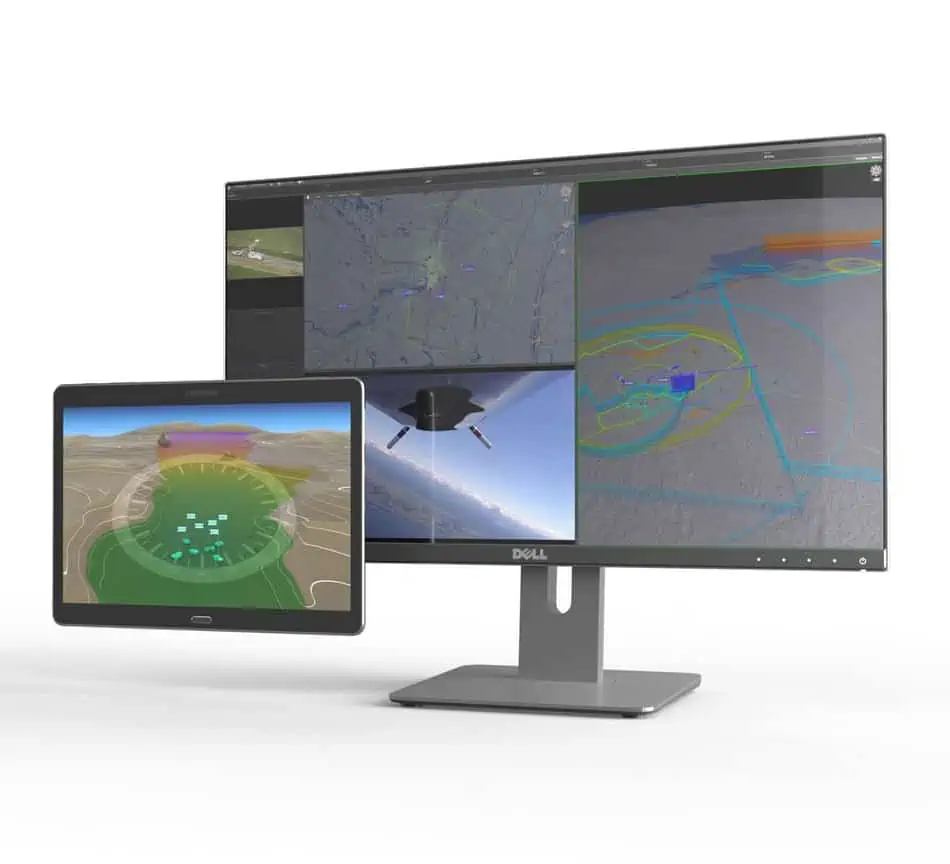
IRIS Terminal includes a ‘sensor viewshed’ feature that is particularly useful in complex 3D terrains. Beyond Visual Line of Sight (BVLOS) operators can pre-plan sensor placements by visualizing the actual line of sight viewshed, ensuring that obstructions do not hinder coverage and facilitating airspace conflict resolution.
Section 2 b. 5) What is the maximum detection range for the system?
With the ‘sensor projection’ feature, IRIS Terminal allows operators to visualize the 3D field of view determined by the sensor manufacturer. This enables operators to overlay sensor performance data onto the real-world operational area, taking into account range, azimuth, and nadir projection fields of view.
section 2 b. 7) What altitude will the small unmanned aircraft (sUA) operate at?
building on the previous discussion of range visualization, the ‘sensor projection’ feature ensures that operators can see the sensor’s Field of View (FOV) within the operational area, including altitude considerations. This guarantees that the airspace defined in the CONOPS remains within the sensor’s detection cone at all times.
Section 2 b.10) How does the Remote Pilot in Command (RPIC) interact with the DAA system to monitor airspace and manage operations?
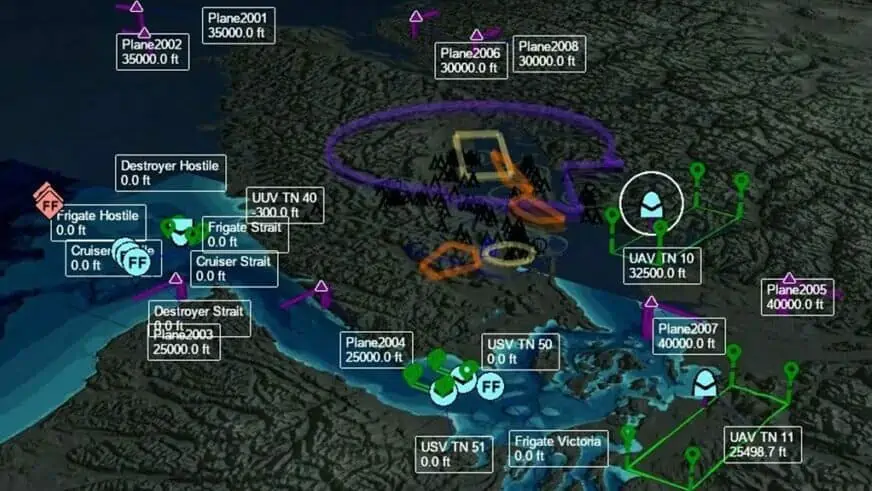
RPICs can visualize their operational environment through IRIS Terminal, which presents the data in both 2D and 3D formats. the platform offers various mapping options, including real-time 2D/3D airport class airspaces, Temporary Flight Restrictions (TFRs), Notice to Airmen (NOTAMs), and other GeoPortal advisories provided in real time by Aloft. RPICs can toggle their sensor footprint for awareness and visualize their own aircraft alongside all other traffic, both cooperative and non-cooperative, in real time.
section 2 b. 14) How will ADS-B IN be incorporated into the DAA system?
IRIS Terminal is compatible with major ADS-B IN sensors (e.g., uAvionix Pingstation, Sunhillo Margate) and data feeds (e.g.,uAvionix Flightline,L3 Harris NEXTGEN). These are clearly displayed in both 2D and 3D formats and can be filtered based on Above Mean Sea Level (AMSL) and Above Ground Level (AGL) altitudes for enhanced relevance to UAS operators. When ADS-B tracks and DAA tracks for the same aircraft are detected, IRIS Terminal correlates them into a single track to minimize visual clutter.
Section 2 b. 15) What criteria trigger alerts for non-cooperative and ADS-B-equipped intruders?
Alerts are generated based on the trajectory, speed, and proximity of third-party aircraft, whether they are cooperative or non-cooperative, that may breach the Line of Sight (LOS) boundary. The dimensions of the LOS ‘moving hockey puck’ are defined by the operator in their CONOPS and implemented in the IRIS terminal settings. This visual aid can be toggled on or off by the RPIC to enhance situational awareness within IRIS Terminal.
Operators can also establish geofences, such as ‘departure geofences’ that alert when their aircraft exits a defined 3D corridor, and ‘intrusion geofences’ that notify the operator of any encroachment into the 3D space occupied by third-party aircraft.
Section 2 b. 16) How does the system alert the RPIC to intruders in the operating area?
IRIS Terminal incorporates a ‘conflict warning’ system that alerts operators to any potential Loss of Separation (LOS) risks. If an operator’s aircraft is at risk of losing separation from a third-party aircraft, whether cooperative or non-cooperative, the operator receives a loud audible alert along with a visual notification that must be acknowledged to silence the audio alert.
The conflict warning system also provides a shining vector line connecting the conflicting aircraft to the operator’s aircraft,along with real-time metrics for horizontal and vertical separation,and also the time (in seconds) until predicted intrusion into the operator’s LOS boundary.
Section 2 b. 17) Are there alerts for DAA system failures or degradation?
IRIS Terminal features a built-in resource status card that displays the operational status of all internal system services. Operators receive both visual and audible warnings if any services degrade or cease functioning.
For comprehensive system health monitoring, IRIS Terminal integrates with the ResilienX Fraihmwork, which provides detailed sensor health monitoring and visualizes complete system health cards within the IRIS Terminal user interface.