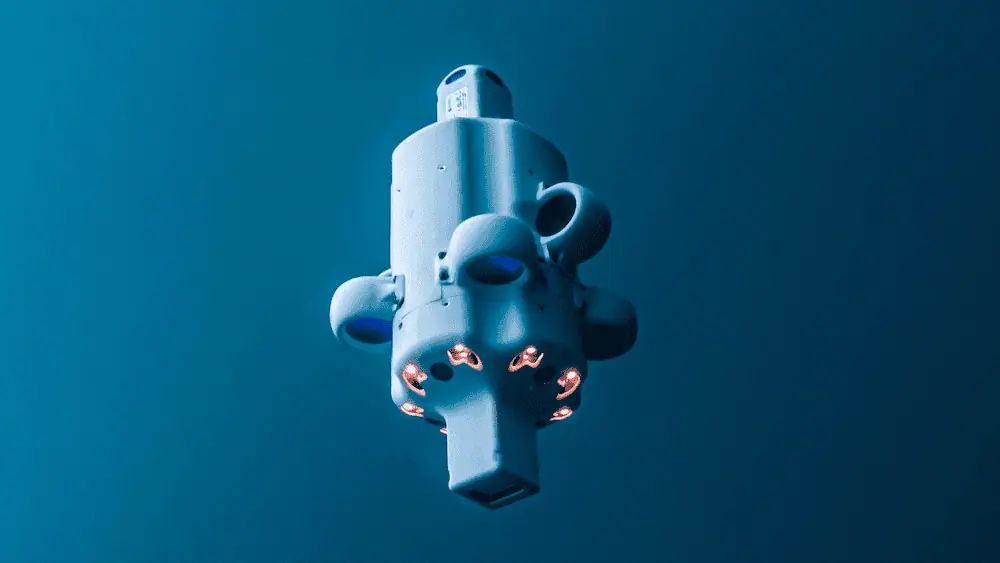


Antoine Drancey,a filmmaker associated with Black Whale Pictures,has conducted a thorough review of the Boxfish Luna ROV,focusing on its essential features and controls while offering valuable advice for fellow filmmakers.
In his analysis, Drancey explores the potential of the Boxfish Luna too transform the landscape of underwater cinematography, addressing whether this ROV could indeed redefine both filmmaking and marine exploration.
Exploring the Control Station and Camera Functionality
Drancey delves into the intricacies of the Boxfish control station,highlighting its refined features and user-friendly design:
Control Mechanisms: The console facilitates seamless navigation of the ROV,enabling adjustments to lighting and camera configurations. the Q mode offers a familiar interface for drone operators, enhancing usability.
Illumination and Camera Adjustments: The versatile lighting system, featuring front-facing lights and extendable arms, guarantees optimal visibility in diverse underwater settings. Users can easily modify camera parameters such as ISO, shutter speed, and aperture through the console.
Safety Protocols: The control interface provides essential data, including battery status, depth, and humidity levels, ensuring safe operation of the ROV. The Return to Surface (RTS) feature automatically guides the ROV back to the surface in case of lost communication.
The Boxfish Luna Package: ROV, Tether, and Control Console
The Boxfish Luna ROV package comprises three primary elements: the ROV itself, the tether, and the control console. Its compact design allows for easy transport in three Peli cases, making it ideal for deployment from smaller vessels.
ROV Specifications: Equipped with eight thrusters, the luna ROV provides extraordinary maneuverability and can dive to depths of 1,000 meters. It is indeed compatible with high-quality cameras like the Sony Alpha 7siii and Alpha 1,renowned for their outstanding low-light capabilities,which are vital for underwater shooting.
Tether Functionality: The tether not only ensures stable data transmission but also serves as a safety line, facilitating the ROV’s retrieval when necessary. The optical fiber connection allows for precise control, which is crucial for both scientists and filmmakers.
User-Friendly Control Station: The control station is designed for ease of use, featuring drone-like controls in Q mode, making it accessible for those familiar with piloting drones.
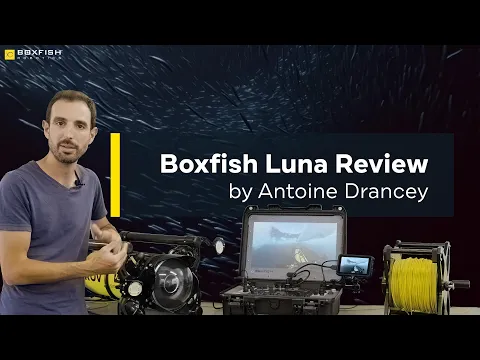
For further insights, watch the video or visit the Boxfish website.