

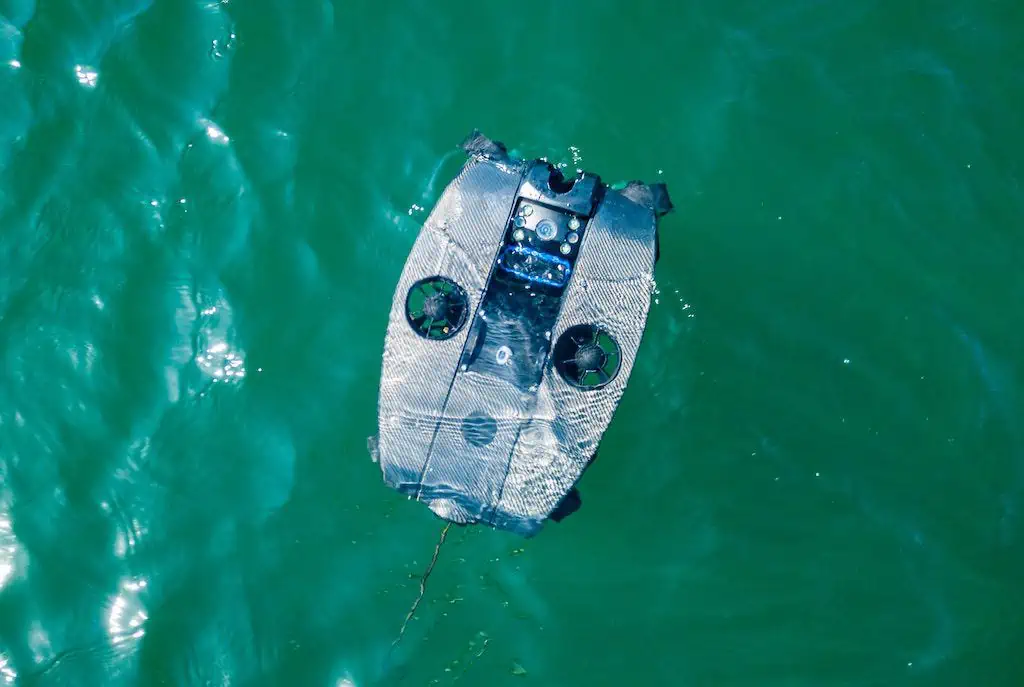
Deep Trekker highlights the advantages of employing remotely operated vehicles (ROVs), the specific environments they excel in, and the essential technologies they should incorporate. Discover more >>
The integration of imaging technologies for creating both 2D and 3D models is increasingly prevalent in the management of critical infrastructure.
For underwater structures, ROVs frequently serve as the sole means to gather dependable data for effective modeling.
The company elaborates on the following topics:
-
The Function of rovs in Underwater Asset Oversight
-
Understanding Underwater Modeling
-
Obstacles in Underwater Modeling
-
Improving Underwater Modeling with ROVs
-
Innovations in ROV Automation
-
Deep Trekker’s Initiatives in This Domain
The final section discusses the capabilities of two ongoing projects utilizing Deep Trekker’s ROVs, with many more initiatives on the horizon. Learn more >>
The company concludes that the evolution of uncrewed vehicles is closely tied to advancements in 3D visualization, autonomous systems, and machine vision. Essentially, achieving subsea autonomy relies on a range of sensors, as accurate positioning is vital for both 3D modeling and autonomous navigation.
Deep Trekker emphasizes that there is no one-size-fits-all solution for every underwater issue. The company is dedicated to leading the industry by leveraging diverse technologies. They combine positioning systems, visual sensors, and software tools to enhance inspection processes.
Explore the complete article or visit Deep Trekker’s website for further insights.