

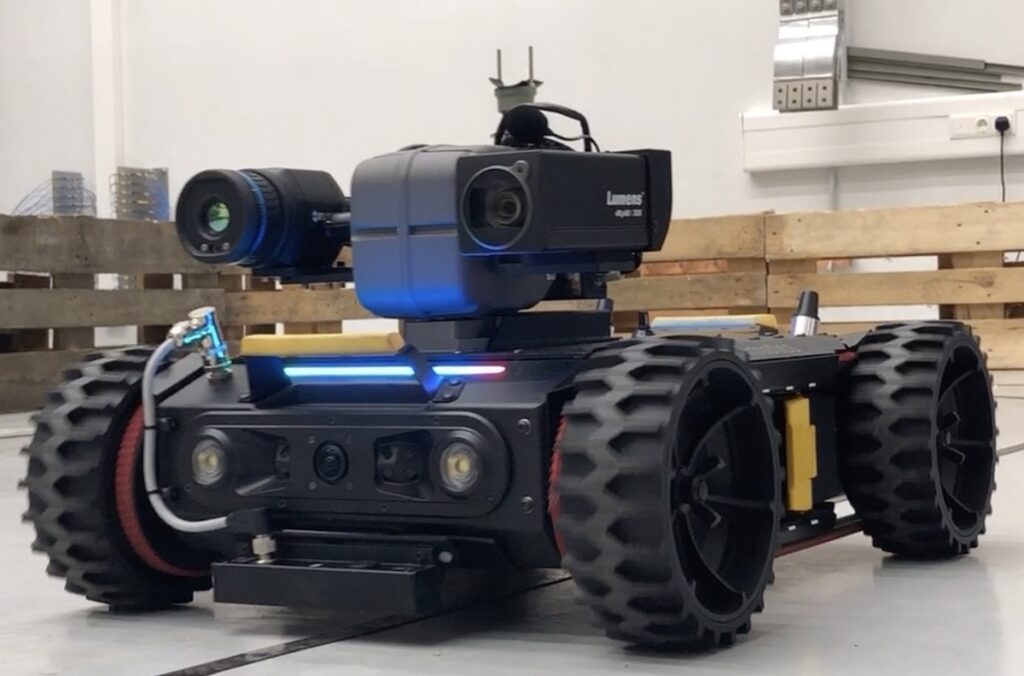
Ross Robotics specializes in creating modular, autonomous ground robots tailored for renewable energy sectors, focusing on HVDC converter facilities. This case study delves into how the BotBlox hardware, particularly the PoEBlox and GigaBlox Nano, enabled Ross Robotics to overcome notable networking hurdles in their camera integration efforts.
Technological Insights
To connect two advanced cameras—the Lumens optical Camera and the FLIR A700 Thermal Camera—Ross Robotics required a compact Ethernet solution that also provided Power over Ethernet (PoE).
- Power over Ethernet (PoE) streamlines networking by merging power supply and data transfer into a single cable.
- The primary concern was to ensure safe and dependable PoE for the high-value, high-performance cameras.
Essential Highlights
Camera Configuration
The integration of 4K optical zoom and thermal imaging necessitated gigabit Ethernet support along with active PoE.
BotBlox Solutions
The PoEBlox and gigablox Nano were rigorously tested to confirm their reliable performance and compatibility with electromagnetic compatibility (EMC) standards.
Modular Framework
Ross Robotics leveraged BotBlox’s shared 3D models,which significantly facilitated the design of custom chassis.
Evaluation and Outcomes
- Initial trials using a Raspberry Pi equipped with a PoE Hat and a benchtop power supply unit yielded positive results.
- Integrating the prototype on the robot with PoEBlox and GigaBlox Nano demonstrated seamless camera functionality.
- EMC testing confirmed that the system could withstand environments with significant electromagnetic interference.
By implementing BotBlox’s PoEBlox and GigaBlox Nano, Ross Robotics successfully integrated high-performance cameras, paving the way for further integration of third-party tools and sensors.
For an in-depth exploration of Ross Robotics’ prosperous integration journey, visit the full article on the BotBlox website >>