

Boxfish Robotics recognizes the challenges of studying mesophotic ecosystems, which exist at depths ranging from 30 to 150 meters, using conventional diving techniques. Discover more >>

The limitations of depth,safety issues,and logistical hurdles make it challenging to access these unique habitats.For professor James Bell and his research team at Victoria University of Wellington (VUW), the Boxfish Alpha ROV has become an essential tool in addressing these challenges.
With a remarkable depth capability of 300 meters, impressive battery life, and ease of transport, this remotely operated vehicle (ROV) facilitates high-resolution surveys and sampling across various mesophotic locations in New Zealand. It has played a pivotal role in biological discoveries, environmental assessments, and national conservation efforts, significantly reducing the reliance on technical diving.
Scuba diving is generally limited to depths of around 30 meters, which restricts access to mesophotic zones. The Boxfish Alpha ROV has enabled the team to routinely observe and collect samples from depths of up to 130 meters, vastly expanding their operational range beyond customary diving limits. its efficient battery and rapid charging capabilities allow for continuous daily fieldwork.
high-quality video and still images were crucial for the VUW team. The Boxfish Alpha’s uncompressed 4K video and 20MP RAW photography facilitate detailed mapping and classification of benthic habitats. Its ability to stream live footage to researchers on the surface has significantly improved collaborative survey efforts.
Portability was another vital factor. The ROV’s modular design and air-travel compliant battery system enable it to be transported as checked luggage, allowing for flexible deployment from various locations throughout New Zealand.
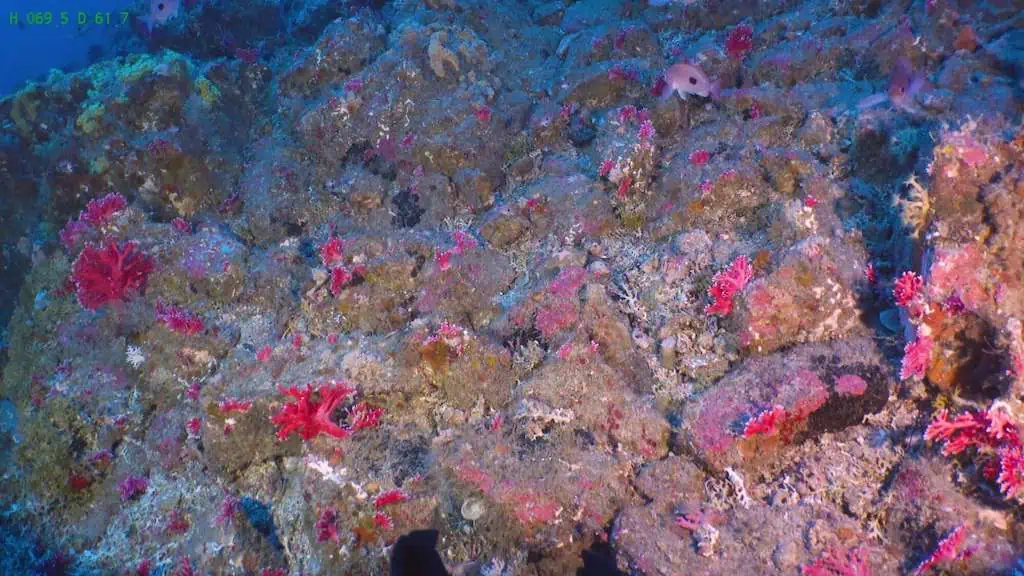
The VUW team has successfully conducted over 100 deployments of the Boxfish in New Zealand waters, documenting mesophotic communities in regions such as Fiordland and Wellington. Their footage has uncovered rich sponge gardens, coral-like assemblages, and other diverse habitats that had not been previously documented. These findings are being utilized to inform regional coastal management strategies.
The high-definition video captured during these missions supports habitat classification efforts in collaboration with agencies like wellington Regional Council, environment Southland, and the Department of Conservation. The team employs this footage to define and describe mesophotic biotopes, aiding in the standardization of deep reef system classifications.
Impact of Marine Heatwaves
In 2022, a marine heatwave led to important sponge bleaching in Fiordland. The Boxfish Alpha allowed the team to document the full extent of this phenomenon, confirming that bleaching reached mesophotic depths. Such a survey would have been unfeasible with diver-based methods alone.
3D seafloor Mapping
The team is also utilizing the ROV for photogrammetry to evaluate reef structure and habitat complexity. By integrating video capture with laser scaling and deploying visual markers using the ROV’s robotic arm, they have produced high-resolution 3D models of mesophotic seafloor environments. These models are instrumental in monitoring spatial changes and understanding the structural factors influencing biodiversity.
Deepwater Sampling and Monitoring
The Boxfish Alpha has been employed to collect black coral samples from depths nearing 100 meters as part of a Department of Conservation initiative focused on species connectivity. The manipulator arm allows for precise sampling of small fragments, minimizing disturbance to living specimens.
The ROV has also been integral to an ongoing monitoring program of mesophotic communities in fiordland, which began in 2018. This long-term project, supported by DOC and Environment Southland, is likely the first of its kind globally for mesophotic reef habitats.

enhancing Functional Ecology Studies
In partnership with Dr. Alice Rogers, the VUW team is leveraging the ROV as part of a Marsden Fund project aimed at investigating ecological functions at mesophotic depths. The Boxfish Alpha has been utilized for biodiversity surveys, placement of temperature loggers, deployment of light traps, and collection of specimens for isotope analysis.
Educational Outreach Initiatives
The stability of the ROV has allowed the team to mount 360-degree cameras for creating virtual reality content. These resources have been employed in school outreach programs to communicate marine science and provide interactive experiences. Additionally, the team has introduced students to ROV piloting in controlled pool environments as part of their engagement efforts.
Mapping Protected Species
As part of a study funded by the Department of Conservation, the team has utilized the Boxfish to document the distribution of Antipathella fiordensis, a protected black coral species. Previously known primarily from Fiordland, the team’s findings have extended its confirmed range as far north as Northland. Coral has now been recorded at depths exceeding 100 meters in several Fiordland Marine Areas.
Overview of the Boxfish Alpha ROV
The Boxfish Alpha ROV integrates advanced imaging capabilities, a modular design, and versatile deployment options. It provides 4K live video and high-resolution still images, along with environmental data collection. With six degrees of freedom, robotic manipulators, and compatibility with additional sensors, it supports a broad spectrum of marine science applications. Its portability allows operation from small vessels,research platforms,or even in icy environments.
Professor James Bell from Victoria University of Wellington remarked, “Our research would not be feasible without the Boxfish Alpha. The distinguishing factor that sets the Boxfish apart from other ROVs in its class is the exceptional quality of the video footage and the ease of deployment.”
“We also greatly appreciate the support, guidance, and advice provided by the Boxfish technical team, who have always been available to assist with any challenges we face and have collaborated with us to develop customized solutions for our ROV to accomplish complex and unique tasks.”
For more data, read the original article or visit the Boxfish Robotics website.