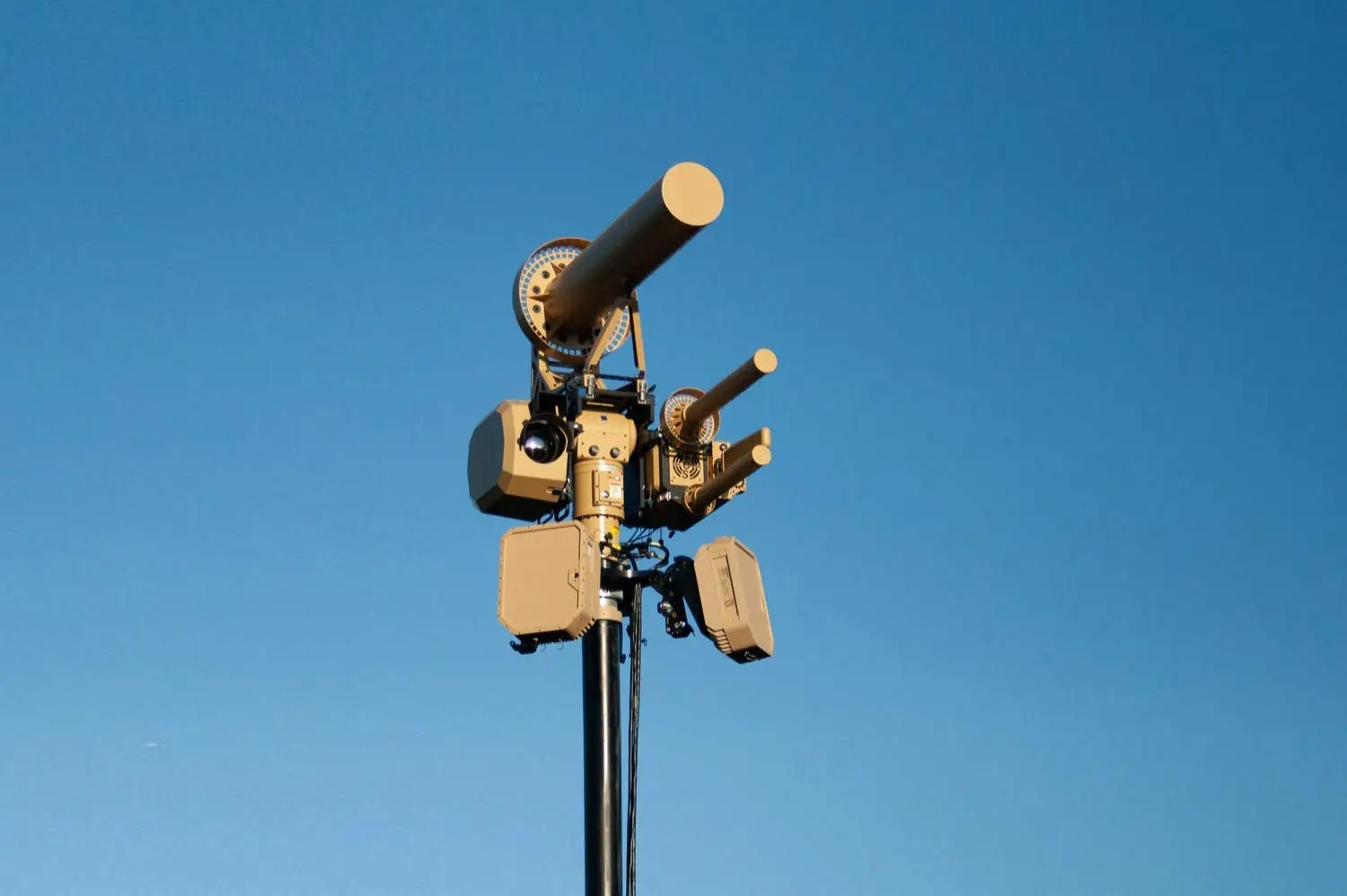



david Tuddenham, the Group Managing director of Chess Dynamics, has shared a extensive analysis on the role of artificial intelligence (AI) in enhancing tracking systems, particularly through the use of cameras that can detect threats and assess behaviors.
He explores how to maximize the effectiveness of these technologies while ensuring that real-time controls are in place to mitigate unintended consequences.
Approaching a New era of Surveillance
We are on the brink of a future where our movements are monitored by advanced cameras capable of analyzing behaviors and predicting threats. This scenario is not merely a fictional narrative but a reality driven by rapid advancements in AI and its submission in tracking systems. While this technology promises to bolster security, it also prompts significant concerns regarding potential misuse and the extent of decision-making autonomy that can be exercised without proper oversight.
What measures can we implement to ensure that these powerful tools are utilized effectively, delivering a transformative leap in capability while maintaining the necessary real-time controls to avert unintended outcomes?
AI Tracking’s Impact on defence
In the realm of defense, conventional methods of tracking and targeting are increasingly inadequate in addressing the evolving threats to global security.
The rise of agile and cost-efficient counter-unmanned aerial vehicle (C-UAV) technologies has accelerated transformations within the defense sector.When employed by adversaries in complex operational settings, these advanced applications can provide tactical advantages and pose significant security risks.
To tackle these challenges, there is a pressing need for advanced persistent surveillance systems that can ensure effective detection and identification with minimal operator involvement. This necessity has catalyzed a reevaluation of surveillance methodologies, highlighting the critical role of AI.
Utilizing Predictive Analytics for Enhanced Tracking
AI can analyze historical data alongside current intelligence to forecast enemy movements and strategies, enabling operators to anticipate threats and devise countermeasures proactively.
Advanced video tracking technologies can monitor targets over extended periods, even in cluttered environments, which is essential for tracking enemy movements, vehicles, or drones.
Moreover,AI systems can process sensor data to identify and classify targets with greater accuracy than human operators,thereby minimizing the risk of amiable fire and enhancing the precision of military operations.
AI-driven video tracking also strengthens border security by monitoring and detecting unauthorized crossings, alerting security personnel to potential breaches. In search and rescue missions, video tracking aids in locating individuals in distress, even in challenging environments like dense forests or urban areas.
Intelligence, surveillance, and Reconnaissance (ISR)
AI video tracking plays a crucial role in ISR operations, capable of monitoring vast areas, identifying potential threats across land, sea, and air, and providing real-time situational awareness to operators.
Drones and unmanned systems utilize video tracking for navigation, target acquisition, and surveillance. AI also powers autonomous drones capable of conducting reconnaissance missions, navigating complex environments, and making decisions based on real-time data.
AI-enabled drones and satellites can autonomously monitor extensive regions, identifying and tracking threats while providing real-time footage. They can analyze their video feeds to detect unusual activities and process large volumes of data from various sensors and cameras to monitor activities effectively.
Additionally, AI can be integrated into autonomous ground vehicles for reconnaissance, reducing risks to human soldiers by gathering intelligence in hostile terrains without direct human control.
Addressing Bias in AI tracking
The ethical implications of AI in security tracking are intricate, with significant concerns surrounding bias and fairness. For instance, AI facial recognition has led to wrongful arrests due to misidentifications, and surveillance systems have demonstrated biases that disproportionately target minority communities.
Jeena Joseph, in her article for AI & Society in August 2024, states: “AI systems do not merely reflect the biases of their developers; they actively shape our behaviors and perceptions in nuanced and frequently enough harmful ways. For example, in law enforcement, predictive policing algorithms identify potential crime hotspots, optimizing officer allocation. While this approach seems data-driven, it often exacerbates existing biases, leading to increased police presence in already heavily monitored areas…”
“The consequences of biased AI extend beyond mere inaccuracies; they substantially impact lives and societal structures, perpetuating systemic inequality and injustice.”
Strategies for Mitigating Bias in AI Tracking
To foster more equitable and reliable AI tracking systems, strategies should include incorporating diverse data reflecting various ethnicities, genders, ages, and other relevant categories; focusing on behavior detection rather than individual identification; and establishing robust governance frameworks to oversee AI system progress and deployment.
Continuous monitoring by human operators and regular updates to address emerging biases are essential. This involves ongoing validation against new data to ensure fairness and accuracy. Engaging diverse teams in the design and development of AI systems can definitely help identify and mitigate biases from multiple perspectives.
Deep Learning Innovations
Deep learning, a subset of machine learning, employs artificial neural networks to mimic human decision-making processes. It can address AI bias through several key strategies.
Techniques such as data augmentation can create balanced datasets by artificially generating new data points, helping to mitigate biases from imbalanced datasets. Regular monitoring and updating of AI system performance with new data can maintain fairness and accuracy over time, involving continuous validation and testing to adapt to new patterns without introducing bias.
one common application of deep learning in video analysis is object detection and tracking, which involves identifying and tracking specific objects in video sequences. Techniques like convolutional neural networks (CNNs) are employed to learn complex patterns from data.
These deep learning models are utilized in software for analyzing video and detecting and tracking objects in real-time, such as vehicles, ships, drones, or people. More advanced video analytics software offers functionalities like object counting and rule-based analysis, such as counting people in crowded areas.
Another prevalent application of deep learning in video analysis is action recognition, which involves identifying specific actions in video sequences or real-time streams. Deep learning models can classify actions performed in various contexts or environments, employing advanced methods like video recognition, pose estimation, emotion analysis, or facial recognition to understand video data contextually.
Given these advancements, video recognition and motion detection analysis are increasingly popular for detecting activities in scenes by analyzing sequences of video frames.
Techniques for video motion detection include frame referencing or pixel matching to identify changes between sets of images or video frames.
Video tracking is now often favored over alternatives like infrared due to its superior target classification capabilities. However, this has led to heightened expectations for video tracking to evolve and meet the pressing demands of modern warfare. Considering the ethical and bias challenges in AI, there is a need for a more ‘hybrid’ AI solution that enhances human operators’ capabilities while alleviating their burdens without fully replacing them.
In response, cutting-edge Deep Embedded Feature Tracking (DEFT) technology is being developed, demonstrating effectiveness against emerging security threats.
Deep Embedded Feature Tracking (DEFT)
DEFT is an AI-driven, advanced real-time video tracking capability designed for accurate and robust tracking in complex scenarios.
As an example, Chess Dynamics has integrated DEFT into its latest CHARM Video Target Trackers, utilizing a deep learning approach to optimize target identification and tracking.
This technology has the potential to transform surveillance, enabling reliable tracking of increasingly elusive targets. Threats can rapidly change appearance, aided by background clutter and other fast-moving objects, but AI-powered deep learning algorithms create comprehensive models of tracked targets, allowing for accurate location and reliable reacquisition after periods of occlusion.
DEFT can track various targets, including multi-rotor and fixed-wing drones, naval vessels, and land vehicles, with efficient autonomy. This capability allows it to autonomously identify threats and facilitate automated target acquisition and reacquisition while minimizing false alerts. This reduces the operator’s burden of prolonged screen monitoring for adversary detection and identification. Rapid and accurate identification of small, fast-moving threats is crucial for effective threat mitigation and safeguarding critical assets.
The technology continuously refines target models, enhancing human operators’ understanding and ensuring precise long-term tracking performance. It integrates AI-driven target detection and tracking capabilities with neural network-based object detection and classification.
As previously mentioned, the increasing prevalence of stealthy drones and agile forces presents unprecedented challenges to security and privacy. These hard-to-detect devices exploit cluttered environments to evade traditional surveillance methods, underscoring the urgent need for innovative countermeasures. DEFT has been developed in response to this growing concern.
Looking Ahead: The Future of AI Tracking in Defense
As threats continue to evolve, so too must the technology designed to counter them. Our focus must remain on ongoing enhancements that stay ahead of this shifting threat landscape.
Chess Dynamics is integrating DEFT into smaller electro-optic systems and products while preserving the technology’s high tracking performance. This integration will enable deployment in autonomous platforms or within cameras to optimize automated video tracking and surveillance capabilities in a single device.
DEFT’s multi-target tracking capability allows the system to assess the similarity between different detections and tracks, preventing confusion when multiple threats of the same type are present in close proximity. Achieving effective multi-target tracking in a device the size of a soda can is a significant challenge, but such advancements are a key focus for defense leaders, and we are optimistic about further developments as we continue to invest in this technology.
The potential for further innovation in artificial intelligence is immense, and technology is advancing rapidly to counter threats that are evolving just as swiftly.
Chess Dynamics has already played a pivotal role in this evolution and will continue to do so as we leverage AI to enhance operator and system performance.
Discover more on the Chess Dynamics website >>