

Dynautics stands at the forefront of smart technology for uncrewed marine missions, having successfully traversed thousands of nautical miles with its cutting-edge vehicle management solutions. The firm specializes in the design, production, and distribution of durable marine autopilots, remote control systems, power management units, and communication technologies for unmanned surface vehicles (USVs).
In this exclusive interview, Dr.Henry Robinson, CEO of Dynautics, provides valuable insights into the advancement of the company’s marine autopilot systems, its customized solutions for uncrewed vessels, and the influence of emerging trends in autonomy and artificial intelligence on the future of marine operations.
Evolution of Marine Autopilot technologies
Dynautics has made notable strides in marine autopilot and vehicle management technologies. Can you elaborate on the evolution of these technologies and the key innovations that have influenced their development?
From its inception, Dynautics has grounded its technology in basic principles: a deep understanding of vehicle control physics, simulations based on these principles, and a modular control architecture designed for maximum adaptability.
We have integrated submission-specific modules to address unique scenarios, such as managing the interplay between RPM, gearbox, reversing bucket, and steering nozzle control for waterjet systems. Some of these functionalities have been modularized and managed through a bus architecture, resulting in a scalable system applicable to a diverse array of uncrewed vessels and autonomous underwater vehicles (AUVs).
Real-World Applications of Customized Solutions
Dynautics is recognized for its bespoke solutions tailored to various unmanned marine missions. can you provide examples where yoru technologies have notably enhanced mission success, and how your team adapts to the unique needs of different sectors?
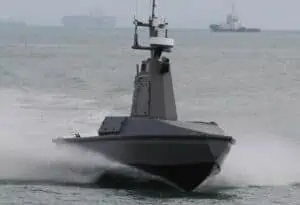
Wave-powered vessels, like the USVs developed by AutoNaut, can operate for extended periods, covering vast distances without the need for batteries or fuel. While their speeds may be modest,AutoNaut’s USVs excel in long-term missions where endurance is crucial. Their requirement was for a low-power control system with satellite connectivity, necessitating a compact design due to the vessel’s size, which ruled out larger VSAT antennas.
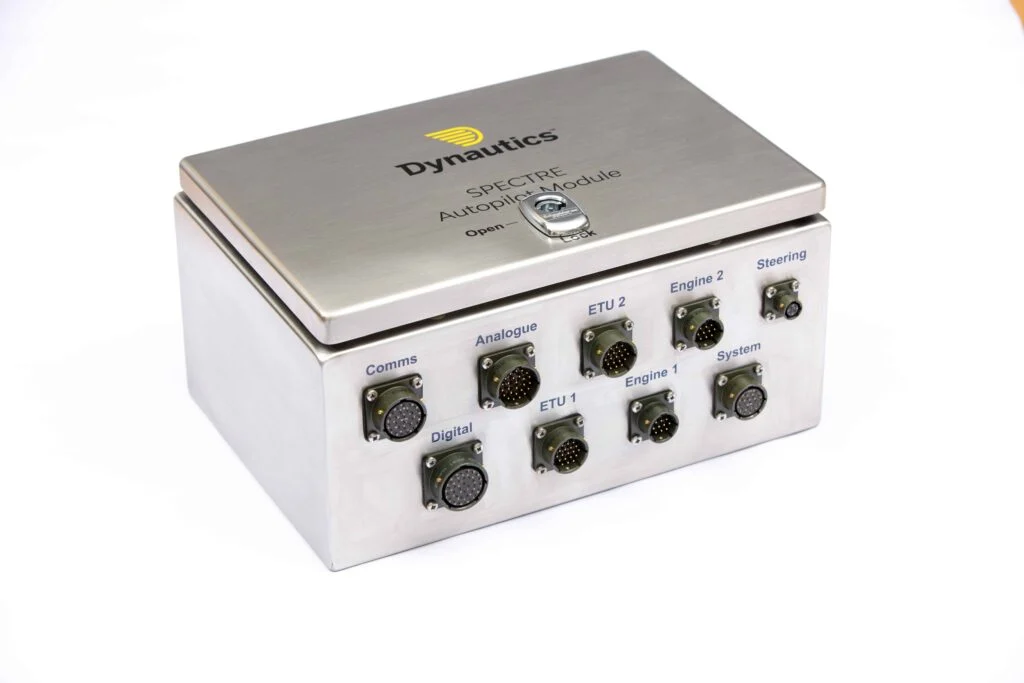
Dynautics SPECTRE Marine Autopilot
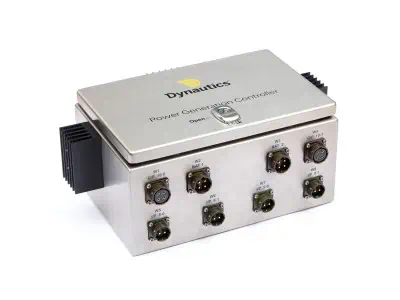
This vessel required a small antenna with limited bandwidth, presenting challenges in managing the data link. Additionally, we had to implement power management solutions that included remote switching and protection features. The outcome was a system capable of operating at sea for weeks, covering thousands of miles far beyond the horizon.
HydroSurv, which offers a range of electric and hybrid USVs from 2.8 to 6 meters for various survey operations, is another instance where Dynautics has optimized control for smaller electric and hybrid vessels. Battery management posed a significant challenge, as we needed to synchronize battery charging with low-noise requirements during specific mission phases.
Some of our industrial and defense clients demanded dual-redundant systems, leading us to design a vessel control system that could seamlessly switch between two autopilots with high reliability.
Moreover, these clients presented unique maneuverability challenges; for instance, one 12-metre vessel had a minimum turning radius of approximately 150 meters. after implementing our control system, it could turn within its own length. Another vessel was required to navigate curved paths rather than the conventional straight lines.
Advancing Marine Autonomy Standards
As autonomous marine vessels gain traction, how do you envision Dynautics’ role in enhancing marine autonomy standards, notably regarding your involvement in the Marine Autonomous Surface Ships – UK code of Practise?
The UK’s Marine Autonomous Systems Regulatory working Group (MASRWG) has been active for over a decade, successfully uniting key stakeholders and providing leadership in developing guidelines for the construction and operation of USVs. Since 2014, we have been part of this group, which has been instrumental in understanding industry trends and contributing to the Code’s development.
Innovations in the Phantom UUV
The Phantom UUV is a highly adaptable platform for autonomous underwater operations. Can you discuss any recent enhancements that improve its performance in challenging underwater conditions?
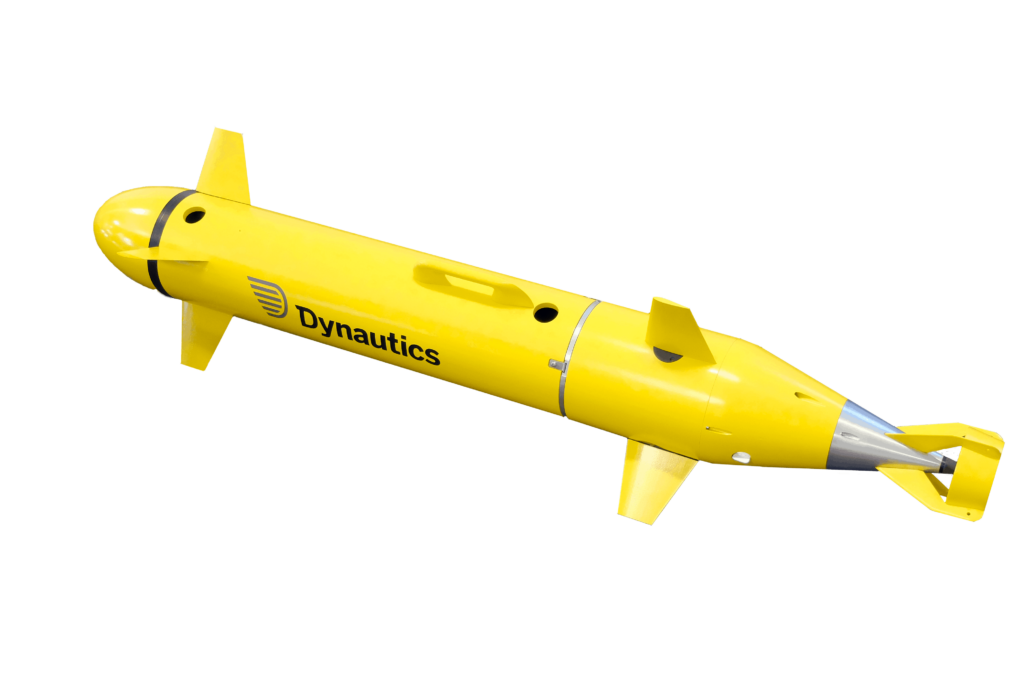
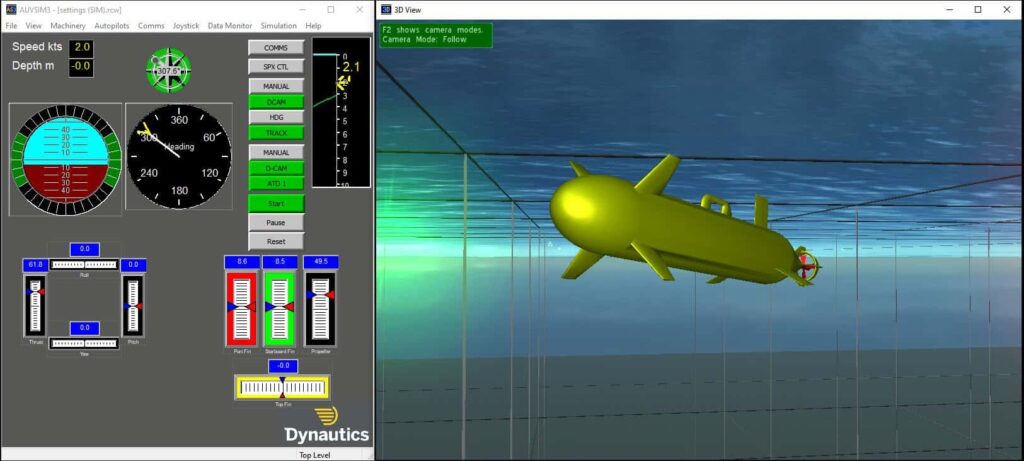
The initial Phantom was developed and underwent its first sea trials within 100 days, thanks to our solid grasp of vehicle dynamics and the use of our dynamic simulation software, AUV Sim, which allowed us to optimize trials and design effectively.
Dynautics Phantom UUV
Building on that success, Phantom 2 has been introduced, featuring dimensions that are approximately double in size and eight times the mass and displacement of its predecessor.
Phantom 2 commenced its first maneuvering trials in March 2025, demonstrating extraordinary performance. It retains the modular design of its predecessor, with propulsion and control located in the rear, allowing for easy adaptation of the mid and front sections to accommodate new payloads within its 315-millimeter diameter.
Future Trends in Unmanned Maritime Systems
As Dynautics continues to innovate in marine autonomy, what emerging trends or technologies do you believe will influence the future of unmanned maritime systems?
While true autonomy for UUVs and AUVs is still on the horizon, pseudo-autonomous decision-making based on mission parameters can be pre-programmed, allowing our vessel control systems to respond accordingly.These parameters can be adjusted remotely and, in certain specific cases, learned to enhance the system’s intelligence.
I believe the integration of AI algorithms into mission control systems will expedite the journey toward genuine autonomy. For instance, if a UUV collects survey data indicating an intriguing cartographic feature, an autonomous mission control system could redirect the UUV to explore this area rather than sticking to its predetermined path, thus yielding more valuable data efficiently.
Collision avoidance in congested waterways remains a significant challenge for USVs. Effective object detection and avoidance are essential to address this issue.
Technologies such as radar, AIS, forward-looking sonar, and optical systems have all seen substantial advancements in recent years. Though, achieving high reliability across all conditions—day and night, rain and fog, and rough seas—remains a challenge, as does maintaining clear optical components.
In busy harbors, complex traffic patterns and tidal influences add to the difficulty. While COLREGs provide guidelines for vessel behavior, not all vessels adhere to them, introducing elements of uncertainty. The complexity of this surroundings sets a high bar for successful navigation systems, which must operate safely and reliably.
A single failure could have dire consequences, which is why I believe usvs will require human oversight for the foreseeable future. In the meantime,solutions will likely focus on supervised autonomy,enhancing situational awareness for remote operators.
Moreover, the emphasis on the blue economy is a significant motivator for USV and UUV designers and users. The adoption of hybrid and electric propulsion systems is on the rise,a trend that is expected to continue. We must be equipped to manage a variety of drive types and power sources, including fully electric systems. Dynautics has been at the forefront of this for several years, ensuring our control systems are prepared for the increased autonomy needed for enduring ocean stewardship.
Thank you for sharing your insights into marine autopilots and vehicle management technologies.It has been a pleasure discussing Dynautics, and we eagerly anticipate the ongoing advancements and integration of marine autonomy technologies in the unmanned maritime systems sector.