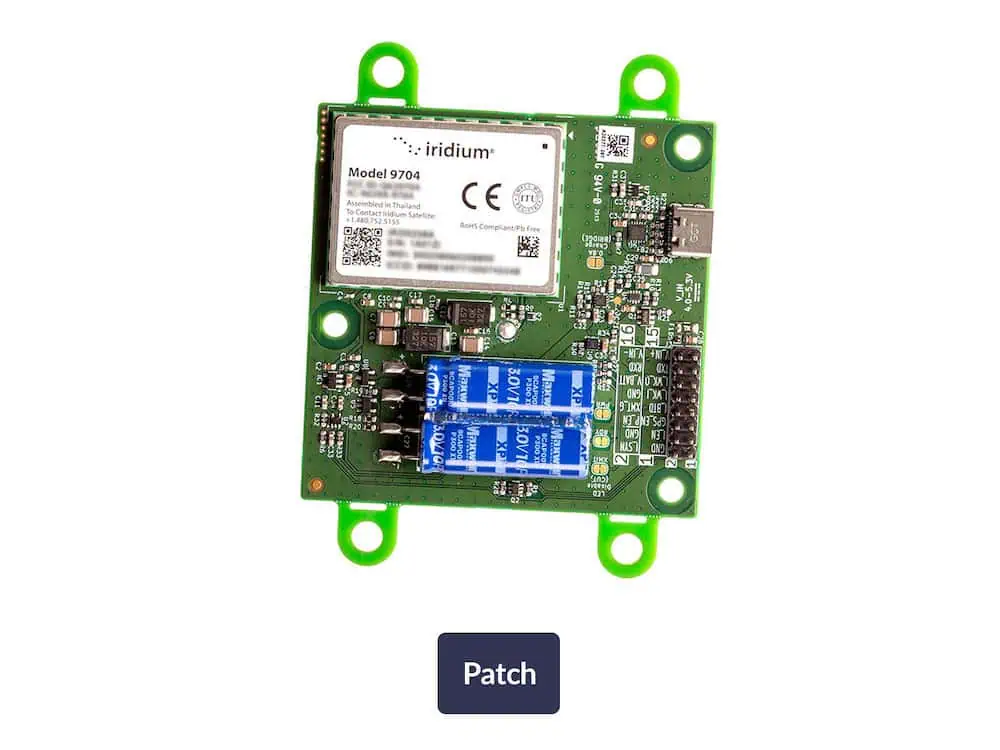
As national infrastructure increasingly becomes a target for malicious entities, remote locations—such as wind farms, oil wells, pump stations, access roads, adn transport hubs—are particularly at risk. The intricacies involved in securing these areas heighten the challenges of safeguarding against potential threats.
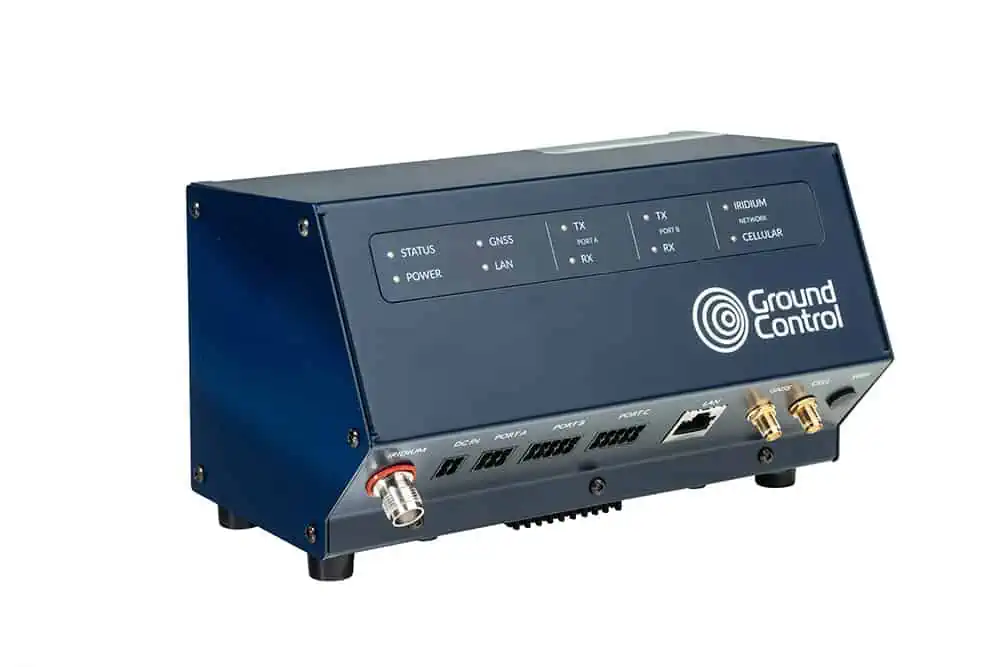
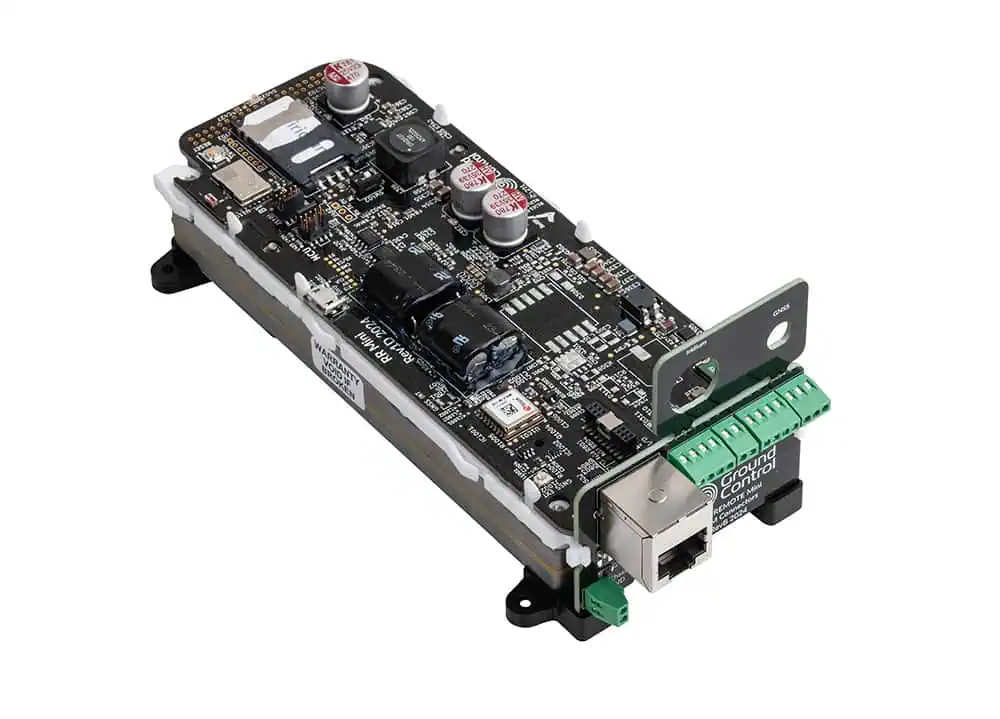
The RockREMOTE Rugged, developed by Ground Control, is an Iridium Certus 100 transceiver designed to enhance data transmission for unmanned vehicles and various platforms, providing a robust solution for increasing sensor data flow in isolated environments.
RockREMOTE Rugged
By integrating seamlessly with Videosoft’s real-time, low-bit rate video technology, it offers a cost-effective means for secure, efficient communication, especially in areas where conventional connectivity is scarce.
This integration simplifies surveillance operations and bolsters security measures, facilitating the monitoring and protection of remote infrastructure in challenging conditions.
Escalating Risks to Remote Infrastructure
Recent reports highlight a significant uptick in cyber attacks targeting facilities essential for utility and energy production.Between 2023 and 2024, certain regions noted a dramatic increase in cyber threats aimed at these sites. Alarmingly, physical assaults on infrastructure have also risen, with substations experiencing incidents involving firearms, leading to considerable service disruptions.

In various areas, there has been a notable increase in vandalism and sabotage directed at power sector infrastructure. These incidents have intensified in both frequency and severity, with some involving explosives to damage transmission towers, resulting in widespread power outages affecting large communities.
Thefts at construction sites, particularly those without on-site security, have also surged, with recent statistics indicating a significant rise in such crimes. Similarly, the agricultural sector is facing growing concerns over equipment theft, with financial losses from these incidents escalating annually.
These attacks frequently enough aim to disrupt essential services,employing tactics such as sabotage,arson,and cyber threats,all targeting critical infrastructure systems. The increase in both physical and digital assaults on remote infrastructure underscores the vulnerabilities of high-value assets that are challenging to secure, leaving organizations and governments grappling with escalating threats to their operations and services.
limitations of Conventional Security Approaches
Infrastructure encompassing transportation, energy production, and heavy industry spans extensive areas, making it impractical to station physical security at every potential target. For example, the estimated cost of employing an unarmed guard for 8 hours a day, 7 days a week, is around $3,600, while an armed guard would cost approximately $6,000.
Statistics reveal that most thefts occur during nighttime, with a higher incidence in winter and during long weekends and holidays. Therefore, providing round-the-clock coverage, especially over weekends, would be advisable, considerably increasing costs.
Another option is to install fences along with cameras and sensors to detect intruders and send real-time alerts to a remote monitoring center.This allows security personnel to oversee multiple sites from a distance, reducing on-site staffing expenses. Upon receiving an alert,the team can dispatch security personnel,notify local law enforcement,or activate localized deterrents such as alarms,sirens,or lights.
This approach offers advantages such as lower costs, continuous surveillance, and scalability. Though, it necessitates a reliable, secure, and cost-effective method for transmitting video streams (and possibly audio and motion sensors). In areas with cellular connectivity, this is relatively straightforward, but in remote locations, satellite communication is often the onyl viable option.
choosing the Right Satellite Connection for Remote Monitoring
Satellite connectivity is not a universal solution. Various radio frequencies are utilized, and the type of frequency significantly influences the design of the satellite transceiver. As a notable example, broadband internet via satellite—such as Starlink, HughesNet, and OneWeb—operates on the Ka-band, which supports higher data rates and ample bandwidth (resulting in less congestion).
though, the Ka-band is prone to rain fade (signal loss during adverse weather) and requires a larger antenna that consumes more power and demands precise alignment. While this may not pose a problem for home installations, remote outstations may encounter obstacles like mountains, trees, or the outstation itself obstructing antenna positioning.
A potential solution is phased array antennas, which can electronically adjust to optimal positions. However,they require significantly more power. For example, solar-powered batteries may struggle to maintain a Ka-band antenna, especially for continuous operations like surveillance systems.
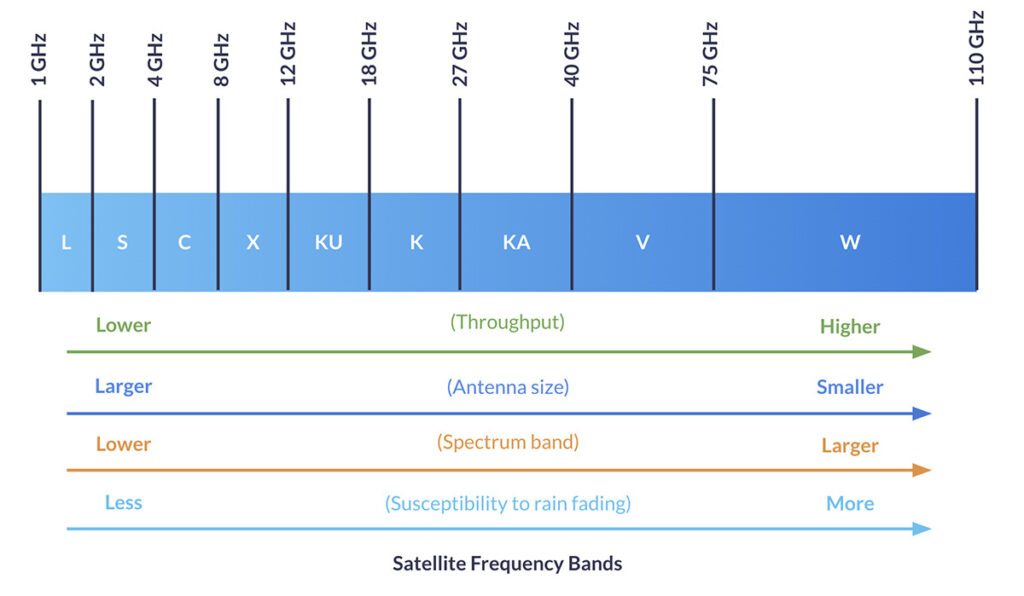
Conversely, satellite services operating in the L-band spectrum utilize smaller antennas and have lower power requirements. Companies like Iridium and viasat employ L-band for data transmission, making it suitable for Internet of Things (IoT) applications where low data transmission and compact, battery-powered antennas are essential.
L-band transmissions are resilient to weather disruptions and arduous to intercept, making them ideal for mission-critical tasks such as remote monitoring.
However, video streaming from remote, perhaps unpowered sites does not align perfectly with either Ka-band or L-band. Video streaming demands high bandwidth, and high-bandwidth satellite services are power-intensive, easily targeted, and challenging to position.While L-band addresses many of these issues, transmitting video over L-band, which has limited bandwidth, can be costly.
Innovations in Remote Video Surveillance
Two significant advancements have made it possible to transmit video over L-band satellite connections at a reduced cost. First, low-bandwidth video technology has been developed. Ground Control’s partner, Videosoft, has created video compression and transmission technology that delivers real-time, low-bit rate video. This technology also features an image enhancement capability that allows users to select and download high-resolution pixels from specific areas of interest within a scene.
Videosoft’s technology is compatible with most standard hardware, including video cameras, CCTV systems, audio microphones, GPS tracking antennas, and other input/output devices.
Second, midband (higher throughput) transmission services within the L-band spectrum have become available, including Viasat’s IoT Pro and Iridium’s Certus 100. iridium’s service is particularly well-suited for remote monitoring due to its Low Earth Orbit satellites, which provide low latency—essential for receiving real-time alerts when a facility is compromised or assets deviate from their expected paths.
Moreover, Iridium’s network of 66 interconnected satellites means users do not need to aim the antenna at a specific satellite, which is especially beneficial in areas with dense foliage or mountainous terrain.
RockREMOTE Rugged: A Streamlined and Secure Solution
Ground control designs and manufactures several Iridium Certus 100 transceivers. For remote monitoring, the RockREMOTE Rugged stands out as an optimal solution. This device possesses the computing power to run the Videosoft program natively without requiring additional hardware. users can simply connect the camera and follow a few straightforward configuration steps to get started.
The rockremote Rugged is user-pleasant and boasts an IP67 rating, making it suitable for long-term outdoor use in harsh conditions. Its compact, omni-directional passive antenna is discreet and less detectable by adversaries.
securing a remote site becomes both smarter and more economical. Users can choose from a variety of cameras, audio devices, and motion detectors, connecting them to the RockREMOTE Rugged. The onboard Videosoft technology will compress the data and transmit it in real-time over the Iridium Certus 100 network to the remote monitoring center.
A Progressive Approach to Remote Security
Ensuring the security of remote infrastructure has never been more crucial or more complex. While customary security measures struggle to balance costs and coverage, the combination of low-bit rate video, real-time image enhancement, and energy-efficient satellite connectivity offers an innovative solution.
With the RockREMOTE Rugged and Videosoft’s technology, organizations can implement surveillance systems that are reliable, cost-effective, and tailored for remote environments. Whether safeguarding critical national infrastructure or high-value assets, this technology equips security teams with the visibility they require, precisely when they need it.
Upcoming webinar: Securing Remote Facilities
Join Ground Control and Videosoft Global for a 25-minute webinar to explore how real-time video, audio, GPS, alarms, and IoT sensor data can provide a comprehensive view of your site, anywhere on the globe.
March 26, 2025 | 15:00 (UTC)
Sign up here >>