

Advancements in ISR Technology: Skyeton’s Raybird-3
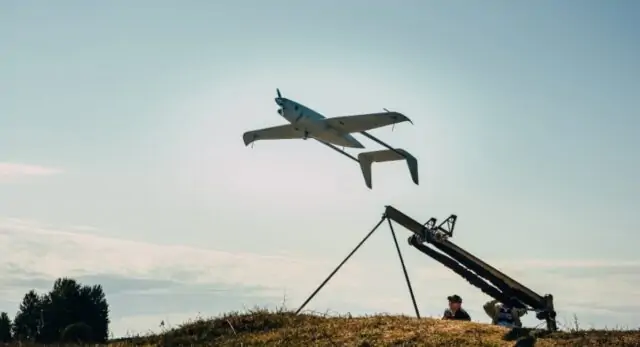
Skyeton has significantly upgraded the Intelligence, Surveillance, and Reconnaissance (ISR) capabilities of it’s Raybird-3 fixed-wing unmanned aerial vehicle (UAV) by integrating a cutting-edge synthetic aperture radar (SAR) system designed by Radionics.
Overcoming Environmental Challenges
conventional drones equipped with optical and infrared sensors often face challenges from adverse weather conditions such as clouds, fog, and rain, which can obscure ground visibility. The introduction of SAR technology provides a solution to these limitations. However, many existing SAR systems are often cumbersome, costly, or subject to strict export regulations. Radionics has developed a compact solution that includes transmit and receive antennas,a transceiver module,a power amplifier,a digital signal processing unit,and a power supply. notably, the transceiver module is remarkably lightweight, measuring just 196 x 305 x 107 mm and weighing only 3 kg, with a 22 cm aperture and an azimuth pattern width of 5.7 degrees.
Seamless Integration and Data Utilization
This SAR module can be effortlessly integrated into the aircraft’s structure, with antennas protruding only slightly. after the UAV completes its mission, radar data can be downloaded for post-processing using specialized software. This data not only supports ISR operations but also facilitates digital mapping, achieving a resolution between 0.3 to 0.5 meters. This precision allows for the identification of two armored vehicles positioned just a foot apart,nonetheless of the UAV’s altitude.
Field Applications and Endurance
The newly integrated SAR system is a perfect match for the Raybird-3 UAV, which has already been deployed by the Ukrainian military and boasts an impressive flight endurance of over 24 hours.