

Lockheed Martin Procerus Technologies Joins Wave Relay Ecosystem
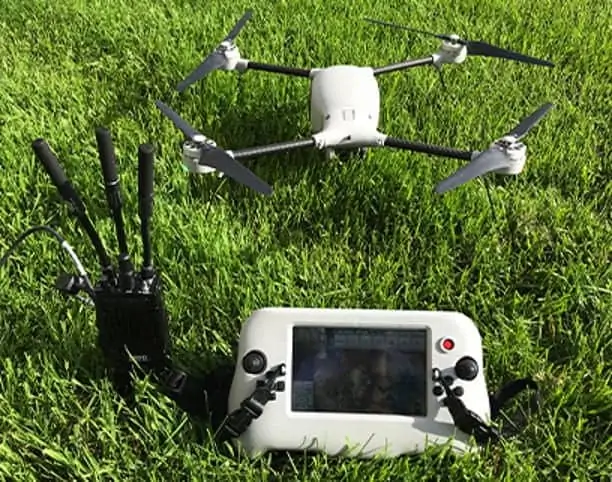
persistent Systems has revealed that Lockheed Martin Procerus Technologies (LMPT) is now a member of the Wave Relay Ecosystem. This consortium comprises various companies that have opted to integrate Wave Relay’s Mobile Ad Hoc Network (MANET) technology into their unmanned systems and sensor solutions. LMPT has introduced a specialized variant of the Indago 3 unmanned aerial system (UAS) that operates on Persistent’s Wave Relay MANET, utilizing the MPU5 radio.
Understanding MANET Technology
Mobile Ad Hoc Network (MANET) technology allows each radio unit to function as both a receiver and a relay point, forming a decentralized peer-to-peer network. This innovative setup enables users to exchange voice, video, text, sensor, and location data without depending on fixed communication infrastructures or a centralized hub, which can be susceptible to failure.
Features of the Enhanced Indago 3 UAS
The upgraded Indago 3 UAS,weighing under 5 pounds,boasts a mission endurance of up to 40 minutes while carrying a payload of 250 grams. Its design allows for easy folding, making it convenient for transport, and it can be deployed in just two and a half minutes. The UAV’s controller connects to a Persistent Systems MPU5 radio, which includes a lightweight Embedded Module. Users can choose between an S-Band or L-Band RF module for their operations.
Impact on Special Operations
Shane Flint, Vice President of Business Advancement at Persistent Systems, stated, “This development is a meaningful advantage for those in the Special Operations community. Users recognize that to effectively network the battlefield, a robust and scalable solution is essential. This allows unmanned systems and sensors to function on a unified network, enhancing team capabilities while minimizing the load on operators. The integration of Wave Relay® by LMPT makes this vision a reality.”
Enhanced Capabilities for SOF Teams
“The Indago 3 not only delivers real-time video to Special Operations Forces but also enhances the MANET by leveraging its beneficial airborne position relative to the team,” Flint added.