

Revolutionizing Satellite Control: The role of Silicon Sensing Systems’ DMU30 IMU
For the past four years, the DMU30 inertial measurement unit (IMU) from Silicon Sensing Systems has been integral to the control system of Japan’s pioneering X-band synthetic aperture radar (SAR) small satellite.
This advanced IMU, utilized by the Institute for Q-shu Pioneers of Space, Inc. (iQPS) based in Fukuoka,Japan,activates immediately after the satellite separates from its launch vehicle and remains operational throughout its mission duration.
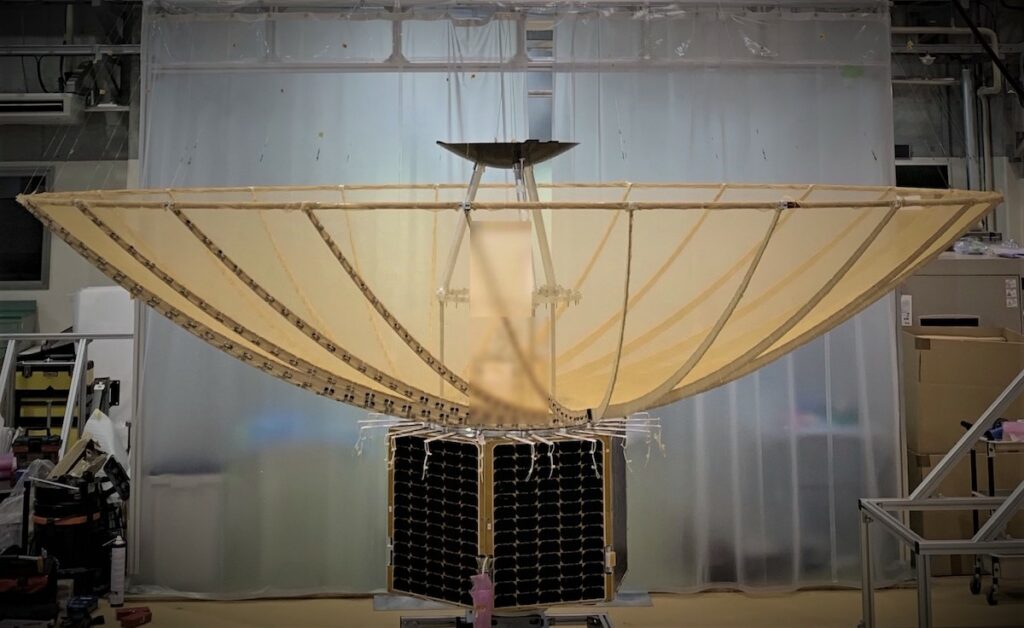
The DMU30 collaborates with various systems to monitor angular velocity and attitude, while also detecting and correcting any oscillations that may arise during the deployment of critical components, such as the satellite’s large antenna.
Weighing just 100 kg, the iQPS satellite boasts a remarkable 1-metre resolution and is part of a constellation of 36 satellites designed to provide essential earth observation data. This data is crucial for applications like disaster response and land and infrastructure assessments.
The DMU30, a highly effective silicon MEMS IMU, is the predecessor to the latest model from Silicon Sensing Systems, the DMU41.
In a 2020 statement, Masahiko Uetsuhara, Project manager at iQPS, noted, “Typically, gyro sensors produce outputs that accumulate errors over time and with significant temperature fluctuations, necessitating calibration. However, with the DMU30, such calibration is unnecessary.
“This not only saves man-hours but also enhances operational efficiency, both of which are critical for our work. The product has proven its reliability in satellite missions, is ITAR compliant, and offers an attractive price point for its performance level.”
David Somerville, General Manager at Silicon sensing, remarked, “Our MEMS technology provides significant advantages in this context compared to customary high-performance inertial systems like fiber optic and ring laser gyros.
“This IMU can deliver performance comparable to a FOG unit but in a more compact and durable design, making it ideal for platforms like the iQPS satellite that have stringent space and weight constraints, as well as for extended operations in harsh environments.”