

Meteksan’s GNSS Anti-Jamming Technology.
This detailed analysis from Meteksan Defence highlights the essential function of GNSS in military operations and how their anti-jamming technologies, particularly AGNOSIS, safeguard against signal disruption and spoofing attempts.
The piece also elaborates on technical specifications and underscores the necessity of multi-band Global Navigation Satellite Systems (GNSS) protection in contemporary combat scenarios.
The Meaning of GNSS in Contemporary Military Equipment
In our increasingly interconnected world, precise navigation and positioning are vital across various sectors—from daily smartphone applications to advanced military operations. GNSS forms the foundation for these capabilities.
Numerous military systems rely heavily on GNSS. In the event of GNSS signal loss, systems can temporarily function using an Inertial Navigation System (INS). However, as reliance shifts solely to the INS, positional accuracy deteriorates over time.The inability to acquire GNSS signals can jeopardize mission success for many platforms.
Understanding GNSS Signal Jamming
Signal jamming is a prevalent tactic in warfare, aimed at disrupting the enemy’s access to reliable positioning, navigation, and timing services. In conflict zones, jamming GNSS signals can hinder enemy units from utilizing satellite systems for movement coordination and targeting operations. Numerous instances illustrate how jamming can substantially disrupt both civilian and military operations.
In modern combat, multiple jammers can be deployed together. As the number of jammers increases, so does the requirement for Controlled Reception Pattern Antenna (CRPA) elements and anti-jam channels to effectively counter these threats.
Thus, the growth of anti-jamming GNSS systems is crucial for maintaining military platform functionality in jamming-prone environments.
Meteksan Defence’s Anti-Jamming GNSS Solutions
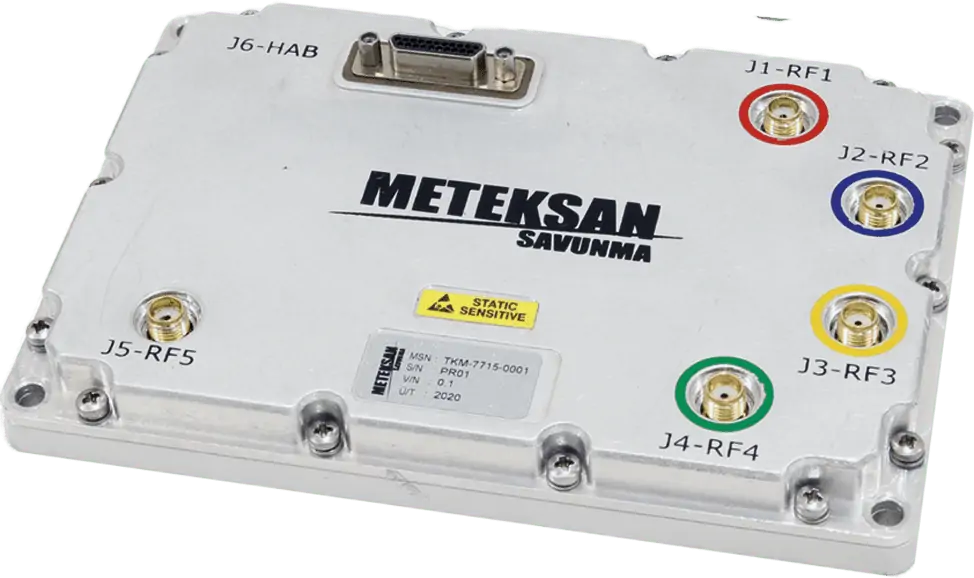
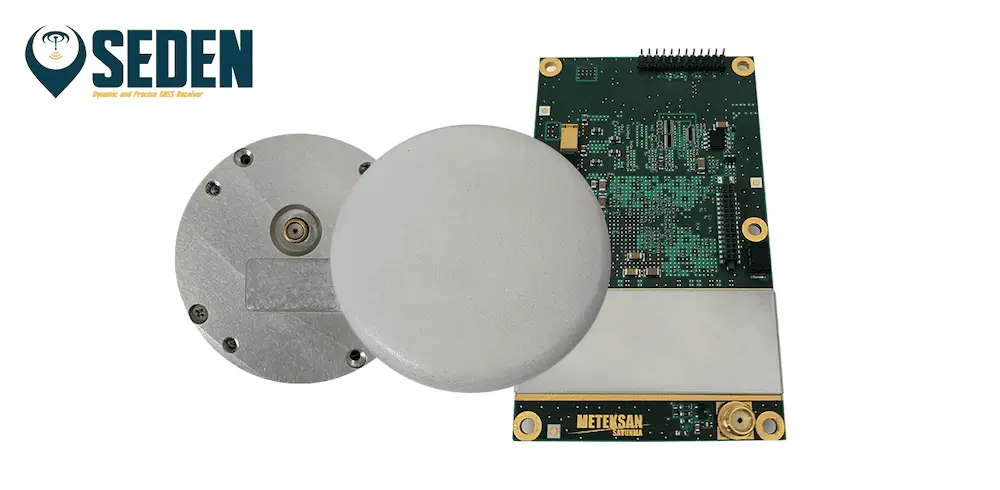
Meteksan Defence specializes in creating platform-specific GNSS antennas and anti-jamming units (AGNOSIS),along with GNSS receiver systems equipped with anti-jamming and anti-spoofing features.
In the AJ-GNSS solution, spatial filtering techniques are utilized to mitigate jamming signals. Phased array antennas facilitate spatial filtering based on the direction of incoming signals, allowing for the separation of jamming signals from GNSS signals. Depending on the number of antennas employed, multiple jamming signals can be nullified at once.
Meteksan Defence designs tailored and dependable antenna solutions and signal processing units that can be integrated with various GNSS receivers, specifically for diverse platforms and challenging missions. The company employs advanced design infrastructure for modeling,simulation,and testing environments.
Conformal and blade antennas are crafted to fit the specific geometry of the platform, featuring aerodynamic designs suited for air, naval, and land applications. These antennas optimize radiative beams based on placement and operational needs.
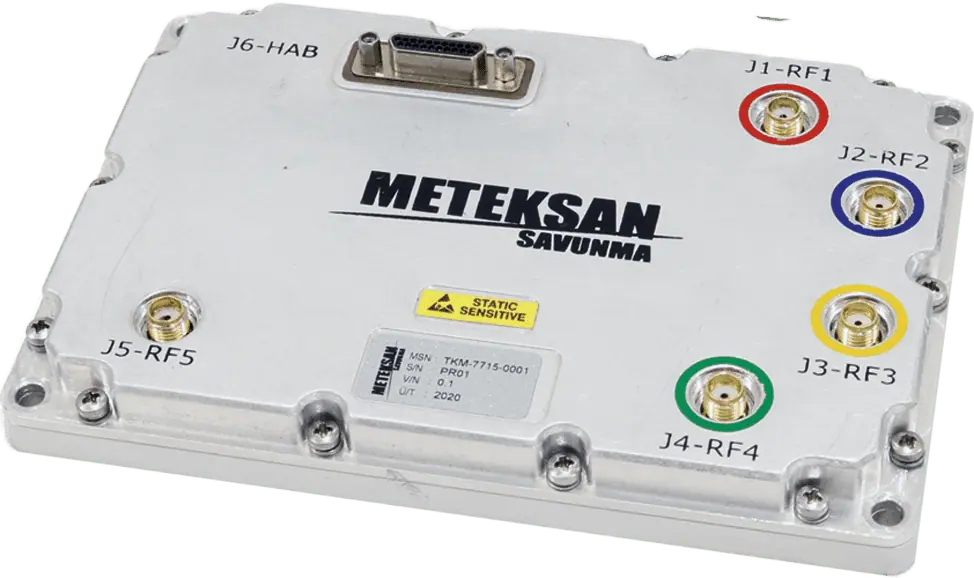
The AGNOSIS anti-jamming solution is recognized as one of the most effective and reliable jam-resistant global positioning systems available. It offers configurations with 4, 8, or 16 antenna arrays, supports multiple frequency bands and satellite systems simultaneously, and employs techniques such as beam nulling, pulse blanking, and frequency notch anti-jamming, along with options for external or embedded multiband GNSS receivers.
AGNOSIS units can operate across all frequency bands simultaneously, allowing for independent beam nulling in each band. For instance, the beam nulling applied to the GPS band operates independently from that of the GLONASS band, optimizing performance for each band and enhancing resistance to multiple jammers.
These methods are complementary rather than mutually exclusive, each offering unique advantages.They can be employed concurrently and are automatically activated by the system in an adaptive manner based on the jamming scenario, ensuring optimal anti-jamming capabilities.
Supported Frequency Bands by anti-Jam GNSS Units
An Anti-Jam GNSS unit can function across various frequency bands, which is crucial for the performance of GNSS receivers.
along with standard frequency bands like L1, L2, and L5, sub-bands within these ranges also carry distinct GNSS signals at nearby frequencies, such as GPS L1CA (1575.42MHz), GLONASS G1 (1598-1605 mhz), and BEIDOU B1I (1561 MHz).
The processing methods for these bands significantly influence jamming resilience.
increasing the number of bands enhances the total number of satellites that a GNSS receiver can track. As each GNSS employs different frequency bands, signal modulation techniques, and access methods, this diversity complicates simultaneous jamming efforts. If certain bands remain unaffected,the GNSS receiver can still generate a solution using available signals.
A critical factor is the maximum number of frequency signals that an anti-jam unit can support at once. While conventional anti-jam units may handle multiple bands, they frequently enough switch between a limited subset based on user selection, which reduces the number of tracked satellites. The ability to process multiple bands simultaneously is vital for maximizing satellite tracking and enhancing receiver resilience.
To effectively jam a multiband receiver, it is indeed necessary to disrupt 12 different frequency regions, considering four primary GNSS satellite systems (GPS, GLONASS, Galileo, Beidou) and three sub-bands for each. Jamming across multiple bands also dilutes the power budget of the jammers, reducing their effectiveness in each band. therefore, jamming a multiband receiver is considerably more challenging than targeting a receiver with fewer bands.
Beam Nulling Techniques in GNSS Anti-Jam Units
Beyond the frequency bands supported, it is crucial to determine whether anti-jam units can apply beam nulling independently for each band. As a notable example, the L1 band encompasses sub-bands like L1CA, G1, B1I, and E1, which are located at relatively close frequencies. If a conventional anti-jam unit uses a broad frequency filter and a single beam nulling approach, it may inadvertently affect multiple sub-bands when attempting to nullify a jammer in one band, potentially reducing satellite tracking in others.
Moreover, if a jammer transmits signals in both the L1CA and G1 bands simultaneously, a single beam nulling method may struggle due to phase shifts caused by frequency differences.For example, if a conventional unit achieves a 40 dB suppression against a jammer in either band, it may not maintain the same level of effectiveness against simultaneous jamming from both bands. In contrast, AGNOSIS can apply beam nulling independently for each band, avoiding this issue.
Theoretically, the beam nulling method can counter multiple jammers, with protection limited to one less than the number of CRPA antenna elements. As each sub-band supports an independent beam nulling process,this method can be applied separately for each sub-band.
Thus, when evaluating the bands supported by anti-jam units, it is essential to identify the specific GNSS signals and sub-bands that the units can protect and the number of distinct beam nulling methods available for these bands, rather than relying solely on broad definitions like L1 or L2.
Meteksan Defence’s anti-jamming GNSS systems, receivers, and antennas are currently deployed across various platforms in Türkiye and globally, including missiles and unmanned aerial and naval vehicles. The company has successfully exported these technologies to numerous international clients.
The necessity of anti-jamming GNSS technology extends beyond luxury; it is essential for ensuring reliable and secure navigation and positioning systems. As reliance on GNSS continues to escalate, investing in anti-jamming solutions is not merely about mitigating threats but also about enhancing the overall efficiency and safety of diverse military applications.
Countermeasures Against Spoofing
In addition to jamming, spoofing signals represent an escalating threat in modern electronic warfare. These signals are crafted to imitate legitimate Global Navigation Satellite System (GNSS) signals, misleading a receiver into calculating an incorrect position or time.
Unlike jamming, which overwhelms the receiver with noise to disrupt signal processing, spoofing stealthily deceives the receiver by transmitting counterfeit signals that appear authentic. This makes detection challenging, as the receiver may continue to operate normally while relying on erroneous data. Addressing these threats necessitates advanced signal processing techniques, including anti-spoofing mechanisms that can distinguish between genuine and fraudulent satellite signals.
Spoofing signals, which are transmitted at lower power levels than jamming signals, can easily bypass anti-jam units undetected. Therefore, countermeasures against these signals must be implemented at the receiver level.
Cleaning spoofing signals using signal processing algorithms is complex, as they closely resemble real signals. Consequently, anti-spoofing measures in GNSS receivers are significantly more intricate than anti-jamming strategies.
The AGNOSIS anti-jam unit also incorporates an internally developed GNSS receiver solution. This integration enables the system to offer not only anti-jamming capabilities but also anti-spoofing features. By leveraging Meteksan defence’s proprietary GNSS technology, AGNOSIS enhances protection against both interference and spoofing attacks, ensuring robust and reliable navigation in environments threatened by both jamming and deceptive signals. The combination of these advanced techniques makes AGNOSIS a comprehensive solution for secure GNSS-based operations across various platforms.
As Meteksan Defence develops its GNSS receivers with in-house R&D capabilities at all levels, from the physical layer to position calculation, countermeasures against spoofing can be effectively applied at every stage.