

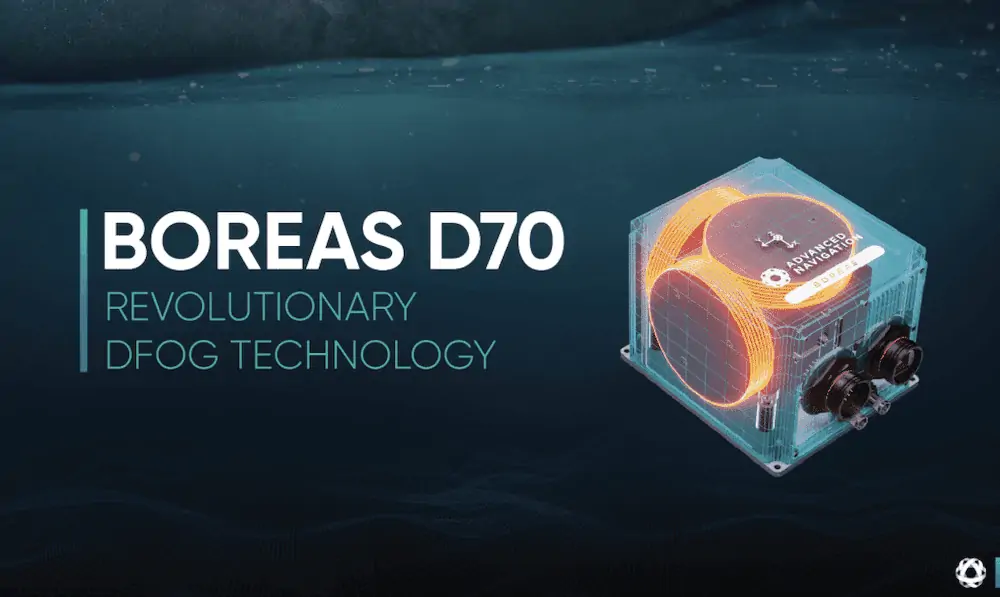
Introducing the Boreas D70: A Leap in Inertial Navigation Technology
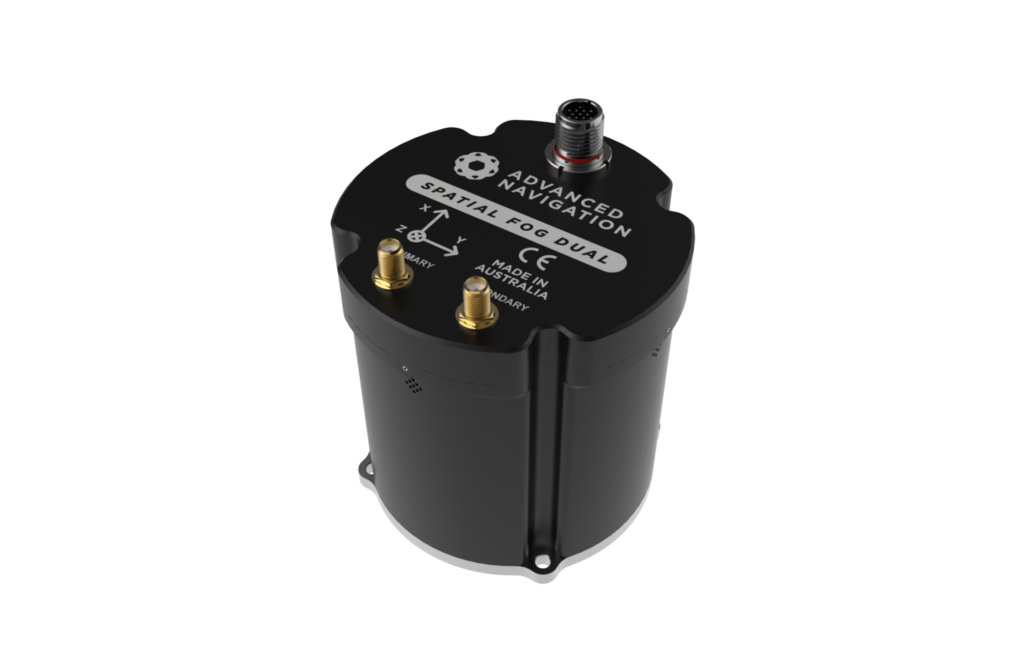
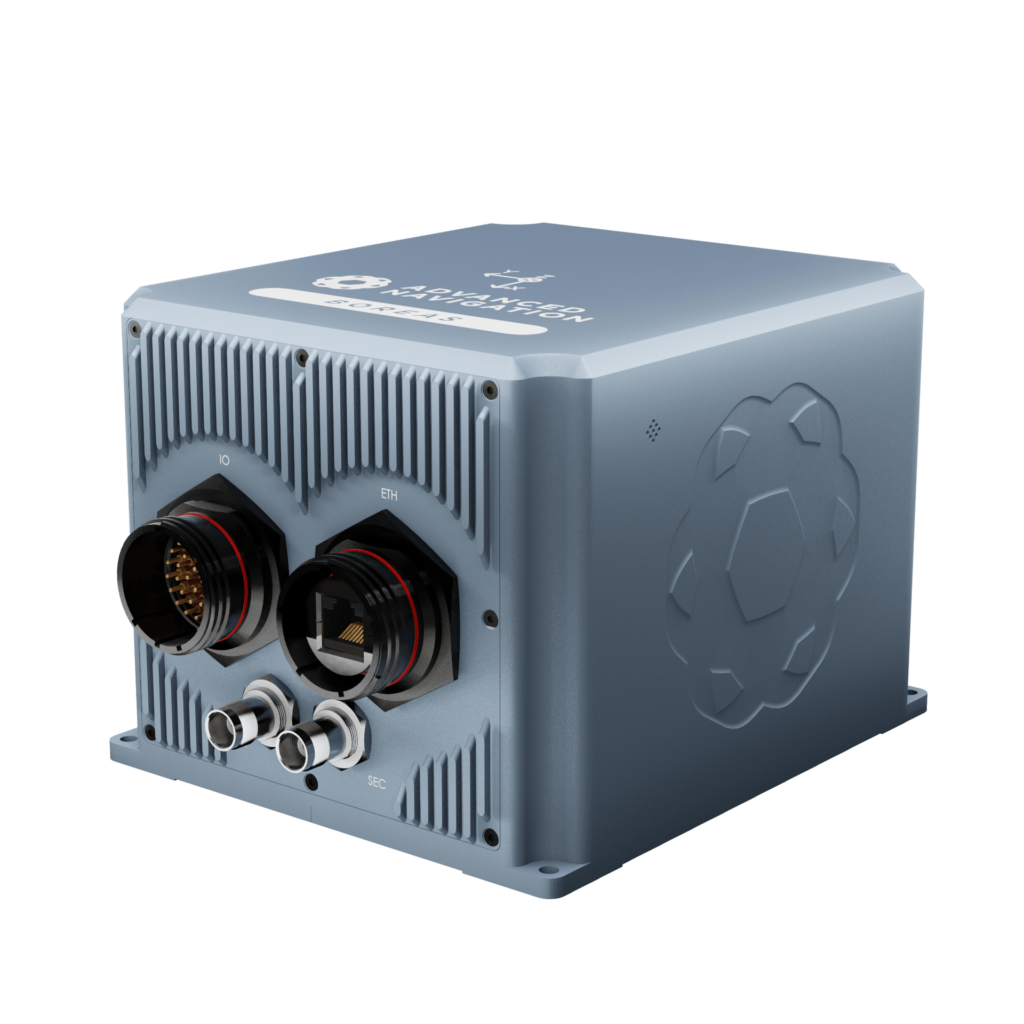
Advanced Navigation has unveiled the Boreas D70, a state-of-the-art Fiber-Optic Gyroscope (FOG) Inertial Navigation System (INS) that sets a new benchmark in performance, offering remarkable accuracy, stability, and dependability.
Versatile Applications Across Multiple Domains
The D70 is the newest addition to the Boreas Digital FOG (DFOG) lineup, engineered for a variety of applications including surveying, mapping, and navigation in subsea, marine, terrestrial, and aerial environments.
“We are excited to broaden the Boreas series with the D70. This system enhances the versatility of our offerings, making ultra-high precision inertial navigation significantly more accessible compared to earlier FOG INS models,” stated Xavier Orr, CEO and co-founder of Advanced Navigation. “This innovative technology paves the way for the integration of FOG INS systems in a wider array of vehicular applications, especially in autonomous vehicles and aircraft, were minimizing weight and size is crucial.”
Cutting-Edge Technology for Enhanced Navigation
The Boreas D70 integrates advanced closed-loop DFOG and accelerometer technologies alongside a dual antenna RTK GNSS receiver. These components work in tandem with the company’s AI-driven fusion algorithm to ensure precise and reliable navigation.
This system boasts rapid gyro compassing capabilities, enabling it to establish and maintain an accurate heading even in challenging conditions. Although the D70 includes a GNSS receiver, it can operate effectively without it for gyrocompass functionality.
Impressive size, Weight, Power, and Cost Efficiency
According to Advanced Navigation, the D70 achieves a remarkable 40% reduction in Size, Weight, Power, and Cost (SWaP-C) compared to similar performance systems:
- 0.01° roll and pitch accuracy
- 0.1° secant latitude heading (gyrocompass)
- 0.01°/hour bias instability
- 10mm positional accuracy
Features of the Boreas Series
The Boreas DFOG series is characterized by its ultra-fast gyro compassing, capable of acquiring heading information in less than two minutes, whether stationary or in motion. This gyro compassing technology allows for highly accurate heading determination without relying on magnetic or GNSS inputs.
Advanced Navigation’s AI sensor fusion algorithm enhances the system’s ability to extract valuable insights from data, making it ideal for control applications.It includes robust health monitoring and instability prevention features to guarantee stable and reliable data output.
Designed for Reliability and Safety
The Boreas system has been meticulously engineered for reliability and availability. Both hardware and software comply with international safety standards and have undergone environmental testing according to MIL-STD-810. The system boasts an impressive mean time between failures exceeding 70,000 hours.
Connectivity and Data Management
Additional functionalities of the Boreas D70 encompass Ethernet, CAN, and NMEA protocols, along with disciplined timing thru a PTP server and 1PPS. A user-kind embedded web interface grants comprehensive access to all internal functions and data, while internal storage supports data logging for up to one year.
Understanding DFOG Technology
DFOG technology is a patented innovation developed over 25 years in collaboration with two research institutions. It was created to fulfill the need for smaller, more cost-effective FOGs while enhancing reliability and accuracy.
Distinguished Professor Arnan mitchell, Director of the integrated Photonics and Applications center at RMIT University, played a pivotal role in the development of DFOG technology alongside Advanced Navigation. Professor Mitchell, an expert in microtechnology and nanotechnology, contributed to the miniaturization of fiber optic gyroscope components onto a single chip, a breakthrough that significantly enhances DFOG’s performance. This advancement allows DFOG to achieve a lower SWaP-C compared to othre FOGs while providing superior accuracy and reliability.
“By fabricating optical components onto a compact chip, we are enabling the creation of more efficient and reliable fiber optic gyroscopes in partnership with Advanced Navigation,” Professor Mitchell elaborated.