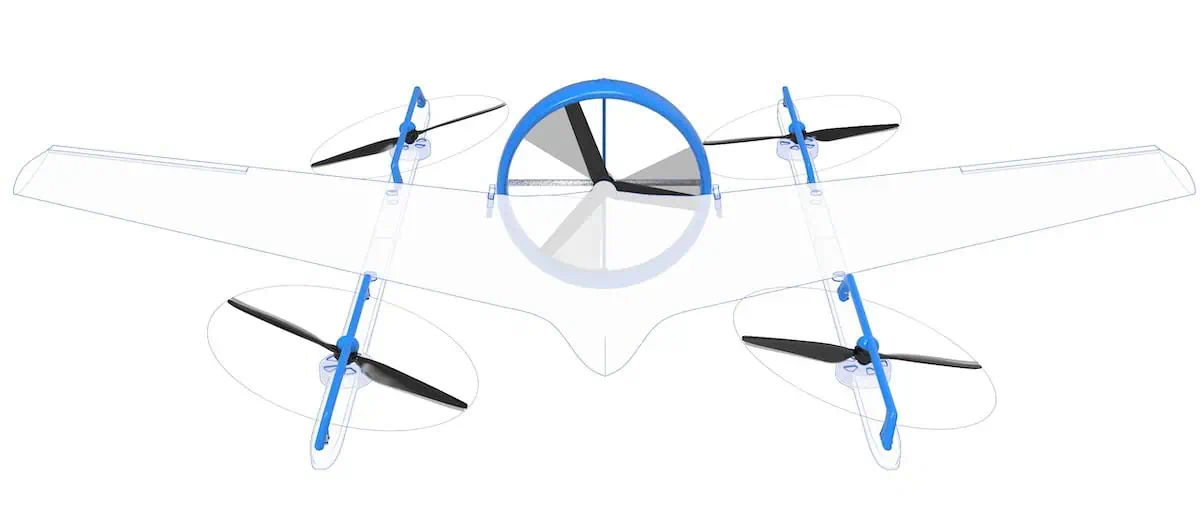
Aerofex has unveiled its Thrust Vectoring Evaluation Kit, designed for single-axis vectoring of an open propeller system, with international shipments set to commence in August 2025.
This flight-ready kit is tailored for domestic researchers, academic institutions, and original equipment manufacturers (OEMs) aiming to deepen their insights into thrust vectoring technology. It encompasses all necessary components to analyze vectored thrust for various applications, representing what Aerofex considers the most straightforward implementation of this technology.
Furthermore, the kit is crafted to bolster research and development across diverse industries, empowering drone manufacturers to transcend existing limitations and pave the way for a new era of unmanned aerial solutions. This is especially notable in sectors like industrial-scale aerial robotics, including construction, agriculture, and logistics.
the kit comprises three main assemblies along with extensive integration resources, enabling researchers and developers to swiftly initiate testing and assessment of thrust vectoring capabilities. The underlying technology is safeguarded by seven active and pending patents in the United States and globally.
As current drone platform technology appears to have reached its peak, many manufacturers face challenges in distinguishing themselves from rivals or enhancing performance beyond existing benchmarks. The introduction of the Thrust Vectoring Evaluation Kit is timely,aligning with Aerofex’s position as a leader in thrust vectoring propulsion and control.
Mark De Roche, the Chief Technology Officer, is scheduled to present a technical paper titled “Thrust Vector Control of Propeller Driven Craft” at the AIAA AVIATION Forum on July 23, 2025. This further underscores Aerofex’s commitment to advancing aerospace technology and thrust vectoring innovations.
The launch precedes the flight testing phase of Aerofex’s dual propulsor testbed, which has a capacity ranging from 200 to 600 lbs, facilitated by a more advanced ducted version of the technology.