

Urban air taxis, designed for transporting passengers within city landscapes, hold the potential to drastically cut travel durations and ease the burden of road traffic.embention raises an important question: should these air taxis operate autonomously or be piloted by humans?
Autonomous air taxis signify a cutting-edge evolution in urban air mobility.These vehicles are equipped with advanced sensor technologies, intricate control algorithms, and reliable navigation systems, enabling them to perform flight operations independently of human pilots. Their core features encompass route optimization, obstacle detection, and automated takeoff and landing sequences.
The benefits of autonomous air taxi systems include:
- Reduction of human error
- Lower likelihood of accidents
- Improved operational efficiency
- Cost savings by removing the need for a pilot
- Ability to operate continuously, enhancing asset utilization
Nonetheless, there are considerable technical and regulatory obstacles to overcome.These challenges involve meeting rigorous reliability standards for autonomous systems and ensuring consistent performance in various operational conditions, including adverse weather and potential system failures. Additionally, gaining public trust remains a meaningful barrier.
On the other hand, manual control systems for air taxis offer a blended approach, integrating both autonomous features and human pilot interfaces. These systems generally function autonomously under normal circumstances but allow for human intervention at any point during the flight, especially in critical or emergency situations. This fly-by-wire control framework shares similarities with traditional avionics, which may simplify the certification process.Such hybrid systems could act as a stepping stone toward achieving full autonomy.
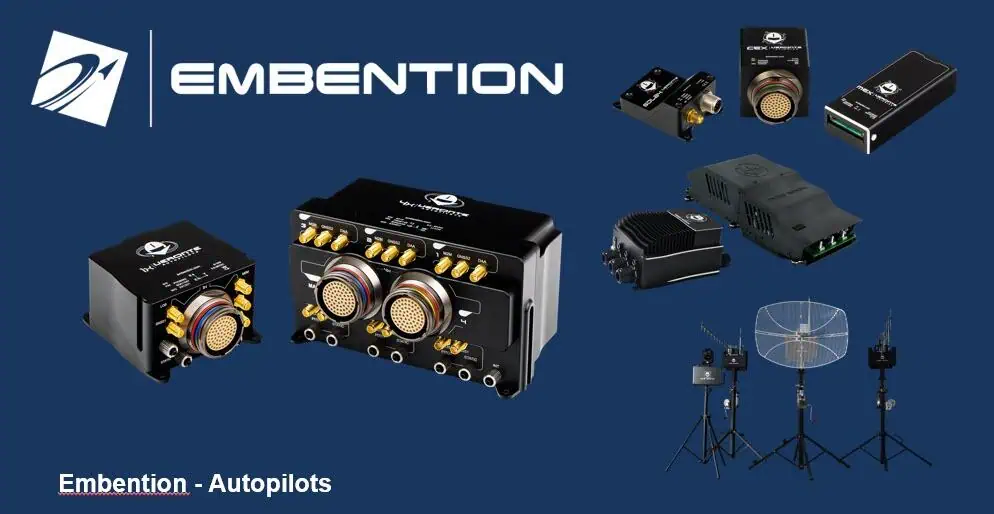
In the realm of air taxi control systems, Embention’s Veronte Autopilot 4x stands out as a leading-edge solution. This redundant flight control system is crafted to deliver accurate control for both fly-by-wire and autonomous flight operations. Its redundant design minimizes the risk of single-point failures, while its robust construction ensures safety throughout all phases of flight. the system is adaptable to various aircraft types, including multirotor, helicopters, fixed-wing, VTOL, and hybrid models.
The Veronte Autopilot 4x is designed to meet manned aviation certification standards, such as DO-178C, DO-254, and DO-160. This compliance framework lays the groundwork for eVTOL airworthiness certification,promoting the integration of autonomous aerial vehicles into regulated airspace.
While fully autonomous systems represent the ultimate goal for urban air mobility, fly-by-wire control systems provide a practical interim solution that may ease regulatory approval and enhance public acceptance in the short term.Companies like Embention are pioneering technologies that support this dual-mode functionality, striking a balance between innovation and safety in the rapidly evolving air transportation sector.
Explore the complete article here, or visit the Embention website for more facts.