

Alvaro, it’s a pleasure to connect with you and gain insights from your expertise. Our audience is especially curious about the advancements in your helicopter platforms, the Alpha 800 and Alpha 900, over recent years. Could you elaborate on this?
Thank you for having me. over the last few years, our platforms have primarily progressed in two key areas: dependability and adaptability. To achieve these improvements, we have dedicated substantial engineering resources to the following aspects:
- Enhancing the reliability and minimizing maintenance needs for the gearbox, main rotor, and tail rotor bearings.
- Transitioning to heavy fuel: this has posed important challenges due to various factors and the critical nature of modifications made to the power plant,but we are now regularly operating with military-grade heavy fuel.
- lastly, we have expanded the operational temperature range for the A900 by refining our proprietary engine cooling system design.This is crucial when utilizing heavy fuels with high flash points, as maintaining engine temperatures within a specific range is essential.
Could you explain your decision to focus on helicopter UAVs instead of VTOL fixed-wing or multirotor designs? What advantages do you see in this choice?
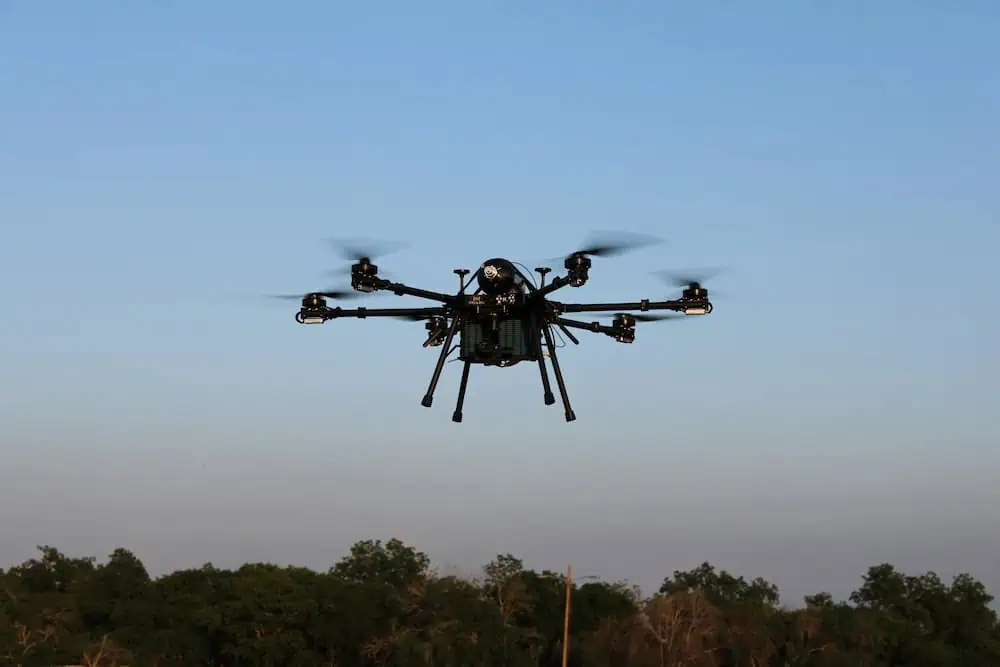
Helicopters offer distinct advantages over other platforms, and for certain missions, they may be the only viable option—such as LIDAR or bathymetric inspections, where sensors require low flight speeds (15-45 km/h) for optimal performance. missions like demining or submarine detection using sonar also necessitate the ability to hover for extended periods, which hybrid fixed-wing VTOLs cannot provide. Therefore, ALPHA is dedicated to developing superior small unmanned helicopters capable of flying for hours in challenging environmental conditions.
Alpha Unmanned was established as a helicopter UAV manufacturer because we recognize the significant aerodynamic and flight characteristic advantages helicopters possess compared to other platforms.VTOL fixed-wing UAVs require large batteries for takeoff and landing and can only hover briefly. Additionally, they struggle with the winds typically encountered in maritime environments.Multirotors face similar challenges. While helicopter engineering is complex, the benefits are particularly pronounced in demanding scenarios.
Is alpha still focused on fuel-powered UAVs, especially as the industry shifts towards battery-operated systems?
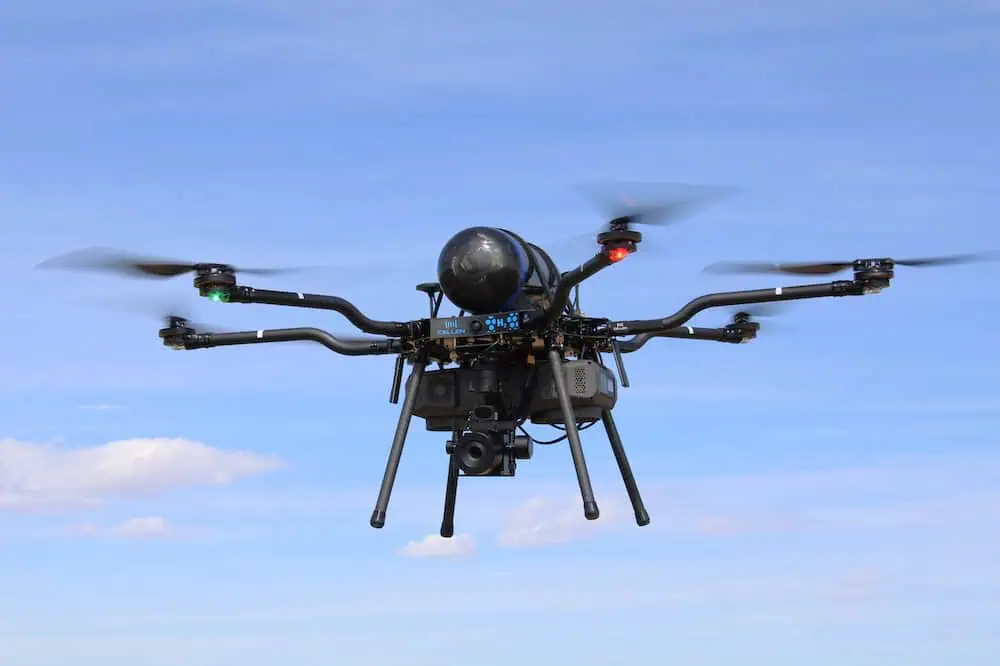
Yes, Alpha remains committed to fuel-powered systems for the time being. Currently, the power and endurance of battery-operated systems cannot match those of fuel engines. While electric systems are improving rapidly, they still cannot achieve the 2.5 hours of hovering time that our Alpha 900 offers. moreover, our fuel engines generate substantial electricity during flight, enabling our systems to support active payloads with power requirements of up to 150 Watts.
We anticipate achieving a maximum flight endurance of six hours at cruise speed within months, a feat only feasible with fossil fuels at this time.
additionally, the ability to utilize various fuels without altering the aircraft configuration provides significant advantages and adaptability for users.
Alpha is recognized for its pragmatic approach, utilizing off-the-shelf technology, including your autopilot. Can you elaborate on the strategic components within your platforms?
As a smaller company, Alpha must concentrate its resources to meet its objectives. With this in mind, we prefer to incorporate commercial components to save engineering time, which we then invest in developing our platforms. Some key components have been part of our designs for many years, allowing us to gain a deep understanding of their integrations and modifications. Specifically regarding the autopilot, we maintain a close partnership with its manufacturer, collaborating on solutions and frequently enough customizing the product to suit our needs.
Alvaro, reliability is crucial in challenging environments like ukraine. Are you pursuing product certification? How do you ensure reliability for your customers?
Yes, product certification is part of our strategic plan. For example, we have received various Experimental Airworthiness Certificates from the Spanish Army for many of our systems and hold a BLOS Flight permit. Additionally, our company is certified to the ISO9001 quality standard. We have designed our systems to comply with STANAG 4738 and will soon pursue a SAIL 4 operational risk level Design Verification Review with EASA.
The conflict in Ukraine has certainly highlighted UAV technology in discussions about defense applications. How do your systems perform in GPS-denied environments?
Our autopilot can detect a decline in GPS signal quality or even GPS-based attacks such as jamming or spoofing. In these situations, the autopilot employs dead reckoning techniques to navigate, utilizing accelerometers, gyroscopes, and airspeed to estimate its position. Recently, we have integrated a Visual Navigation system that works in conjunction with dead reckoning methods, enhancing navigation accuracy in GPS-denied scenarios and ensuring mission success in challenging environments.
Are there plans to weaponize the Alpha platforms? If not, what types of missions are best suited for Alpha’s helicopters?
Weaponizing our platforms is not part of our company’s vision. Our systems excel in ISTAR missions. Additionally, Alpha’s helicopters are particularly effective for ISR missions, border surveillance, search and rescue operations, infrastructure inspections, mapping, and more. the adaptability of our helicopters for payload integration also enables them to conduct surveying missions, such as LiDAR surveys and power line inspections.
Can you share the latest sensors integrated into Alpha’s platforms? Do you utilize EO/IR sensors, radars, or others? How do you see the evolution of new sensors? Are there any you consider essential for ISR missions?
One of the most recent sensors integrated into our platforms is an IMSI catcher produced by the Spanish company CENTUM. When paired with an EO/IR camera,the Alpha 900 becomes a formidable tool for mountain rescue or intelligence operations. We are also working on incorporating a synthetic aperture radar. New sensors are continually improving, not only in quality but also in weight and size. Miniaturization is enabling the integration of payloads in lightweight UAVs that were previously unimaginable. for ISR missions, EO/IR cameras are crucial payloads. When combined with onboard image processing and AI algorithms, they can autonomously detect and recognize targets, transmitting only the processed data to the operator.
As UAV systems must integrate with various information systems for effective operation in active environments, are Alpha’s systems compatible with NATO communications and others? Can you provide examples and explain why this is significant for Alpha Unmanned Systems?
Yes, in recent years, Alpha has invested resources to ensure our systems can integrate with NATO operational networks.
In collaboration with leading Spanish companies (GMV, Navantia, Telefónica) and the Spanish Navy, we have developed software interfaces to incorporate data from our platforms into the Navy’s Combat System and land-based Mission Control centers.
We successfully tested these integrations during NATO exercises, such as Dynamic messenger, held in Lisbon in September 2023. During these exercises, the Alpha 900 was operated from the Spanish Navy vessel BAM Furor, transmitting data to the ship’s combat System in real-time during operations. This capability is a key differentiator for Alpha, setting us apart from many other manufacturers.
Lastly, artificial intelligence will play a crucial role in the future of autonomous systems. How does Alpha Unmanned Systems plan to incorporate AI moving forward?
As previously mentioned,there are already autonomous systems capable of detecting and identifying targets or threats. AI can also optimize missions, plan efficient routes, and manage multi-UAV operations by autonomously deconflicting aircraft and assigning assets to targets. Moreover,AI has significant potential for tasks such as fleet maintenance planning,aircraft maintenance diagnostics,and monitoring flight parameters.
Are there any emerging trends in UAV technology,operations,or training that you would like to discuss? What limitations do customers face when using systems like yours and others?
In terms of technology and operations,we expect significant advancements in communications over the next few years with the widespread integration of 5G and satellite communications. This will enable UAVs to be operated from virtually anywhere globally, including the use of virtual reality or augmented reality headsets, which will become standard human-machine interfaces. In terms of training, these headsets will provide a more immersive experience, enhancing simulations and improving training outcomes. A primary limitation we have observed with customers over the years is the steep learning curve associated with these systems, particularly for newcomers. Innovative interfaces like the aforementioned headsets, along with online training and simulators, will help mitigate these challenges.
Thank you for your time, Alvaro. It has been a pleasure speaking with you, and we look forward to following Alpha Unmanned Systems with great interest.