

Vanguard has published an insightful article that explores the distinctions between led-acid and lithium-ion batteries, marking the first installment in a trilogy focused on battery technology.This piece is tailored for individuals seeking to select an appropriate battery solution for applications such as UAVs (unmanned aerial vehicles), UGVs (unmanned ground vehicles), or various robotic systems.
understanding Lead-acid Batteries

Originating in 1859, lead-acid batteries are among the most recognized types of rechargeable batteries. Their affordability and ability to deliver high surge currents make them a common choice for automotive applications, particularly for starting engines.
“From a cost viewpoint, lead-acid batteries have a clear advantage,” states Dave Schulenberg, Director of Product Management – Battery and electrification at Briggs & Stratton.
Due to their simplicity, lead-acid batteries typically have lower initial costs. “They are essentially ‘basic batteries’ that can tolerate a variety of conditions,” Schulenberg explains. “They can work with uncomplicated charging systems and are less likely to fail catastrophically if short-circuited. They can also handle inconsistent power sources.”
Though, lead-acid batteries are known for their considerable weight. While this can be seen as a drawback, in certain scenarios, their heft can be beneficial. “As an example, in a forklift, the weight of the lead-acid battery serves as a counterbalance, preventing the vehicle from tipping over when carrying heavy loads,” Schulenberg adds.
lead-acid batteries are reliable but can be cumbersome due to their weight and high internal resistance. “They generate heat during charging and discharging, which represents lost energy,” Schulenberg notes. “In high-demand situations, their efficiency can plummet to as low as 50%.”
Exploring Lithium-Ion Batteries
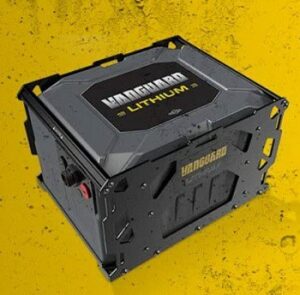
Emerging over a century after lead-acid batteries, commercial lithium-ion batteries became available in 1991. “In general, lithium-ion batteries are equipped with advanced technology,” Schulenberg remarks. “They require onboard intelligence, which brings a host of impressive features.”
While both battery types are rechargeable, their similarities largely end there.
Lithium-ion batteries boast high energy density and minimal self-discharge rates. “These batteries are managed by a battery management system (BMS), which is the smart aspect,” Schulenberg explains. “This system provides temperature regulation,power usage data,voltage monitoring,and the ability to connect with IoT devices,among other functionalities.”
Moreover, lithium-ion batteries are more efficient than their lead-acid counterparts. They offer a substantially broader usable capacity range. “Typically, you can only utilize about half of a lead-acid battery’s capacity, while lithium-ion batteries can achieve over 93% efficiency,” Schulenberg states.
The self-discharge rate of lithium-ion batteries also surpasses that of lead-acid batteries. You can leave a lithium-ion battery unused for extended periods without losing its charge. “This is crucial for long-term storage,” Schulenberg emphasizes.In contrast, a lead-acid battery left idle may be entirely drained upon return.
Additionally, lithium-ion batteries exhibit a longer cycle life. “Every time a battery is cycled, it loses some capacity, but lead-acid batteries degrade much faster than lithium-ion batteries,” Schulenberg points out.
After 500 cycles, a lead-acid battery may only retain about 80% of its capacity, while a lithium-ion battery can maintain this level after 2,000 cycles. “This means customers must replace lead-acid batteries midway thru their usage, while lithium-ion batteries can last the entire lifespan of the device,” Schulenberg explains.
Lastly, lithium-ion batteries are significantly lighter. “For the same energy output,lithium-ion batteries weigh five times less than lead-acid batteries,which is a considerable advantage for manufacturers when designing equipment,” schulenberg concludes.
Choosing the Right Battery for Yoru Needs
While lead-acid and lithium-ion batteries have clear differences, the choice often hinges on the specific submission. Lead-acid batteries may be suitable for short-term uses where high surge currents are necessary and weight is not a concern.
For most other applications, consider lithium-ion options, such as the Vanguard Battery, which offers advanced capabilities and superior performance throughout the lifespan of your equipment.