

Advancements in Remote Sensing: Black Swift Technologies and NASA’s Collaborative Mission
Black swift Technologies (BST) has unveiled an aspiring initiative in partnership with NASA’s Goddard Space Flight Center, aimed at enhancing multi-angular remote sensing methodologies through the deployment of small Unmanned Aircraft Systems (sUAS) for monitoring vegetation health and growth.
Innovative Drone Technology for Crop Monitoring
Utilizing drone technology,researchers can efficiently assess crop vitality and growth by employing a narrow spectral band centered at 531 nm. This approach allows for the derivation of vegetation photosynthesis-related indices, such as the Chlorophyll/Carotenoid Index (CCI) and the Photochemical Reflectance Index (PRI). These indices track seasonal variations in pigment ratios and photosynthetic rates, offering insights that conventional greenness indices like the Normalized Difference Vegetation Index (NDVI) cannot provide.
The MALIBU Pathfinder Mission
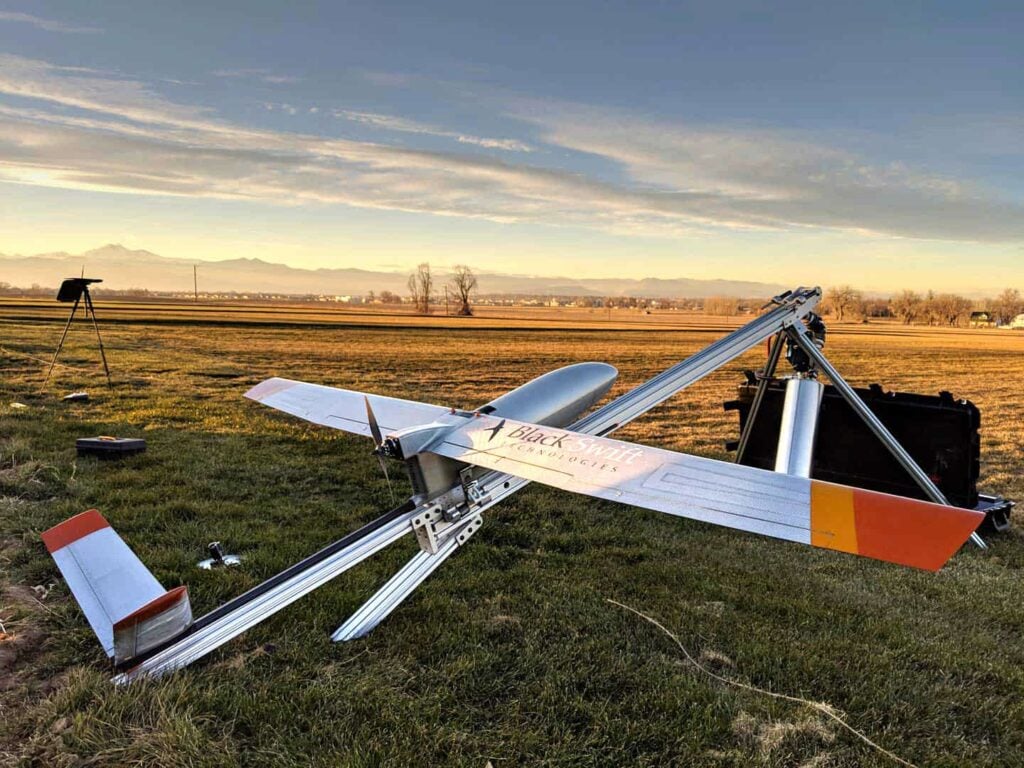
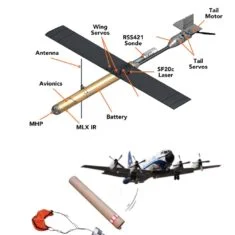
The MALIBU (Multi AngLe Imaging Bidirectional Reflectance Distribution Function small-UAS) mission leverages Black Swift’s cutting-edge sUAS, the Black Swift S2™, to gather multi-angle reflectance data for land surface analysis. This is achieved through multispectral imagers positioned at various angles. the mission’s core subsystem features a multi-angular sensor array based on the Tetracam Mini-Multiple Camera Array (MCA), which produces high-quality reference datasets essential for calibration and validation efforts supporting NASA’s premier Earth Science initiatives.
Past Context of Satellite Remote Sensing
For nearly three decades, NASA has utilized satellite remote sensors to assess and map vegetation density across the globe. The Advanced Vrey High Resolution Radiometer (AVHRR) from NOAA has been instrumental in capturing images that depict plant growth density worldwide. The NDVI, a widely used measurement, is derived from the visible and near-infrared light reflected by vegetation. Healthy plants absorb most visible light while reflecting a important amount of near-infrared light, whereas unhealthy or sparse vegetation reflects more visible light and less near-infrared light.The Normalized difference Red Edge (NDRE) index, which requires a sensor capable of capturing the red edge band, allows for the assessment of chlorophyll content. While NDVI and NDRE provide valuable insights,advancements in multispectral sensors have improved the accuracy of imagery by correcting distortions caused by airborne particles and ground cover.
Enhanced Sensor Capabilities of MALIBU
Unlike standard multispectral cameras that typically feature five channels, MALIBU’s multi-angular sensor array consists of 12 channels. The primary Tetracam camera on the port side includes five channels and an incident light sensor, while the secondary camera on the starboard side has six channels. Together, these cameras function as a unified sensor suite with a combined field of view of 117.2 degrees. The selected channels are designed to align with the relative spectral response of various satellite land sensors, including Landsat-8 OLI, Sentinel-2 MSI, and others. By deploying MALIBU multiple times throughout a single day, researchers can gather data from various solar and observation angles, substantially enhancing the accuracy of Bidirectional Reflectance Distribution Function (BRDF) retrievals.
Implications for Climate and Vegetation Studies
Nasa states, “By facilitating a deeper understanding of surface directional reflectance variability at sub-pixel resolution, MALIBU will empower NASA missions to refine the retrieval of reflectance-based biogeophysical properties.” This encompasses vegetation indices, land cover, phenology, surface albedo, snow and ice cover, Leaf Area Index (LAI), and Fraction of Absorbed Photosynthetically Active Radiation (fAPAR), among other terrestrial Essential Climate Variables (ECVs). According to the U.S. Geological Survey and the World Meteorological Organization, satellite-generated terrestrial ECVs provide critical empirical data necessary for understanding and predicting climate evolution, guiding mitigation and adaptation strategies, and assessing risks associated with climate events.
Applications in Agriculture and Environmental Monitoring
MALIBU will deliver precise imagery regarding crop conditions, plant health, growth tracking, and pest and disease identification—crucial information for optimizing crop development and production efficiency.
Cost-Effective data Collection
“The objective of MALIBU is to gather timely and precise in-situ data at a fraction of the cost associated with traditional NASA airborne science platforms,” explains Jack Elston, Ph.D., CEO of Black Swift Technologies.“By measuring land biophysical parameters from a cost-effective, repeatable sUAS platform, MALIBU complements NASA’s satellite observations while significantly simplifying the logistical and technical challenges of manned aircraft operations in remote areas.”
Technological Foundations of MALIBU
MALIBU heavily relies on Black Swift Technologies’ proprietary SwiftCore™ Flight Management System to achieve the mission’s objectives. SwiftCore’s advanced autopilot capabilities enable the science team to deploy MALIBU at varying altitudes based on terrain and maintain near-constant heights, facilitating multi-angle reflectance measurements for land surface studies. Initial flight tests demonstrated MALIBU’s ability to capture high angular sampling of surface reflectance anisotropy at a spatial resolution of 10 cm. The system successfully sampled both diurnal and seasonal landscape patterns under clear-sky conditions, which can be challenging at high latitudes. Moreover, the rapid turnaround between flights—preparing for the next deployment in under an hour—allowed for measurements during a Landsat-8 OLI overpass.
Conclusion: A New Era in Environmental Monitoring
The successful execution of the initial field campaign for the MALIBU system showcases its potential to assist scientists and land use planners globally in monitoring and adapting to agricultural, climatic, and weather-related changes with unprecedented accuracy and efficiency.