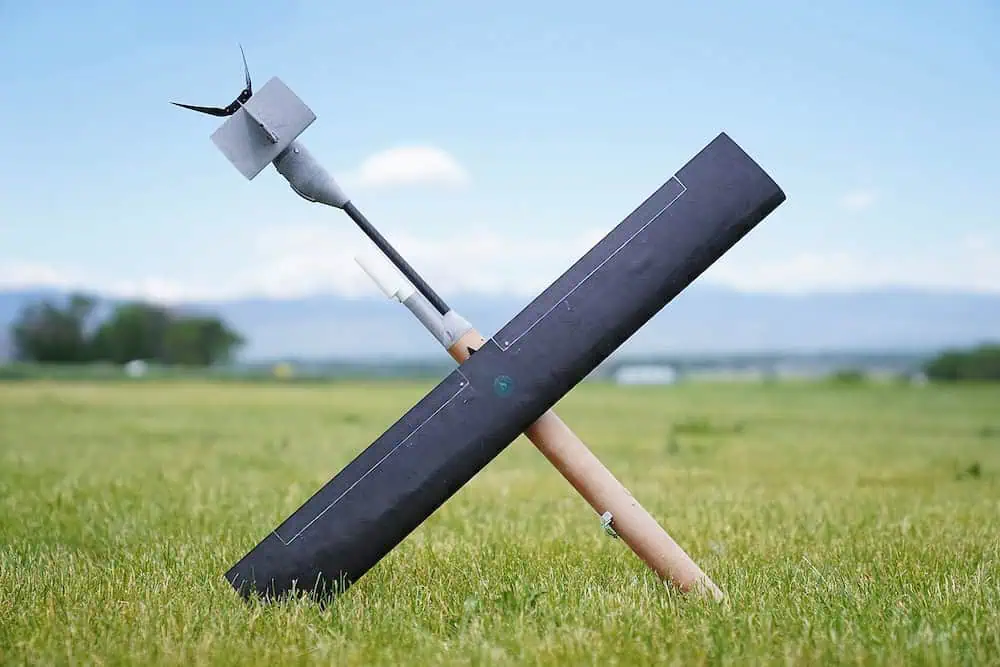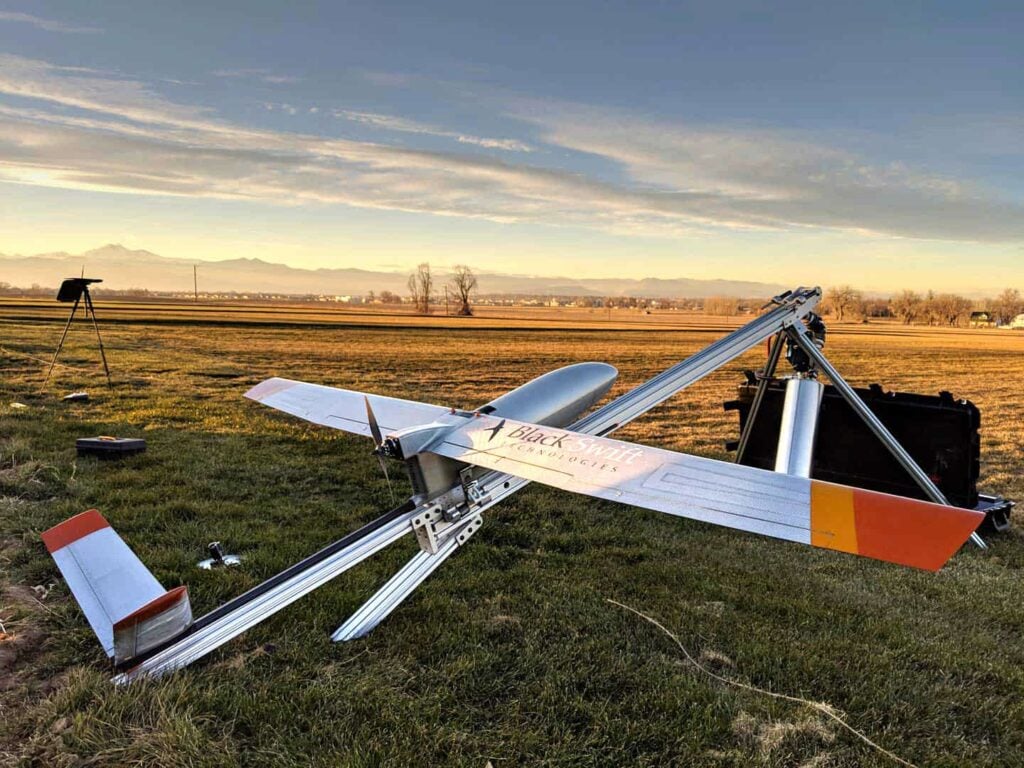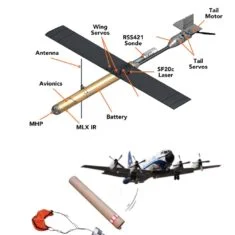


Black Swift Technologies (BST) has successfully completed the initial phase of a NASA-backed initiative aimed at showcasing the potential of integrating various onboard sensors too create a terrain-following fixed-wing unmanned aircraft system (UAS). This innovative technology will be demonstrated using BST’s Black swift S2 UAS.
By leveraging artificial intelligence (AI) and machine learning, BST is poised to drive the growth and acceptance of UAS across the industry. The company’s autonomous navigation capabilities allow fixed-wing UAS to maneuver around obstacles and traverse challenging terrains, thereby enhancing operational safety for both users and the general public.
“Our cutting-edge sensor suite and sensor fusion methodology unlock capabilities that have not been previously available for fixed-wing UAS,” states Jack elston, Ph.D., CEO of Black Swift Technologies. “The integration of these advancements with our sophisticated avionics system substantially enhances the safety of operating small fixed-wing UAS in complex environments or beyond visual line of sight.”
Fixed-wing aircraft have the advantage of covering larger areas in a shorter time frame compared to multi-rotor drones. Though, low-altitude sensing presents its own set of challenges. Navigating around obstacles like trees and towers,and also dealing with terrain variations that may exceed the aircraft’s climbing ability,are meaningful barriers to the widespread adoption of fixed-wing aircraft for scientific and commercial data collection.
BST’s innovative approach combines state-of-the-art machine vision technologies with advanced sensors, such as lidar and radar, into a modular subsystem. This enables fixed-wing UAS to operate safely across diverse environments and weather conditions.
While the initial focus will be on fixed-wing UAS, particularly the Black Swift S2, this enhanced onboard intelligence subsystem will eventually be adapted for multi-rotor UAS and other platforms in subsequent versions.
In recent years, there has been notable progress in collision avoidance technologies for multi-rotor drones. This has not only led to the miniaturization and diversification of proximity sensing systems but has also inspired various technologies for onboard image processing and data fusion. Although some of these advancements can be applied to fixed-wing collision avoidance,the higher speeds and dynamics of larger fixed-wing UAS necessitate longer-range sensing and real-time predictive decision-making capabilities to ensure timely reactions.
Recent innovations in autonomous vehicles and advanced driver assistance systems (ADAS) have introduced a range of longer-range sensors, including radars and lidars. This project integrates conventional vision-based techniques with both lidar and radar, facilitating data collection flights for fixed-wing UAS in a wide array of environments.
In scenarios where an in-flight emergency arises, particularly when the UAS is operating beyond visual line of sight (BVLOS), the system can execute remote and autonomous landings. This is made possible through the use of online machine vision classifiers,which can accurately identify obstacles (such as people,buildings,and vehicles) that may obstruct a safe landing area. Consequently, this results in an autonomous landing that minimizes risks to both individuals and property.
Numerous applications for UAS require vehicles capable of covering extensive sampling areas, including pipeline inspections, monitoring rock and mudslides, analyzing snowpack, assessing forest biofuel potential, identifying invasive plant species, observing trace gas emissions over volcanoes, and conducting missions that demand high-resolution imagery.
Employing a UAS that can transport essential instruments through challenging environments significantly enhances the calibration and validation of data gathered from ground-based and satellite methods. This active remote sensing approach—where signals are emitted, interact with the surroundings, and the altered signals are detected—enables UAS-collected data to contribute to more extensive 3D models than customary remote sensing techniques.
As a notable example, in volcano monitoring, low-altitude UAS flights (tracing the terrain of the forest canopy) allow the vehicle to directly sample gas plumes and ash clouds that are close to the ground, where the most critical chemical and physical characteristics are found promptly following eruptions.
utilizing UAS to measure hazardous phenomena, such as wildfire smoke, mitigates the risk to researchers and scientists who would otherwise need to observe these dangers up close. UAS systems empower researchers to gather essential data while maintaining a safe distance from hazardous conditions.
Black Swift’s technology facilitates active navigation around obstacles and rugged terrains for fixed-wing UAS, thereby minimizing potential risks to both people and property.