

Understanding inertial Measurement Units (IMUs)
Explore innovative offerings from 19</strong premier global providers
view Suppliers Showcase Your Solutions
SUPPLIER SPOTLIGHT
An Inertial Measurement Unit (IMU) is a sophisticated electronic device that employs accelerometers and gyroscopes to gauge acceleration and rotation, providing crucial positional data.
IMUs play a vital role in unmanned aerial vehicles (UAVs, UAS, and drones), with applications spanning control and stabilization, navigation and correction, measurement and testing, as well as mobile mapping.

The raw data generated by an IMU,including angular rates,linear accelerations,and magnetic field strengths,can be integrated into systems like Inertial navigation Systems (INS),which compute relative position,orientation,and velocity to enhance UAV navigation and control.
Explore our directory of IMU suppliers & manufacturers for Drones, UAV & UAS here >>
Inertial Measurement Units for Drones
IMUs come with a diverse array of features, specifications, and parameters, making the selection process dependent on the specific needs of a UAV submission. This article discusses key considerations such as technology, performance, and durability when choosing an IMU for drone applications, while also spotlighting some of the top IMU manufacturers in the UAS sector.
Technologies behind Inertial Measurement Units
IMUs are available in various types,some of which include magnetometers for measuring magnetic field strength. The primary technological categories for UAV applications include: silicon MEMS (Micro-Electro-Mechanical Systems), Quartz MEMS, FOG (Fiber Optic Gyro), and RLG (Ring Laser Gyro).
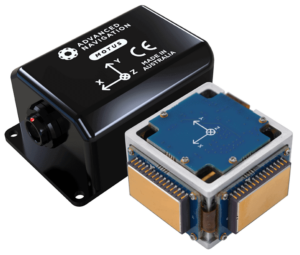
advanced Navigation’s Motus MEMS IMU
Silicon MEMS IMUs utilize miniaturized sensors that either measure the deflection of a mass due to movement or the force needed to maintain a mass in position. While they generally exhibit higher noise and vibration sensitivity compared to FOG IMUs, advancements in technology are enhancing their precision.
MEMS IMUs are especially suited for smaller UAV platforms and mass production, as they can be produced in smaller sizes and weights at a lower cost.
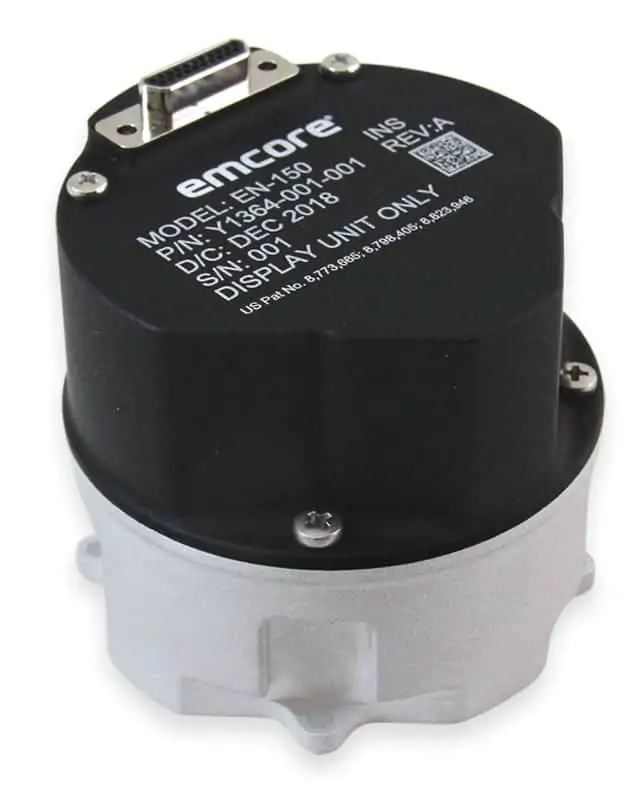
EMCORE’s EN-150 FOG IMU
FOG imus employ solid-state technology that utilizes light beams traveling through coiled optical fibers. They are less affected by shock and vibration, offering excellent thermal stability, even though they can be influenced by magnetic interference. Their high performance in critical parameters such as angle random walk and bias instability makes them ideal for precision navigation in mission-critical UAV applications.
with higher bandwidth, FOG IMUs are also suitable for stabilizing high-speed platforms. Generally larger and more expensive than MEMS IMUs, they are frequently enough found in larger UAV systems.
RLG IMUs operate on a similar principle to FOG IMUs but utilize a sealed ring cavity instead of optical fibers. They are regarded as the most accurate IMU technology but are also the most costly and typically larger than other types.
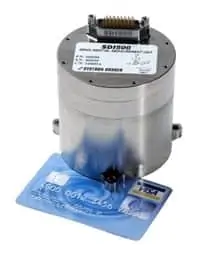
The Systron Donner Inertial (an Emcore brand) SDI500 Quartz MEMS IMU
Quartz MEMS IMUs utilize a single-piece inertial sensing element, micro-machined from quartz, which is driven by an oscillator to vibrate at a specific amplitude. This vibration can be used to detect angular rate, producing a signal that can be amplified and converted into a DC signal proportional to the rate. Quartz MEMS technology is known for its reliability and stability across temperature variations, making it suitable for UAVs operating in space- and power-constrained environments.
Discover suppliers of Inertial Measurement Units for UAVs, UAS, and drones.
IMU suppliers
Evaluating IMU Performance and Precision
The effectiveness and precision of an IMU are resolute by various factors, including sensor technology, packaging thermal properties, and the software utilized. The following parameters can be considered when assessing the performance and accuracy of specific IMUs,aiding in the selection for a particular UAV application:
- Bias – what does the IMU output when there is no input?
- Bias repeatability – how consistent is the IMU bias under varying conditions (e.g., after each power cycle)?
- Bias stability – how much does the bias fluctuate over time?
- Random Walk – how much random noise is present in the output?
- Vibration Sensitivity – how much does the angular rate output change in response to environmental vibrations?
These factors depend on the technologies employed in the IMU and the physical characteristics of the accelerometers, gyroscopes, and magnetometers. Incorporating temperature compensation in an IMU can enhance measurement stability.
For applications requiring high accuracy, such as UAV surveying and mapping, a high data output rate is crucial to minimize errors from interpolation between readings.
Explore our directory of IMU suppliers & manufacturers for Drones, UAV & UAS here >>
Inertial Measurement Units for Drones & UAS
IMU Performance Classifications
Inertial sensors can generally be categorized into performance classes based on bias stability specifications, which help to define the performance of a module. higher-grade sensors typically offer greater accuracy.
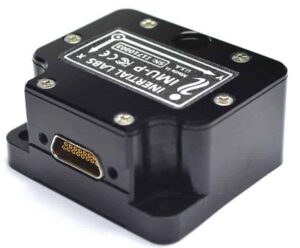
Inertial Labs’ IMU-P tactical Grade IMU
Tactical and industrial-grade IMUs are frequently enough preferred for rigorous applications like UAV navigation due to their high performance and accuracy levels.
Tactical-grade IMUs feature gyroscopes with exceptionally low in-run bias stability, ensuring that offset errors remain stable over time. This characteristic is essential for mission-critical and high-precision tasks such as UAV navigation and stabilization of antennas and weapon platforms.
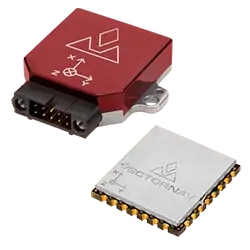
VectorNav’s Industrial-Grade IMUs
Industrial-grade IMUs, while offering lower accuracy than tactical-grade IMUs, provide better performance and reliability than those designed for consumer use.
They exhibit good shock and vibration tolerance and maintain consistent performance over time and temperature. Many industrial-grade IMUs are factory-calibrated to enhance temperature performance.
MEMS-based IMUs are frequently utilized in industrial-grade applications, particularly in UAV platforms that prioritize compact components for stabilization, control, and navigation.
Along with consumer, industrial, and tactical-grade IMUs, higher classifications such as navigation-grade and military-grade are also available.
Durable IMUs for Harsh Environments

Tactical Grade FOG IMU by Novatel
IMUs designed for UAVs frequently enough need to be exceptionally rugged to endure challenging conditions, including high shock and vibration levels, and also extreme temperature ranges.Enclosures may be crafted from precision-machined anodized aluminum and rated to various ingress protection standards (like IP67) to safeguard against environmental stresses and hazards.
IMUs with low vibration sensitivity offer enhanced accuracy in navigation for UAVs operating in high-vibration environments.
ITAR-Compliant IMUs
IMUs that are ITAR (International Traffic in Arms Regulations)-compliant are not subject to export controls that necessitate a license for transferring any system globally containing ITAR-controlled technology. Utilizing an ITAR-compliant IMU in an unmanned system design simplifies international sales of the final product.
IMUs classified as Significant Military Equipment (SME) and thus governed by ITAR regulations include those specifically designed for unmanned aircraft and weapon systems.
Compact imus
Size, Weight, and Power (SWaP) considerations are crucial in the design and development of UAV platforms. Many manufacturers strive to minimize the overall size and weight of their systems to enhance flight range, extend flight duration, or increase payload capacity.
This has led to the creation of miniature IMUs that meet the stringent SWaP requirements of UAVs, featuring extremely low weight and compact dimensions.
Explore our directory of IMU suppliers & manufacturers for Drones, UAV & UAS here >>
Inertial Measurement Units for Drones
Selecting the Ideal IMU
Engineers tasked with designing UAV systems must identify and prioritize the performance, SWaP, and cost factors that are critical to their design’s success to choose the right IMU and technology. Comparing IMUs based on their specific technologies and performance characteristics will be a vital part of the design process.
The inertial sensor market encompasses a vast range of product prices and performance levels; here is an overview of some of the leading IMU manufacturers:
SBG Systems
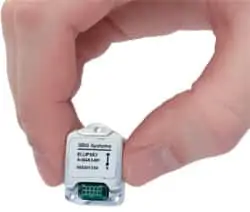
SBG Systems specializes in MEMS-based ITAR-free inertial sensors that balance cost, size, and performance for unmanned systems applications.
The Ellipse 2 Micro Series is SBG’s smallest high-performance IMU, weighing just 10 grams and designed for SWaP-conscious unmanned systems. These IMUs can be integrated with a GNSS receiver for enhanced positional accuracy, heave, and heading output. Learn more >
inertial Labs
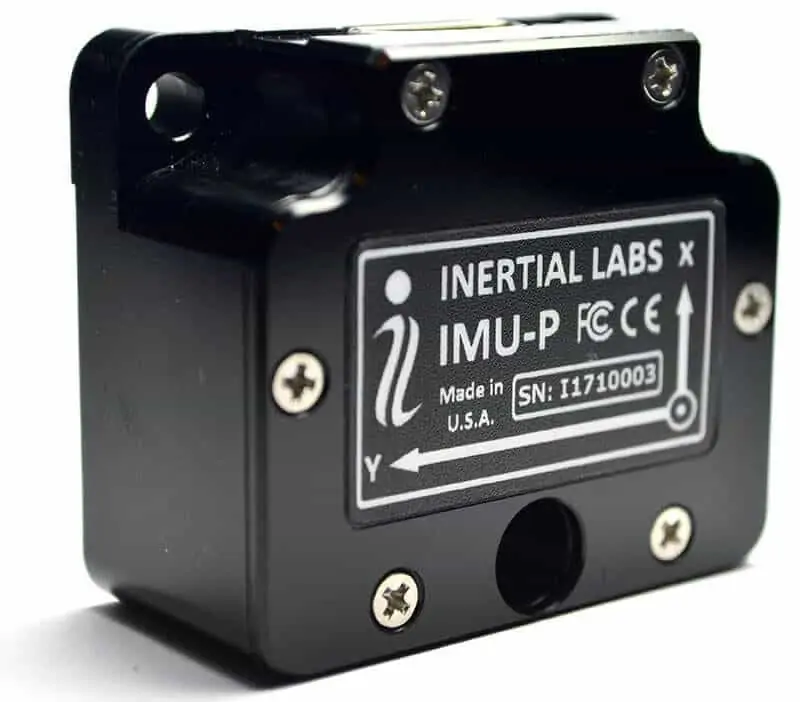
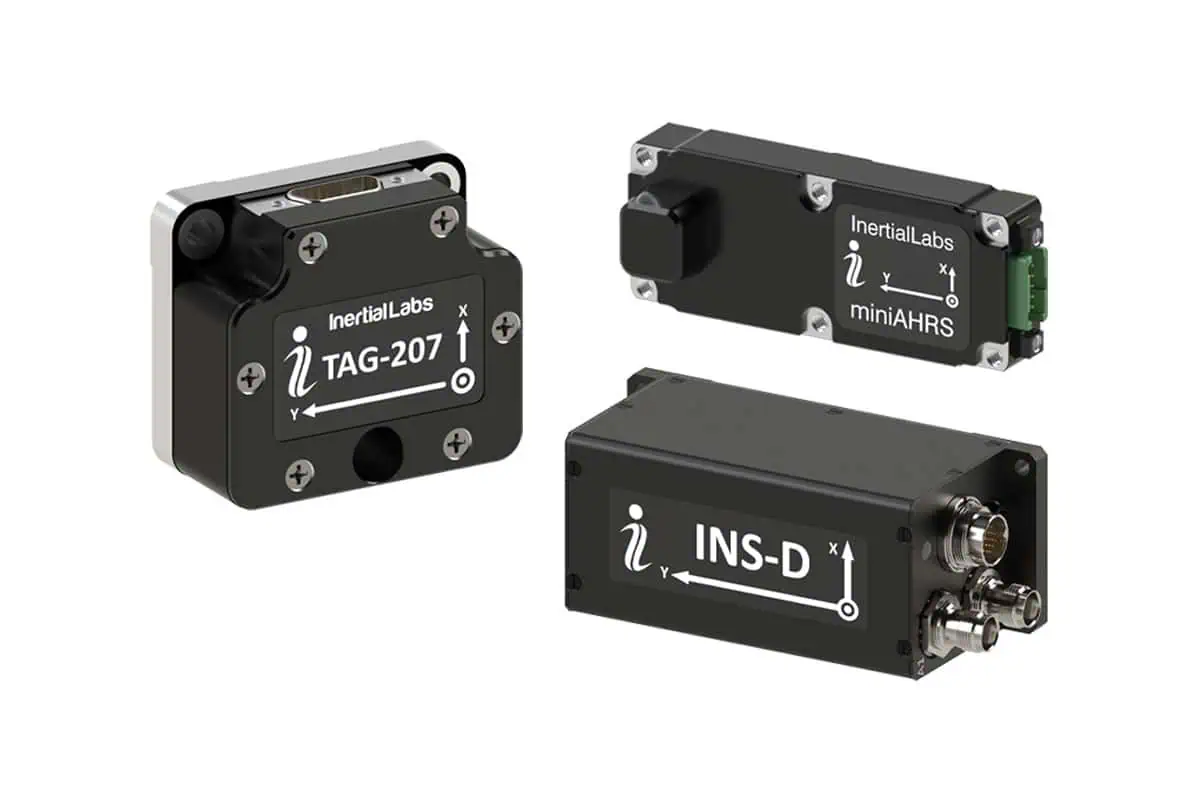
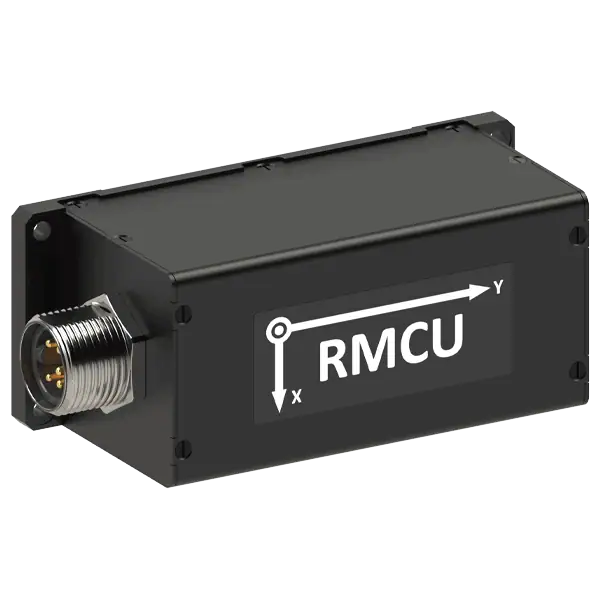
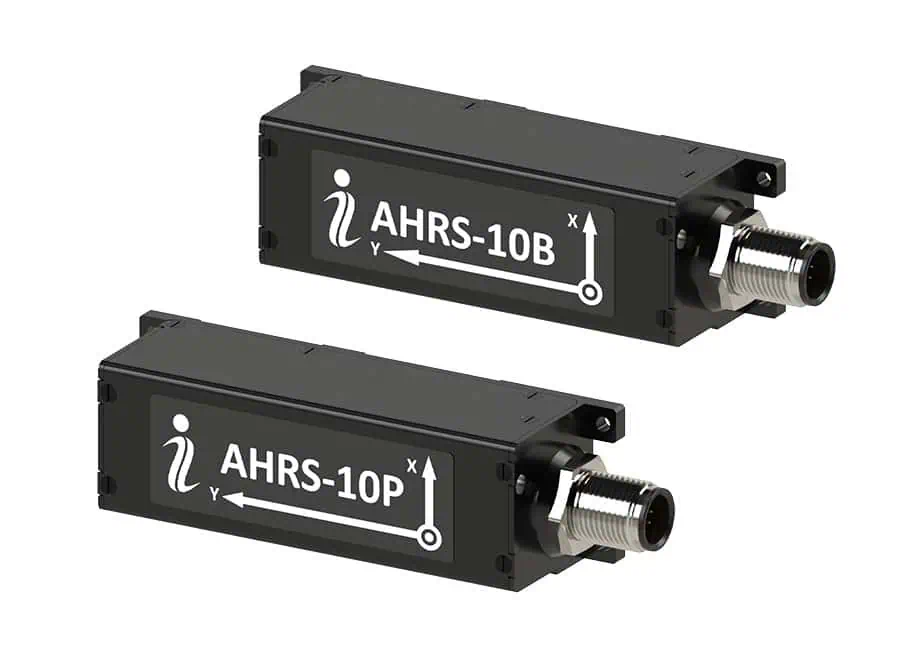
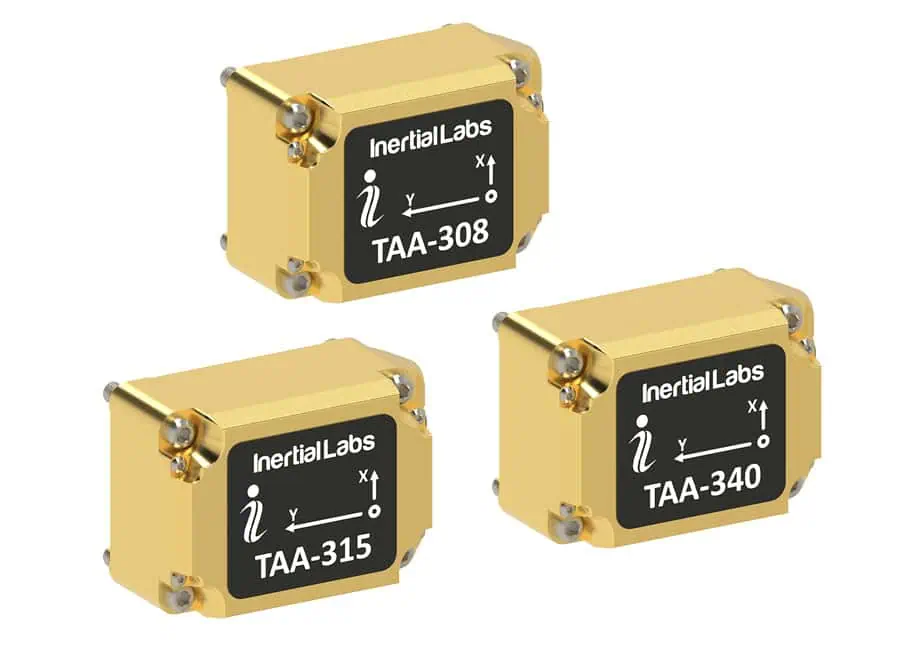
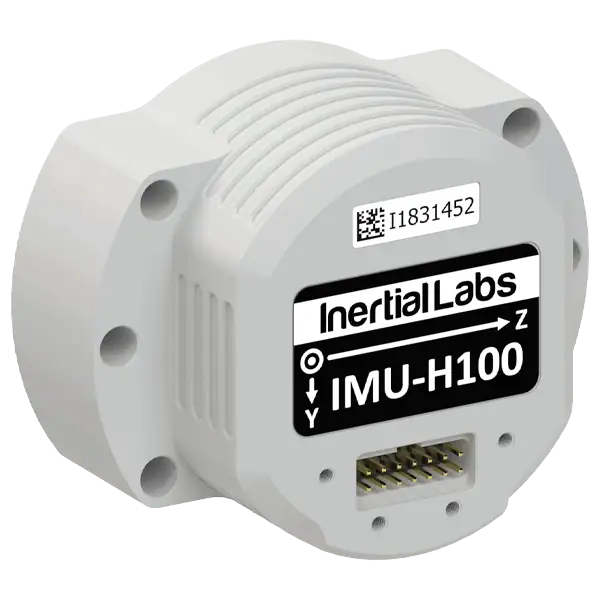
Inertial Labs develops high-performance MEMS-based inertial solutions that are compact and energy-efficient. The Inertial Labs IMU-P is an ITAR-free, fully temperature-calibrated and compensated IMU available in both industrial and tactical grades, designed for various applications including UAV navigation and control.
Learn more >
Advanced navigation
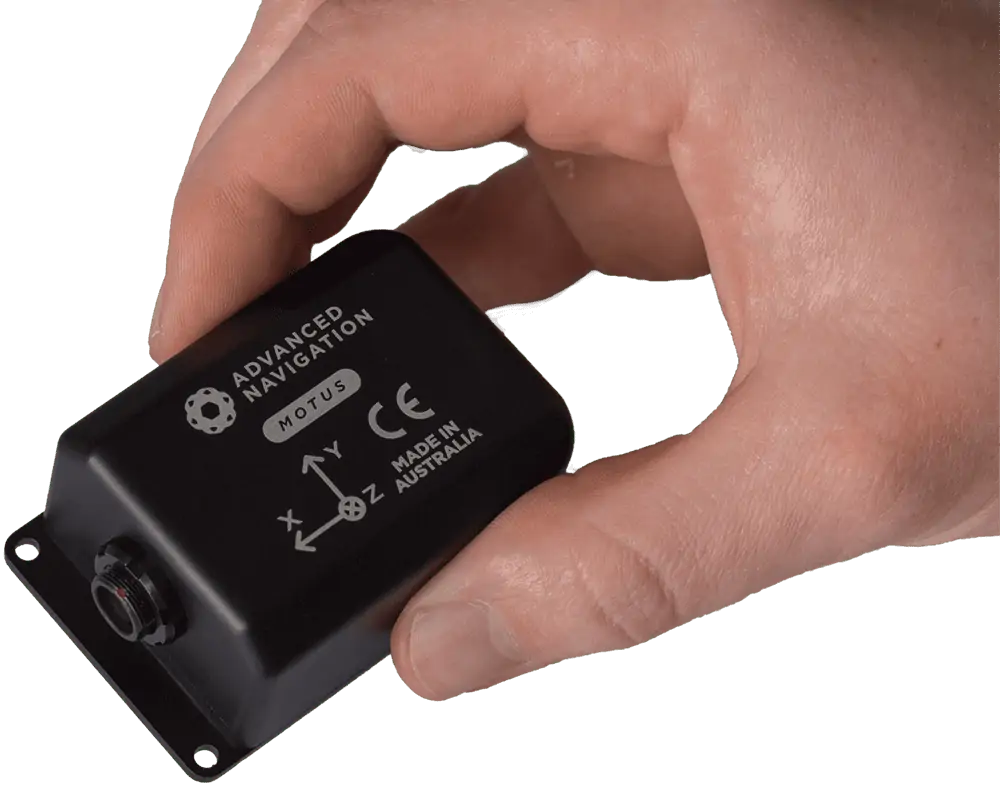
Advanced Navigation provides MEMS and FOG-based navigation solutions for both commercial and military UAV applications. The Motus is a miniature ultra-high accuracy MEMS IMU that delivers inertial performance surpassing even some FOG IMUs. Weighing only 26 grams, it features a bias stability of 0.4 °/hr.Learn more >
VectorNav Technologies
VectorNav Technologies specializes in advanced MEMS tactical and industrial-grade sensors designed for challenging environments.
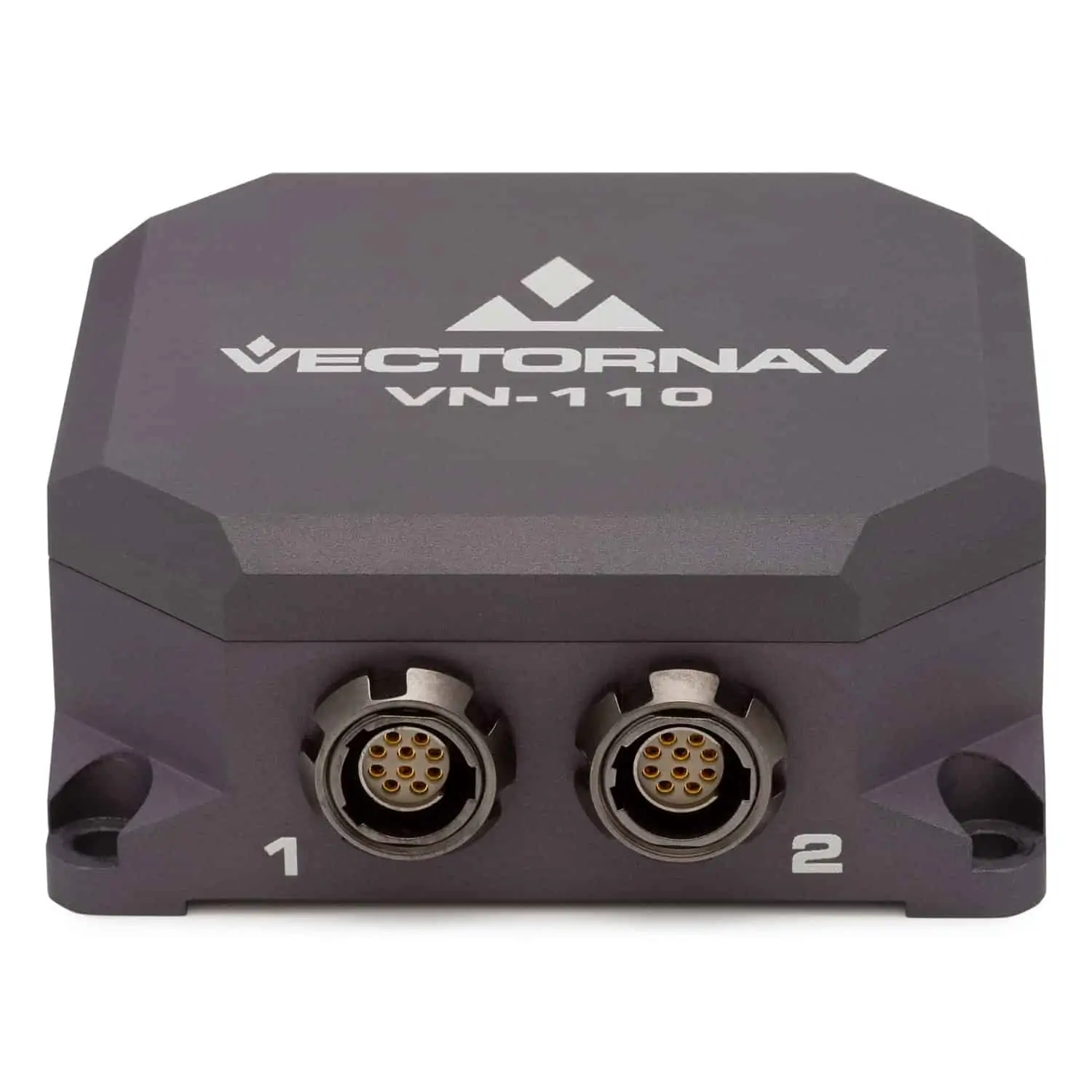
The VN-110 is a compact tactical-grade IMU/AHRS (Attitude & Heading Reference System) housed in a rugged aluminum casing. With less than 1˚/hr in-run gyro bias stability, its industry-leading algorithms provide precise position, velocity, and attitude estimates along with compensated inertial measurements.
The VN-100 is a miniature industrial-grade IMU/AHRS, built on a high-performance, temperature-calibrated IMU core, available in both surface mount and rugged packaging options. Learn more >
EMCORE
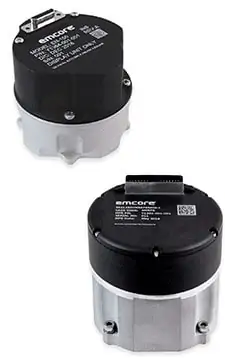
EMCORE specializes in high-precision FOG IMUs designed with low SWaP requirements for UAVs and unmanned systems. The EN-150 is currently the smallest closed-loop FOG-based IMU available, offering exceptional accuracy and performance.
The EN-300 is a low-noise, high-stability FOG IMU that meets the high-performance demands for GPS-denied navigation, precise targeting, and line-of-sight stabilization. It is indeed available in three performance variants to accommodate a wide range of applications. Learn more >
Parker Hannifin, MicroStrain Sensing Systems
Parker manufactures the MicroStrain line of inertial sensors, which are miniature sensors designed for seamless integration into existing unmanned platforms. The 3DM-CV5-10 is a fully calibrated and temperature-compensated miniature industrial-grade IMU, measuring 38 mm x 24 mm x 9.7 mm and weighing just 8 grams, making it Parker’s smallest, lightest, and highest-performing IMU in its category. Learn more >
NovAtel
NovAtel provides a variety of IMUs from leading manufacturers, which can be paired with a GNSS receiver to deliver highly accurate and continuous position, velocity, and attitude data. Options include commercial MEMS IMUs, high-end tactical-grade MEMS IMUs, tactical-grade FOG IMUs, and tactical-grade RLG IMUs. Learn more >
FIBERPRO
FIBERPRO develops tactical-grade FOG-based inertial Measurement Units for drones and autonomous vehicles, enhancing performance with improved linearity, reduced bias drift, and phase shift cancellation.
The FI 200C provides high-accuracy velocity and angular rate data via a digital output. This closed-loop, ITAR-free IMU features a bias repeatability of less than 0.5 degrees/hour across the full temperature range. Learn more >
Gladiator Technologies
Gladiator Technologies focuses on low-noise, high-performance MEMS-based IMUs designed for demanding environments. Their rugged IMUs feature environmental sealing, precision alignment, and internal vibrational isolation, along with bias, scale factor, and misalignment modeling across the entire operating temperature range. Learn more >
Silicon Sensing
Silicon Sensing produces high-performance MEMS IMUs for a wide range of unmanned applications. The IMU20 is an aerospace- and space-grade IMU capable of withstanding high-impact, high-vibration environments. This medium-grade, non-ITAR IMU is suitable for both commercial and industrial applications, particularly for UAVs and satellite launch platforms. Learn more >
MostaTech
MostaTech specializes in ultra-miniature FOG (fiber optic gyroscope) sensor technologies, providing precise motion and orientation measurements in lightweight, rugged packages.
The non-ITAR U Series includes the highly compact U183 and U121D, both designed to meet a broad range of unmanned inertial requirements and featuring a fully integrated ADC board with RS422 serial communications, allowing user-adjustable data rates from 0.1 to 4 kHz. Learn more >
Discover suppliers of Inertial Measurement Units for UAVs, UAS, and drones.

IMU Suppliers