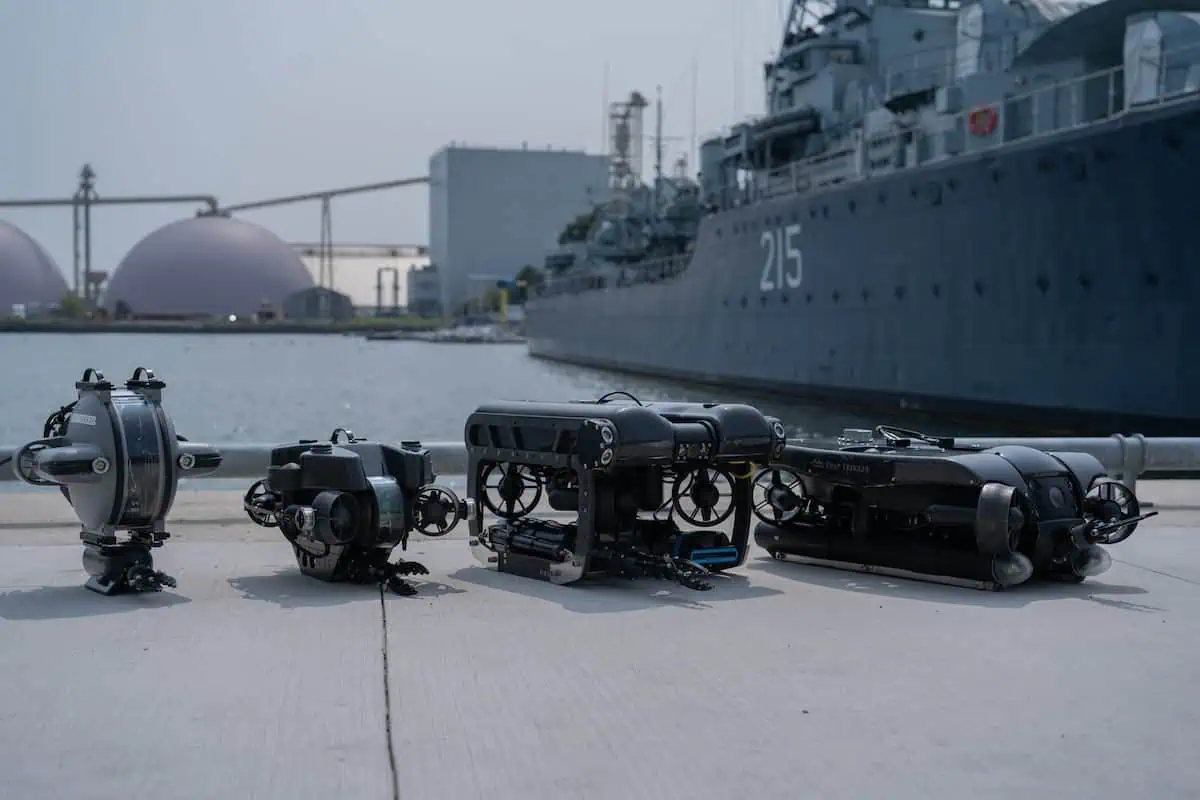


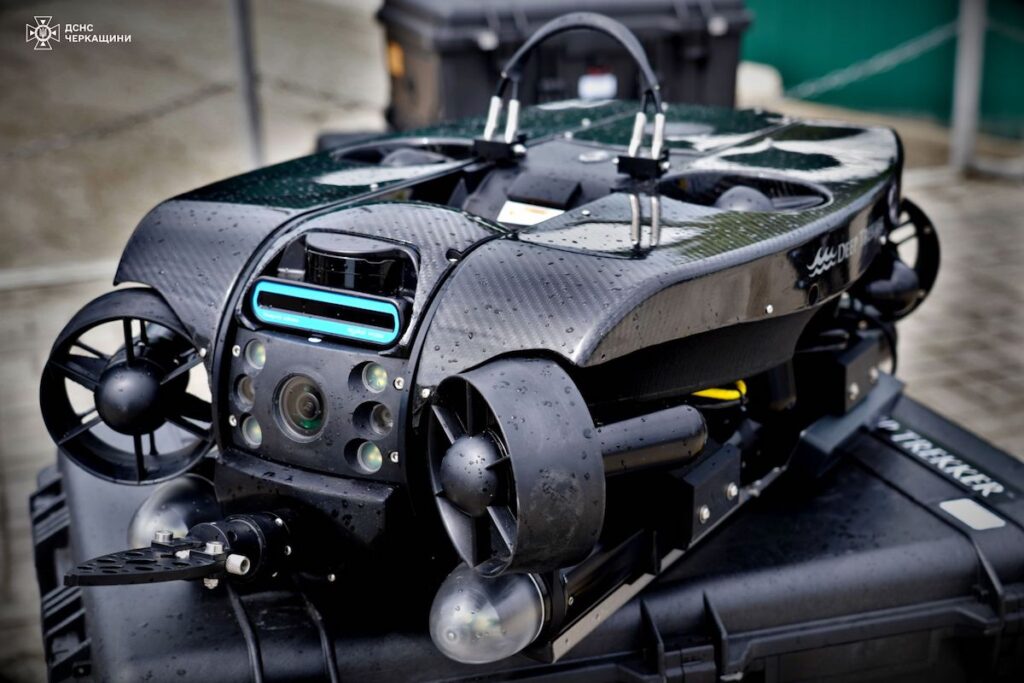
Deep Trekker has successfully supplied sixteen REVOLUTION ROVs to Ukraine’s State Emergency Service (SESU) as part of a United Nations Development Program (UNDP) initiative, backed by the governments of Korea, France, and New Zealand.
The ROVs will assist trained SESU teams in operations within water bodies affected by explosive remnants of war throughout Ukraine, facilitating essential underwater explosive ordnance disposal (EOD) tasks.
Alan Middup, President of Deep trekker, remarked, “providing the Emergency Services in Ukraine with our REVOLUTION ROVs through the UNDP is a significant milestone for Deep Trekker.
“This not only showcases the capabilities of our ROVs in challenging environments but also highlights our global presence and expertise. I take great pride in having deployed our technical and mission specialists to Ukraine to train emergency services in utilizing these systems. The work these teams can now perform in Ukraine’s waterways is vital for ensuring safety in the region.”
Overview of the UNDP Initiative
The deployment of ROVs is part of a broader UNDP-led mine action initiative in Ukraine. This project encompasses not only the provision of underwater drones but also includes technical training, the development of inter-agency standard operating procedures (SOPs), and strategic alignment to guarantee safe and standardized operations across various regions.
According to SES estimates,approximately 13,500 square kilometers of inland water require assessment for explosive hazards. The introduction of ROVs significantly enhances the feasibility and safety of this extensive task.
A representative from the Embassy of the Republic of Korea in Ukraine stated, “We recognize that considerable risks lurk beneath the water’s surface, necessitating innovative solutions to address them. We are proud to assist SES divers with technologies that enable them to operate safely and effectively.”
Frederic rousseau, Humanitarian Attaché at the French Embassy in ukraine, added, “France has consistently supported Ukraine’s national demining capacity, and we are honored to be part of this initiative.Today’s transfer exemplifies our commitment to the safety of the Ukrainian populace.”
Paul Ballantyne, Chargé d’Affaires ai from New Zealand, stated, “By collaborating with UNDP on underwater mine clearance, the Government and people of New Zealand are dedicated to helping communities rebuild with enhanced confidence and security.”
Oleksiy Migrin, Deputy Head of SES, emphasized, “Equipping our specialists with modern tools and providing training is crucial for their safety and operational effectiveness.”
Maria Gutsman, Head of UNDP Ukraine’s Recovery and Peacebuilding Programme, articulated the overarching goal, “Customary methods are no longer adequate—innovations are essential for saving lives.” This includes ROVs, AI-driven detection technologies, aerial and satellite data, and other advancements that assist Ukraine in systematically reclaiming contaminated areas. In 2024, UNDP’s mine action initiatives reportedly facilitated the safe return of nearly 4 million square meters of land to productive use.
compact ROVs for Challenging and Low-Visibility Missions
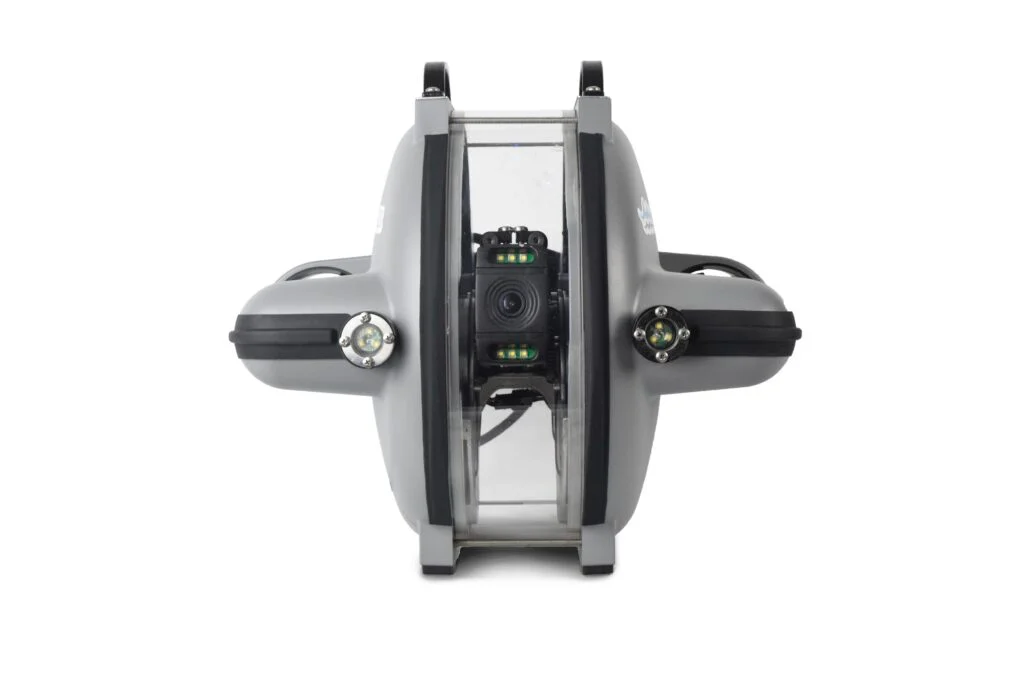
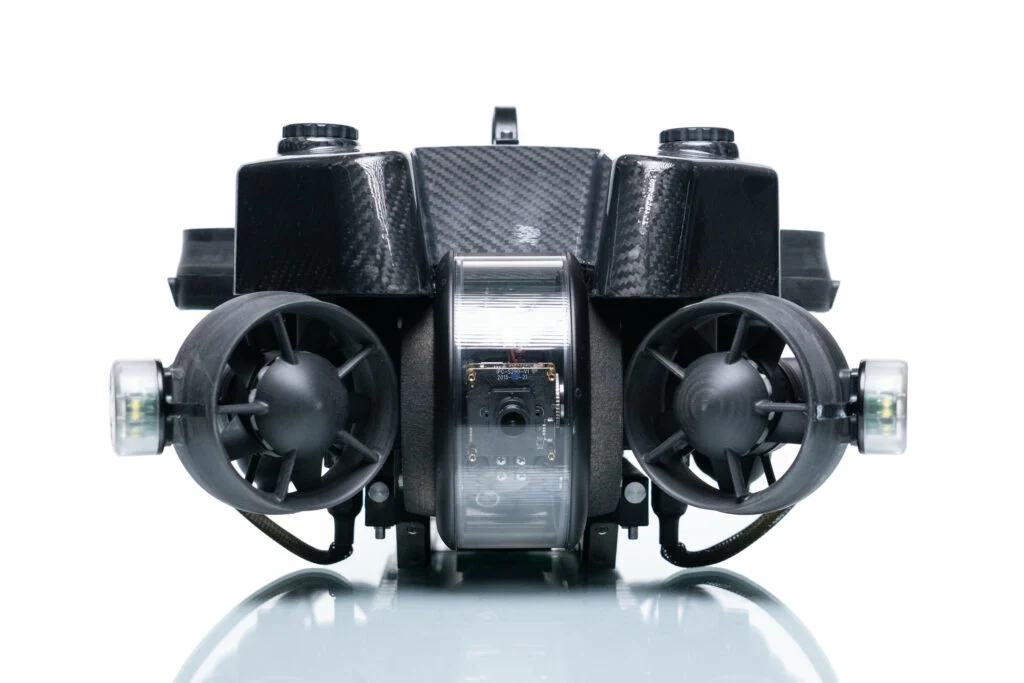
Engineered for resilience and high performance, the Deep Trekker systems provided to SES can operate at depths of up to 300 meters. They feature imaging sonars and visual cameras, along with advanced navigation tools for use in low-visibility and GPS-denied environments. These capabilities enable divers and EOD teams to inspect,identify,and mark potential threats more efficiently and with reduced personal risk.
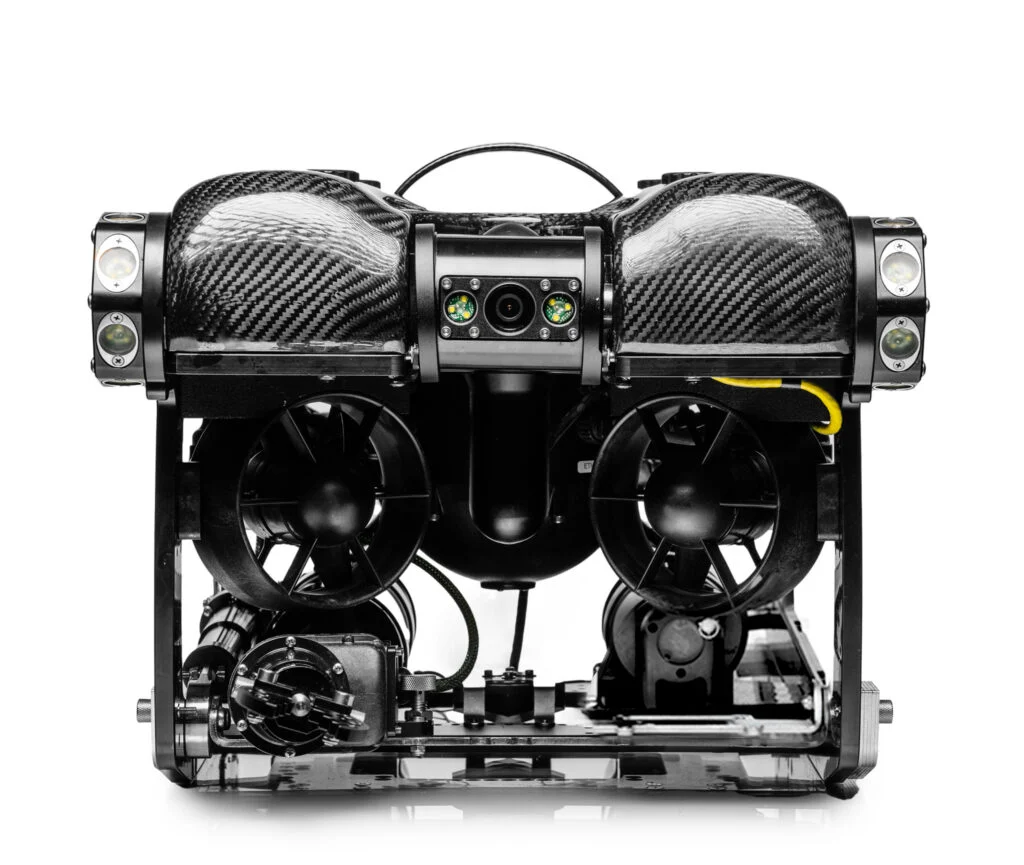
Each deployed REVOLUTION ROV is based on Deep Trekker’s RECON configuration,equipped with a comprehensive suite of integrated tools:
- M1200d Blueprint Oculus multibeam sonar
- IMAGENEX Micro Side Scan Sonar
- SensorPod + with DVL for inertial navigation (resistant to GPS/GNSS jamming)
- BRIDGE Console and application suite
- Dual-chamber lithium batteries for extended operational time
- Service parts kit for field maintenance
This configuration is designed to identify,track,and map targets in low-visibility conditions,achieving confirmed positional accuracy within a few meters even after prolonged missions. The dual-sonar system allows for both real-time visual acquisition and extensive area scanning, while the inertial navigation unit ensures operational continuity in GNSS-denied zones.
The REVOLUTION ROV is crafted for field deployment with minimal logistical demands. With battery operation, robust materials, and a streamlined service architecture, it is built to endure demanding missions while remaining easy to maintain. These features are critical for ongoing EOD operations in Ukraine’s inland waters, where time, access, and safety are constant challenges.
Data Management and Control via BRIDGE Console
A significant enhancement is the introduction of Deep Trekker’s BRIDGE Console—a rugged control system that allows operators to manage sonar data, video feeds, mission logs, and mapping overlays in real time. The BRIDGE app facilitates easy export of all mission data for inter-agency coordination and post-mission analysis.
the BRIDGE Console supports advanced navigation functions powered by the integrated DVL and SensorPod +, ensuring consistent tracking and mapping even in GPS-denied environments.
During operational testing, the system exhibited reliable positional accuracy, with drift limited to a few meters after 30 minutes of submerged operation.Operators can generate and overlay mission maps, re-acquire known targets with high precision, and effectively manage ongoing search patterns within a single integrated interface.
Riccardo Caponi, Account Executive at Deep Trekker, stated, “All data is integrated and accessible through the Bridge Console and the Bridge app. There is incredible adaptability in how data is displayed,transferred,and managed in the field.”
Training SESU for Effective ROV Operations
Over a two-week period, Deep Trekker’s technical team and UNDP experts collaborated on-site with SESU divers to provide comprehensive training on the REVOLUTION ROV systems. The training combined classroom instruction with practical deployment scenarios, covering system setup, launch and recovery procedures, tether management, sonar operation, inertial navigation workflows, and mission data handling using the BRIDGE Console and app.
Operators received training on both primary sonar systems (Blueprint M1200d multibeam and Imagenex Micro Side Scan) as well as procedures for reacquiring targets, conducting systematic search patterns, and managing data overlays for post-mission analysis.
Thirty-one SESU personnel successfully completed the training programme and are now capable of operating the systems independently. The hands-on approach allowed participants to execute full mission cycles in diverse conditions, reinforcing real-time decision-making using the ROV’s sensor suite and navigation data.
Tim De La Franier, deep trekker Diagnostician & Service Trainer, remarked, “It was an incredible experience and a true honor to work with the UNDP in delivering ROVs to SESU. These ROVs will significantly enhance their operational capabilities, equipping them with advanced tools necessary for conducting critical missions more safely and effectively. Their focus, commitment to mastering the new technology, and eagerness to learn made the training process highly effective and efficient.”
Caponi added, “Training the State Emergency Service of Ukraine for two weeks on our underwater robots for IED operations was an incredibly impactful experience. Their dedication and quick understanding of the technology, especially given the critical nature of their work, was truly inspiring. We’re proud to have equipped them with new capabilities for such vital missions.”
Ihor Bezkaravayny, Deputy Minister of Economy of Ukraine, emphasized, “This is another significant step in ensuring that humanitarian demining efforts in Ukraine address real needs on the ground. We are sincerely grateful to UNDP and the governments of Korea, France, and new Zealand for their partnership in implementing innovative demining approaches.”