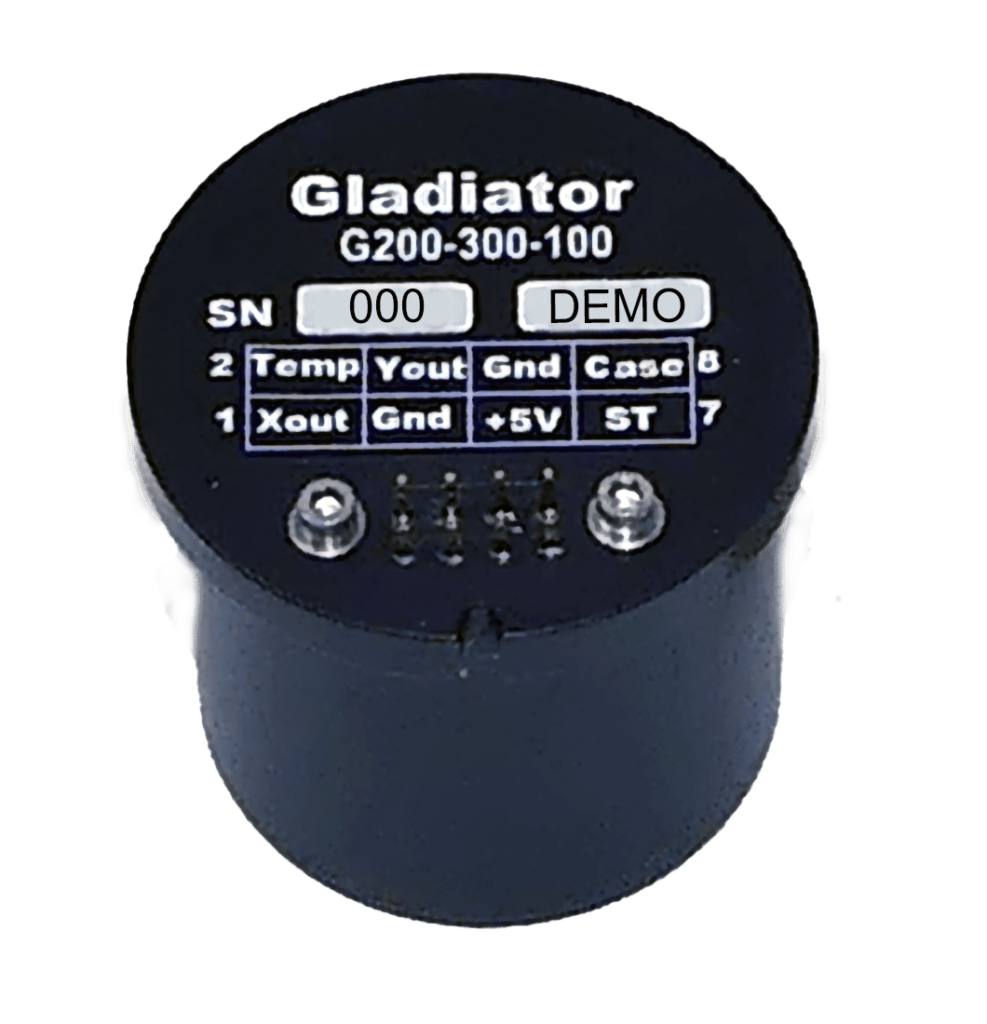
Introducing the GA50 Accelerometers by Gladiator Technologies: High-Performance MEMS solutions
the GA50 series accelerometers are meticulously crafted single-axis MEMS devices designed for optimal precision and dependability, notably suited for unmanned vehicles and autonomous systems. These accelerometers excel in delivering precise motion detection within a compact framework, making them perfect for applications such as inertial measurement units (IMUs), navigation, and guidance systems.
Diverse Performance Variants
Offered in 5g, 40g, and 70g configurations, the GA50 Accelerometers provide adaptability for a wide range of applications.Each unit features a bulk micro-machined silicon MEMS sensor paired with an request-specific integrated circuit (ASIC), an analog front end (AFE), and an integrated temperature sensor, ensuring remarkable accuracy and stability.
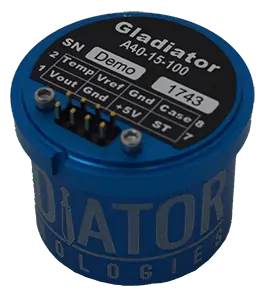
GA50 Accelerometer
Compact Design for Seamless Integration
Encased in a remarkably small LCC20 package measuring only 253 mm³ (0.25 cm³), the GA50 stands as Gladiator Technologies’ most compact MEMS accelerometer to date. Its minimal size facilitates effortless integration into systems with limited space while preserving high-performance standards.
Factory Calibration for Enhanced Reliability
Each GA50 Accelerometer is subjected to thorough factory calibration and conditioning across its entire operational temperature range. Built to endure shock and vibration, these sensors provide long-term bias repeatability and stability, guaranteeing consistent, high-precision measurements even in dynamic conditions.
Customizable Solutions & Evaluation-Ready Options
The GA50 Accelerometers can be customized to meet specific application needs and are available either individually or mounted on an evaluation board for easy testing. This versatility simplifies integration and validation processes in both progress and production settings.
Designed for accuracy and resilience, the GA50 Accelerometers offer a dependable motion-sensing solution for applications that demand precision, stability, and a compact design.
Read the original article >>