
Advancements in Underwater Exploration: The Hydrus Drone
In an unprecedented leap towards ocean exploration, the Hydrus drone from Advanced Navigation is transforming the landscape of underwater robotics.
This pioneering company, renowned for its innovations in AI and navigation systems, recently deployed Hydrus to the perilous depths of the Rottnest ship graveyard, situated in the Indian Ocean off Western Australia’s coast.
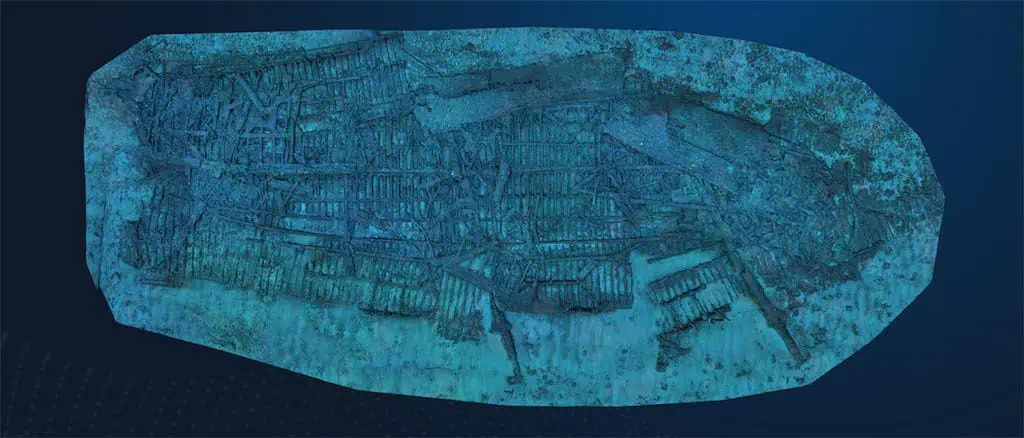
Upon analyzing the data collected, the team was thrilled to find that Hydrus had identified a 64-meter shipwreck on the ocean floor, a size that dwarfs even the largest marine creature, the blue whale.
Unlocking the Mysteries of Underwater Heritage
Astoundingly, only 24% of the ocean has been mapped and explored by humans. The remaining 76% conceals approximately 3 million undiscovered shipwrecks, wiht 1,819 documented wrecks along Western Australia’s coastline. Each wreck serves as a vital link to understanding our cultural, ancient, and scientific heritage.
Sence the early 1900s, the Rottnest graveyard has become a final resting place for ships, naval vessels, aircraft, and covert submarines. Many of these wrecks remain hidden due to their depths, which range from 50 to 200 meters. Accessing these sites typically requires specialized equipment and expertise, making such missions both costly and complex.
Unveiling the Ocean’s Hidden treasures
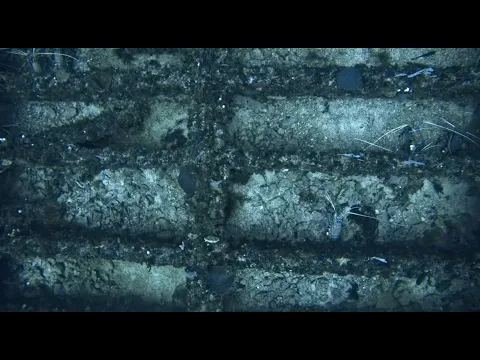
“Hydrus is compact enough for a single operator to deploy, utilizing its complex navigation and dialog systems to capture 4K video and images simultaneously. After surfacing, the team was ecstatic to discover that Hydrus had successfully surveyed a 64-meter shipwreck,” stated Peter Baker, Subsea Product Manager at Advanced Navigation.
“By pinpointing the exact coordinates of the wreck, we employed two Hydrus units to conduct three missions, completing the entire survey in under five hours. This efficiency is crucial in underwater exploration, where expenses can escalate rapidly.”
Creating a Virtual Replica of the Ocean floor
With expertise in shipwreck photogrammetry, Curtin University HIVE successfully reconstructed a high-resolution digital model of the wreck using data collected by Hydrus. This process involved generating a 3D digital twin from the 4K geo-referenced images and video footage captured by the drone.
Associate Professor Andrew Woods from Curtin University HIVE remarked,“The navigational coordinates provided by Hydrus are invaluable. They considerably enhance feature matching and reduce processing time, especially when dealing with larger datasets.”
Western Australia: A Hub of Maritime History
Dr. Ross Anderson, Curator at the WA Museum, revealed the historical importance of the wreck, identifying it as a coal hulk over a century old from Fremantle Port’s past. These iron vessels were once essential for servicing steamships in Western Australia.
among the fifteen documented iron and wooden ships in the graveyard, many were originally fast clipper ships that facilitated the lucrative grain and wool trade between the UK and Australia, constructed in the 1860s to 1880s and scuttled in the 1920s to 1930s. They now rest silently, awaiting exploration.
Dr. Anderson stated, “This is the most detailed and complete dataset the WA Museum has received from this wreck. This high-resolution imagery is crucial for maritime archaeological research and education regarding underwater cultural heritage. With tools like Hydrus, we can create accurate maps and 3D models of historic shipwrecks in deep waters, uncovering untold stories beneath the surface.”
The data has been made available to the WA museum for public archives and can be viewed in lifesize format at the Curtin university HIVE’s immersive Cylinder display.
The teams are now focused on revealing more secrets, including the luxurious SS Koombana, a passenger ship that vanished with over 150 people during a cyclone in 1912. They plan to continue their explorations in the Indian Ocean with Hydrus,aiming to uncover more of the ocean’s hidden narratives.
Micro AUV Hydrus Captures Shipwreck by Advanced Navigation on Sketchfab
Reducing Costs in Underwater Data Acquisition
Traditionally,collecting ocean data has been fraught with risks and high expenses. Deploying a human diver or remotely operated vehicle (ROV) to depths below 50 meters can cost around AUD$20,000, while missions deeper than 50 meters can exceed AUD$100,000.
However, Hydrus is revolutionizing the economics of ocean exploration. In this mission, it managed to cut surveying costs by up to 75%, allowing the team to conduct more frequent and thorough surveys in a shorter timeframe.its lightweight design (approximately 7 kg) negates the need for large vessels, complex launch systems, and specialized diving teams.