

Ophir Optronics has published a detailed application note outlining its strategies for developing infrared (IR) optics tailored to the demanding requirements of long-range security and surveillance systems.
INTRODUCTION
The importance of long-range infrared (IR) imaging in the security and surveillance sectors is on the rise, playing a crucial role in monitoring, tracking, and targeting. The global market for IR systems in commercial and dual-use security applications is projected to expand substantially, reaching approximately $243 million by 2025, with a compound annual growth rate (CAGR) of 6.1% from 2019 to 2025.
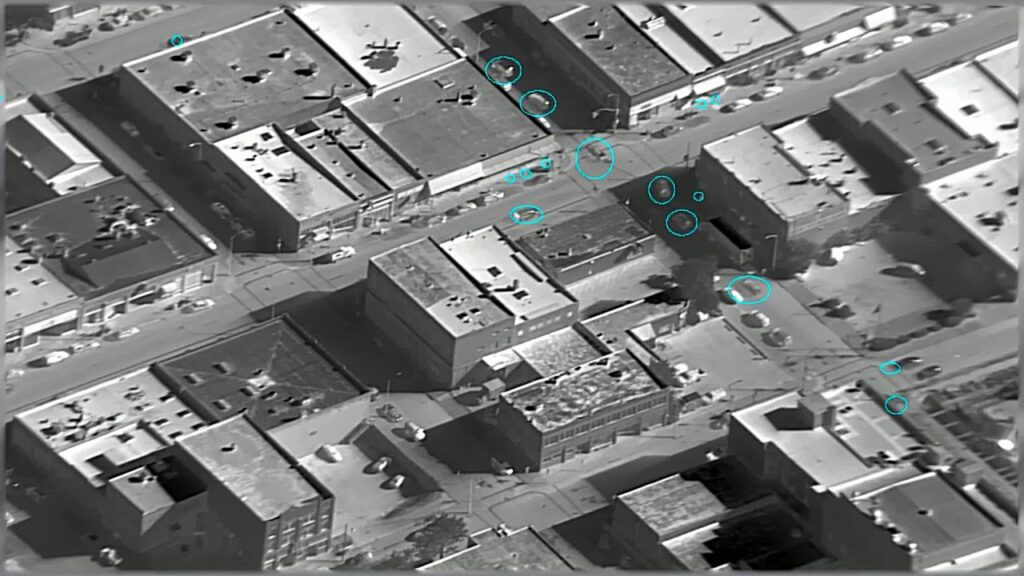
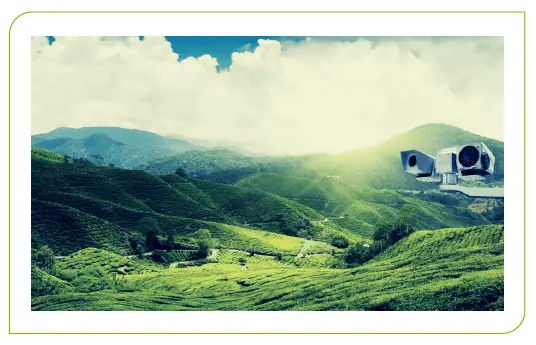
Utilizing IR imaging technology,long-range IR cameras are capable of capturing images of individuals and vehicles at extensive distances,wich is essential for contemporary security challenges. These cameras require high-performance IR lenses that can efficiently gather emitted IR radiation and direct it onto a detector array.
Fig. 1. IR Imaging in security and Surveillance cameras
The production of optical components, notably IR lenses for long-range security applications, is shaped by several recent market trends:
- Advancements in optics-limited IR systems – Innovations have resulted in sensors with smaller pixels and enhanced camera resolutions, necessitating optics-limited IR systems that incorporate advanced, high-precision optical components.
- Increased utilization of UAVs and drones – The deployment of UAVs and drones for security purposes comes with strict size, weight, and power (SWaP) constraints, prompting the need for innovative opto-mechanical designs.
- Rising demand for multi-spectral capabilities – There is a growing need for systems that can operate across multiple spectral bands,including SWIR+MWIR and MWIR+LWIR,which requires new specifications for IR components.
- Operational resilience in diverse environmental conditions – Security missions are conducted day and night, frequently enough in adverse weather conditions like rain or fog, necessitating durable optical components that maintain high performance across various environments.
CHALLENGES
Given these trends, optical manufacturers face the challenge of creating components that deliver high performance while adhering to the stringent requirements of modern security imaging systems.
Key considerations include:
- Detection, Recognition, and Identification (DRI) capabilities at long ranges
- Selection of sensor type, either uncooled LWIR or cooled MWIR
- Resolution and type of the detector
- Focal length and F# specifications
- Size and weight limitations (SWaP constraints, particularly for UAVs)
- Modulation Transfer Function (MTF) requirements for optical performance
- Environmental resilience
To address these challenges, Ophir employs innovative designs and advanced manufacturing technologies.
INNOVATIVE SOLUTIONS
Ophir adopts several strategies to develop IR optics that can withstand the rigorous demands of long-range security and surveillance systems:
Continuous Zoom Lens Design
This design approach allows for high performance while minimizing size and weight, utilizing a single zoom lens rather of multiple fixed-field lenses. This flexibility enables operators to adjust magnification during missions seamlessly.
Advanced Optical Design
- Utilization of advanced IR materials reduces the number of optical elements, addressing challenges related to athermalization, achromatization, and overall size and weight.
- Folded optics designs contribute to size and weight reduction (see fig.2).
- Diffraction-limited designs ensure optimal performance.
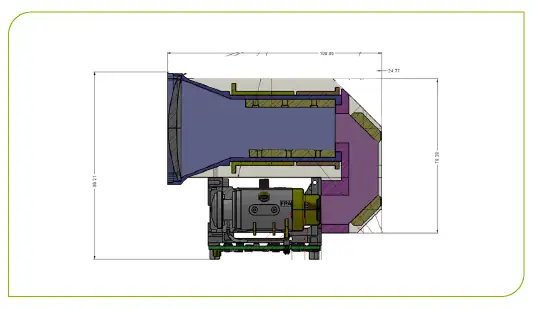
Fig. 2. Folded optics zoom lens design
Robust Mechanical Design
The mechanical design is crucial for ensuring durability in challenging environments while maintaining high accuracy and stability.Key components include:
- Precision-engineered mechanical parts
- Ground and hard-coated components for enhanced accuracy and stability
- Advanced materials that promote athermalization and low-SWaP design
- Resilience against harsh environmental conditions
Ophir optimizes lens assemblies for weight and rigidity to endure shock and vibration. Engineers design and test moving components for longevity without maintenance in extreme conditions,ensuring compliance with IP67 environmental standards.
State-of-the-Art Production Capabilities
With advanced in-house production capabilities, Ophir can manufacture components in various shapes and materials tailored to specific applications. High-precision large optics are essential for achieving narrow fields of view (FOV), and our cutting-edge lens production capabilities are pivotal in overcoming these challenges.
are critical for enhancing optical performance. Ophir employs high-durability (HD) and low-reflection hard carbon (LRHC) anti-reflective coatings to optimize both performance and durability in extreme conditions, suitable for multispectral applications.
Product Features
Ophir provides a diverse array of products for security and surveillance applications, characterized by:
- Consistent boresight across the entire zoom range
- Fixed F# maintained throughout the zoom range
- Focus retention across the zoom range
- Functionality in low temperatures and harsh environments
- High image quality
- Rapid FOV adjustments with continuous optical zoom
- Compatibility with major MWIR & LWIR detectors
To showcase our capabilities, we present three long effective focal length (EFL) zoom lenses designed for advanced long-range security and surveillance applications:
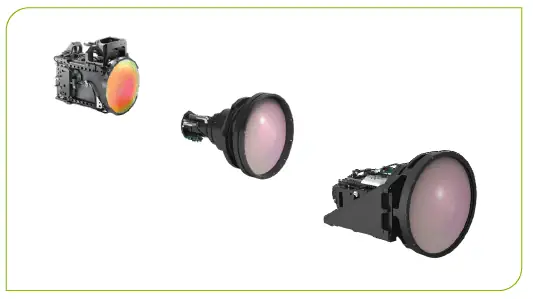
Fig. 3. Ophir’s long EFL continuous zoom lenses. L > R: The SupIR 28-850mm f/5.5, SupIR 45-900mm f/4.0, and SupIR 50-1350mm f/5.5
The key features of this lens include:
- MWIR spectral range – 3μ to 5μ wavelength
- Compatible with high-definition detector formats (1280 x 1024) with a 15μ pixel pitch
- 30x zoom ratio
- Folded design
- excellent boresight retention
- Exceptional operational range (over 20 km detection, see figure 7 for details)

Fig. 4. SupIR 28-850mm f/5.5 MFT performance
Figure 4 illustrates the MTF charts for this lens at both narrow and wide fields of view (NFOV and WFOV). The charts depict the Sagittal (S) and Tangential (T) components of the MTF across various spatial frequencies at different field positions. The Sagittal MTF for both NFOV and WFOV approaches the diffraction limit across the focal plane, while the Tangential component shows some reduction, particularly at WFOV.
This lens combines the 15-300mm f/4 lens with a 3x optical extender, resulting in a zoom lens with a long EFL of 900mm, a 20x zoom ratio, and a fixed F# of 4 throughout the zoom range.
Figure 5 presents the MTF charts for this lens at both NFOV and WFOV. For this lens, both Sagittal and Tangential MTF components are close to the diffraction limit, with slight degradation towards the corners of the focal plane.
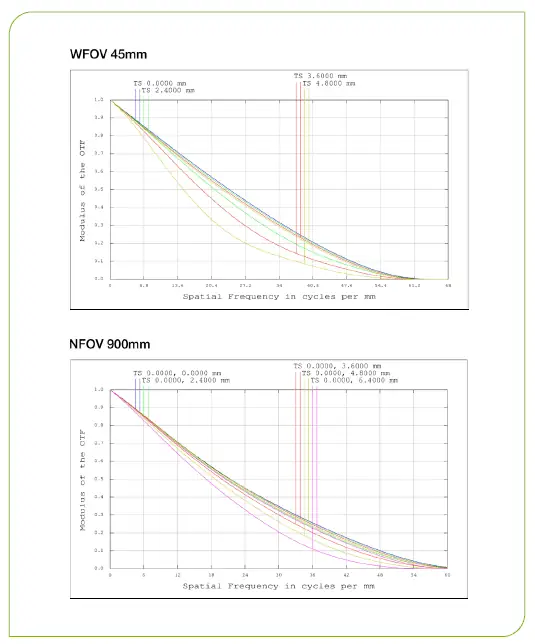
Fig. 5. SupIR 45-900mm f/4 MFT performance
The third lens in this series is the 50-1350mm f/5.5 zoom lens, derived from the 28-850mm lens with an extender. This lens supports the SXGA 1280 x 1024, 15μ FPA format, delivering performance close to the diffraction limit. As the longest focal length lens in our portfolio, it meets the most demanding requirements for long-range thermal imaging in aerial and surveillance applications, achieving detection ranges exceeding 26 km.
Figure 6 displays the MTF graphs for the 50-1350mm f/5.5 lens at both NFOV and WFOV. Its MTF performance mirrors that of the 28-850mm zoom lens, with the Sagittal MTF at both NFOV and WFOV approaching the diffraction limit across the focal plane, while the Tangential component is lower.
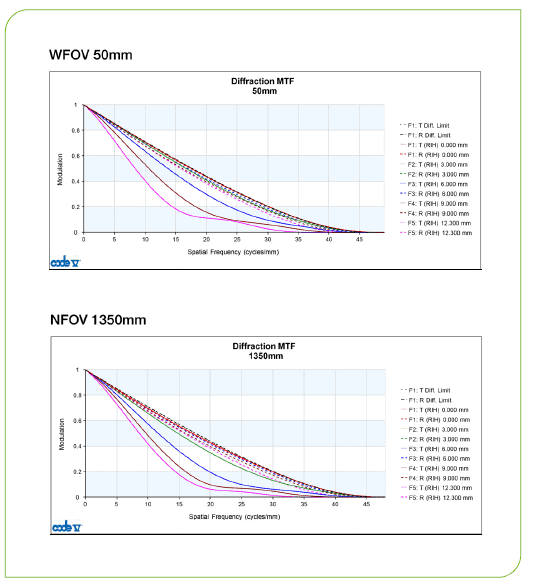
Fig.6. SupIR 50-1350mm f/5.5 MTF performance
The DRI performance values for these lenses are illustrated in figure 7, showcasing ranges exceeding 26 km, achieved by the SupIR 50-1350mm f/5.5. These DRI ranges were calculated using the U.S. Army Night Vision Lab’s FLIR92 model, assuming an atmospheric attenuation coefficient of 0.2 km-1. The remarkable DRI values are attributed to the long EFL and high NFOV MTF values, as depicted in figures 4-6.

Fig. 7.Detection, recognition, and identification ranges for each lens.
FINAL THOUGHTS
The integration of optical, mechanical, and zoom designs is essential for achieving high performance in small pixel sensors and long-range detection systems.
For constrained platforms like UAVs and drones, lightweight designs that maintain high optical performance across the zoom range are critical.
To ensure high-resolution imaging in challenging environments, lenses must be engineered with extended focal lengths, zoom ratios, and durable coatings to guarantee sustained performance and longevity.
Leveraging this unique combination of cutting-edge designs and manufacturing capabilities, Ophir is poised to fulfill the demands of next-generation long-range thermal imaging applications in the security and surveillance sector, delivering high image quality, resolution, continuous zoom, and extensive operational ranges in adverse conditions.