

Advanced Navigation, a frontrunner in autonomous systems and navigation technology, has received grant funding from the Australian Government via the Australian Space Agency’s Moon to Mars initiative: Supply Chain Capability Advancement Grant.
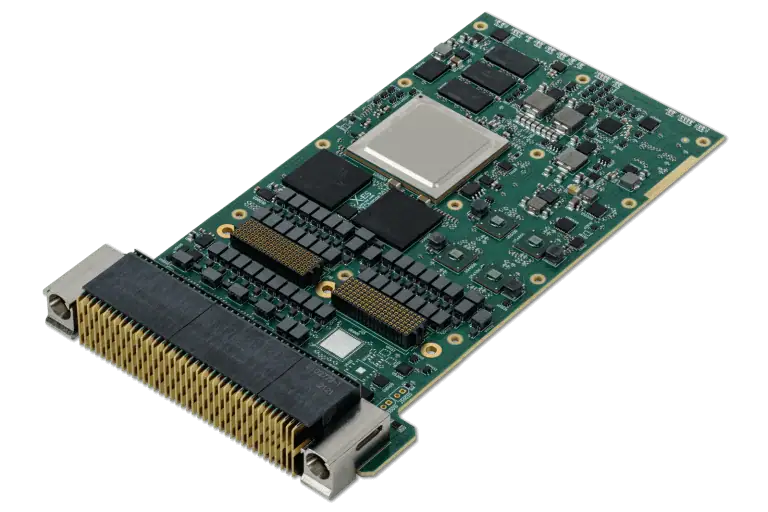
This financial support will expedite the creation of a high-shock Inertial navigation System (INS) tailored to endure the extreme forces encountered during rocket launches.
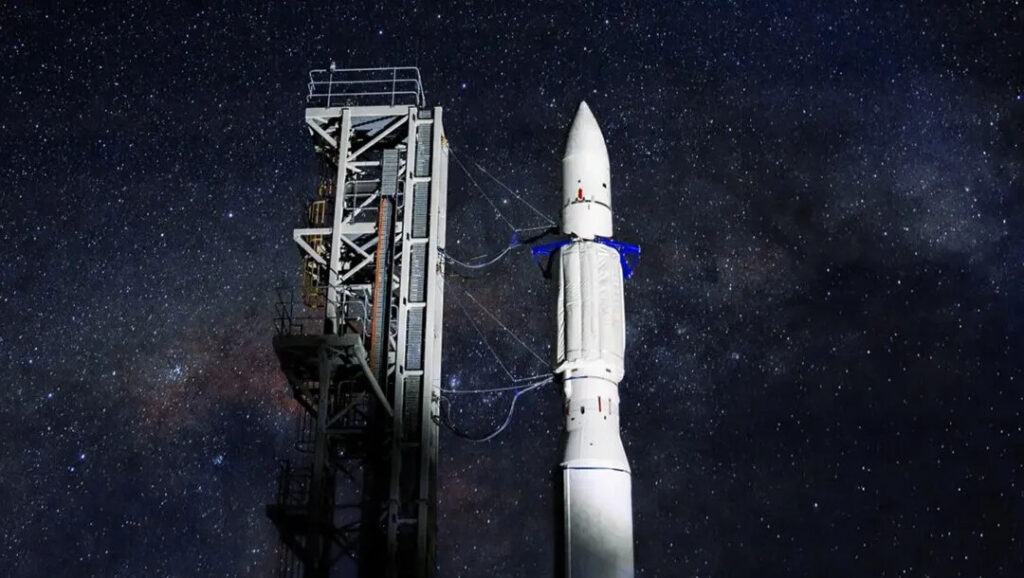
The high-shock INS will play a crucial role in assisting Gilmour Space Technologies, an Australian provider of launch services, in the advancement and deployment of Eris Rockets and Elara Satellite platforms into low Earth Orbit (LEO).
Designing Navigation Systems for Harsh environments
Rocket launches subject onboard systems to severe shock, vibration, gravitational changes, and temperature variations.The INS must provide precise navigation while withstanding these harsh conditions.
The system will incorporate:
- Advanced accelerometers and gyroscopes capable of detecting minute motion variations
- A high-shock enclosure designed to absorb and redistribute extreme g-forces
- Durable shielding to protect sensitive sensors from vibrations and thermal stress
“In the vastness of space,where external references are absent,rockets depend on a complex array of navigation,guidance,and control (GNC) systems.The onboard navigation must endure dynamic conditions,gravitational forces,and the complexities of orbital mechanics while ensuring a reliable flight path. In essence, the system must be virtually indestructible,” stated Chris Shaw, CEO of Advanced Navigation.
“Our engineering team is eager to continue innovating in the development of sensors for high-pressure environments. We are excited to support Gilmour Space in advancing Australian-made launch vehicles, ultimately reducing the costs associated with accessing space.”
Enduring the Rigors of Rocket Launches
from liftoff to payload deployment, every phase of a rocket’s journey requires meticulous engineering and coordination. All electronic and fiber-optic components must endure importent shock, vibration, gravitational shifts, payload impacts, and extreme temperature changes.
These components must be seamlessly integrated into the overall system, as even a minor misalignment or miscommunication can led to catastrophic mission failures.
The onboard INS comprises a variety of high-precision sensors, including accelerometers and gyroscopes, sensitive enough to detect the slightest changes in noise and vibration. To ensure reliable performance, these delicate components must be shielded from the extreme forces experienced during launch.
An innovative approach involves the use of a high-shock enclosure—a protective barrier surrounding the INS. This enclosure serves as a cushion, absorbing and redistributing intense g-forces from engine ignitions and launch vibrations. By mitigating these shocks, the enclosure protects the sensors, maintaining their accuracy in the most challenging conditions.
“This collaboration unites two companies dedicated to enhancing Australia’s sovereign aerospace capabilities. We are excited to partner with Advanced Navigation on future missions to improve our launch and satellite systems for clients worldwide,” remarked kody Cook, Deputy Chief Engineer at gilmour Space.
Testing the Limits: Smash, Shake, Bake, Crush, Repeat
While development is crucial, rigorous testing is equally important. The qualification of the INS will align with the specifications of Gilmour Space’s Eris orbital vehicle.
to simulate a rocket launch, the navigation system will undergo a series of rigorous tests to determine its failure thresholds, including:
- Shock: Sudden high-impact forces to mimic stage separations and engine ignitions
- Vibration: Continuous high-frequency vibrations to replicate conditions during liftoff and ascent
- Temperature: Extreme heat and cold cycles to ensure functionality across the rocket’s operational range
- Pressure and Vacuum: Rapid pressure changes and vacuum conditions to simulate ascent through the atmosphere and operation in space
These simulations create a perfect storm for potential system failures, where the INS must endure repeated shaking, freezing, heating, smashing, crushing, and pulling—critical milestones to conquer before it is truly ready for launch.
“Initiatives like this showcase the ingenuity Australia offers to our international partners in space,” stated Enrico Palermo, Head of the Australian Space Agency. “Through this investment, we are enabling Australian companies to gain essential space heritage and build robust customer bases, which will create more opportunities for Australia to collaborate on the global stage.”
Advanced Navigation has previously been awarded the Moon to Mars Initiative: Demonstrator Mission Grant, further solidifying its position in Australia’s expanding space sector.