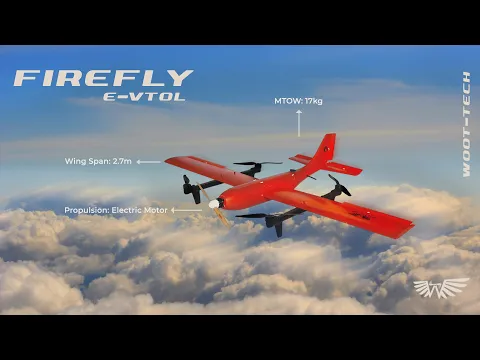


Woot Tech Aerospace has joined forces with Anqa Aerospace from Saudi Arabia to develop the Firefly series of versatile, propeller-driven aerial target drones.
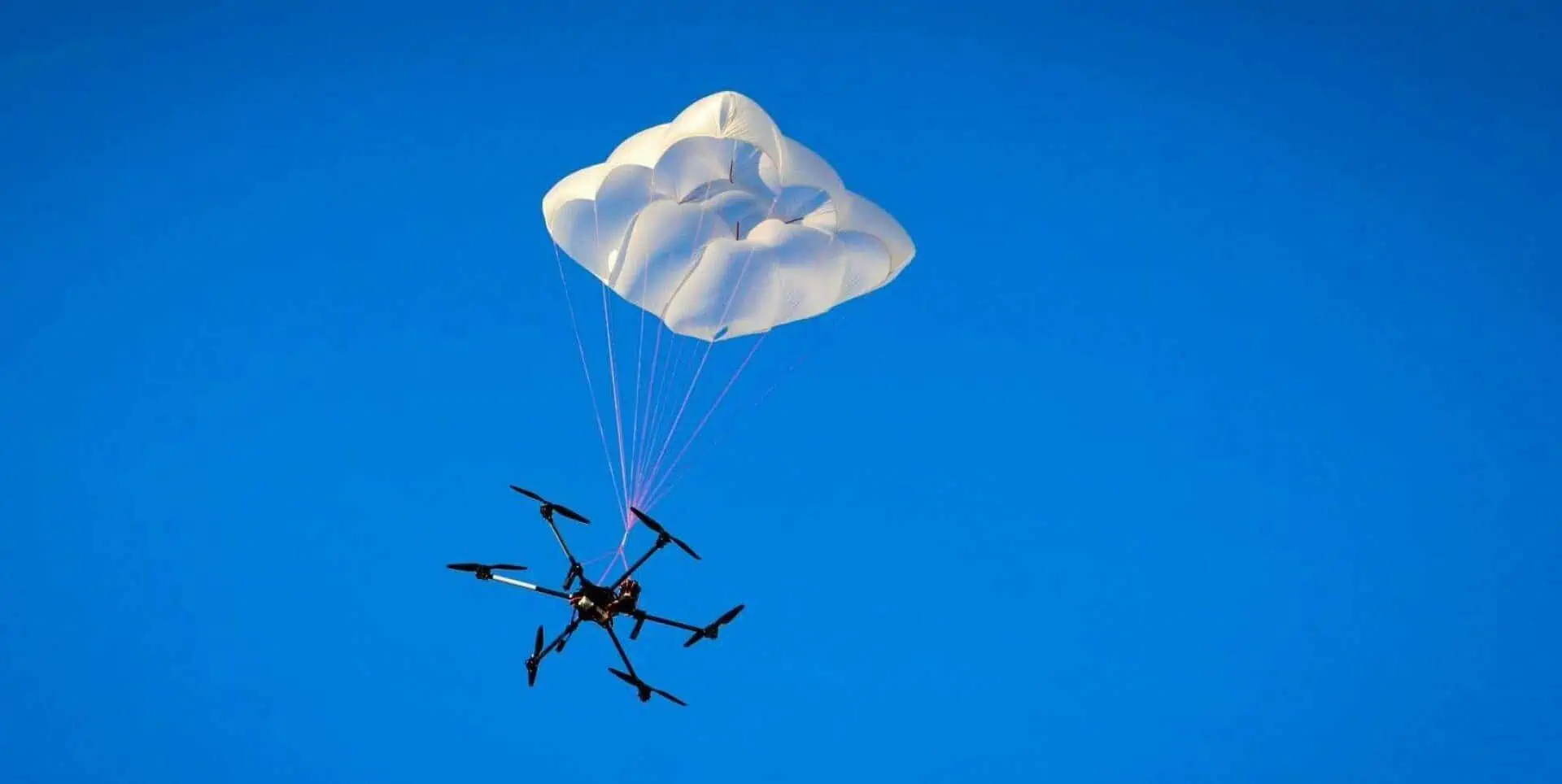
The collaboration emphasizes the importance of peacetime training for air defense teams to stay adept in the face of evolving threats and advancements in technology. These target drones are designed to replicate realistic threats, facilitating both training and qualification for anti-aircraft systems. Traditionally, these drones are launched using catapults or rocket assistance, and they descend via parachutes. However, these launch systems can be cumbersome and impractical for confined environments, such as naval vessels. Additionally, the costs associated with these conventional launch methods often exceed the price of the drones themselves, notably when considering setup and maintenance expenses.
To address these industry challenges, Woot Tech Aerospace and Anqa Aerospace have unveiled the Firefly reconfigurable target drones. This innovative airframe can be adapted for various launch methods, including conventional takeoff (CTOL) using wheels, catapults, or rockets, as well as electric vertical takeoff and landing (eVTOL) configurations, which are increasingly relevant in today’s aerial landscape. Furthermore, a piston engine variant (hVTOL) can mimic the infrared signatures of internal combustion engines. All configurations can accommodate standard target payloads, such as MDI sensors, corner reflectors, Lunenburg lenses, infrared flares, and tow targets.
The companies assert that firefly represents a groundbreaking approach, seamlessly integrating with existing catapult launch systems while also providing a flexible takeoff and landing solution. This adaptability allows the same aircraft to conduct diverse mission profiles, including high-speed dives exceeding 100 knots, abrupt stops and hovers, vertical ascents and descents, and signature maneuvers with varying propeller activity.
In contrast to conventional target drones,which often suffer structural damage during parachute recoveries—especially in challenging terrains like seas or mountainous regions—the Firefly VTOL variants can safely land in various locations,including compact ship decks. Designed for ease of assembly and operation by a single crew member, these drones are also more cost-effective to run. The all-electric version allows for speedy battery swaps, enabling extended training sessions without significant interruptions.