

Innovative Digital Training Vessel Unveiled by South Hampshire College Group
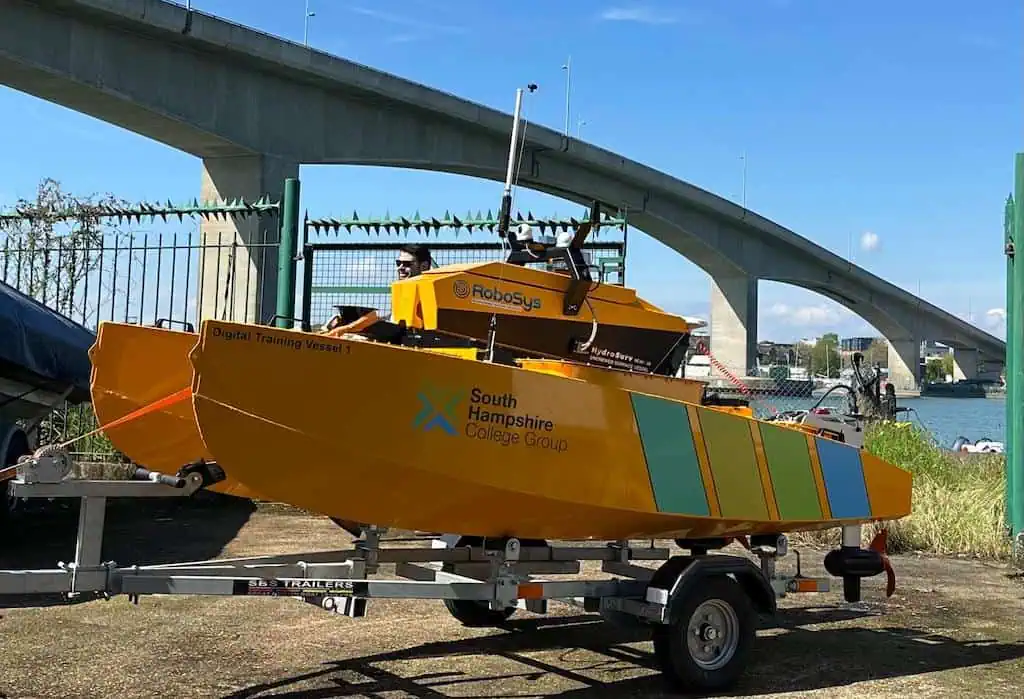
The South Hampshire College Group (SHCG) has introduced a cutting-edge Digital Training Vessel (DTV), an unmanned surface vessel (USV) tailored to address the evolving skill demands in the Solent area.
SHCG, a newly formed educational entity, merges three Further Education institutions from Southampton, Eastleigh, and Fareham, aiming to enhance educational offerings in the region.
Pioneering Educational Initiatives in the UK
This DTV is believed to be a groundbreaking addition to the UK’s further education landscape, supporting an ambitious curriculum at SHCG’s Center of Excellence in Engineering, Manufacturing, and Advanced Skills Training (CEMAST) in Lee-on-the-Solent, as well as at the Marine Skills Centre located along the River Itchen in Southampton.
USVs are increasingly favored by industries and research organizations for tasks such as surveying, patrolling, and search and rescue operations due to their numerous advantages, including zero emissions, reduced operational costs, fatigue reduction, consistent routing, and enhanced safety. In this context, the vessel will primarily serve educational purposes.
Remote Control and AI Integration
The Digital Training Vessel can be operated remotely from a shore-based mission control center or from a mothership, utilizing advanced digital remote operations and optional AI-assisted decision-making capabilities.
This initiative aims to foster learning in innovative maritime skills, addressing the skills gap in the sector and contributing to local employment challenges.
Bridging Skill Gaps in Maritime Operations
The skill set required for USV remote Operators encompasses digital technology, marine engineering, electrical systems, systems engineering, knowledge of net-zero practices, and navigational expertise—areas that have not previously been integrated into a single career pathway.
With a new curriculum set to launch in the upcoming academic year, students from diverse academic backgrounds will acquire essential experience and knowledge, promoting the maritime sector as a viable career choice.
Funding and Support for Innovative Education
The acquisition of the Digital Training Vessel was made possible through a grant from the Local Skills Improvement Fund (LSIF), aligning with SHCG’s commitment to pioneering innovative skill education and contributing to the Solent’s Local Skills Improvement Plan (LSIP).
Other recent educational initiatives by SHCG and LSIP include TECH:TRUCK, a collaborative mobile educational platform shared among seven local educational institutions, and the newly established Institute of Technology (IoT) at CEMAST, which uniquely offers a Higher National Certificate in Robotics and Mechatronics funded by the Department for Education.
Launch Event Highlights
The unveiling of the DTV took place at SHCG’s Marine Skills Centre in Woolston, near Southampton, where maritime students and representatives from academia and industry gathered to witness the event.
The launch served as a platform to highlight the diverse technical skills and career opportunities within the maritime industry, facilitating collaboration across various academic disciplines. Attendees experienced the USV’s capabilities firsthand during live demonstrations of remote operations.
Representatives from organizations such as the UK’s Marine Robotics innovation Centre, Hampshire chamber of Commerce, National Oceanography Centre, Robosys Automation, Landau Marine, and the South Coast Institute of Technology where present, showcasing the strong support from industry and educational partners.
Industry Insights on the Future of Maritime Education
According to Nigel Lee, Chief strategy Officer of Robosys Automation and lead on the DTV “Trio” Collaboration Project, “Today marks a significant milestone for the maritime sector, as the demand for skilled professionals in this field is rapidly growing, not only for USVs but also for larger uncrewed and lean-crewed vessels.”
“The introduction of this advanced Digital Training Vessel as an educational resource expands opportunities for learners, addressing the pressing skills shortage in the maritime industry while ensuring a consistent quality of education.”