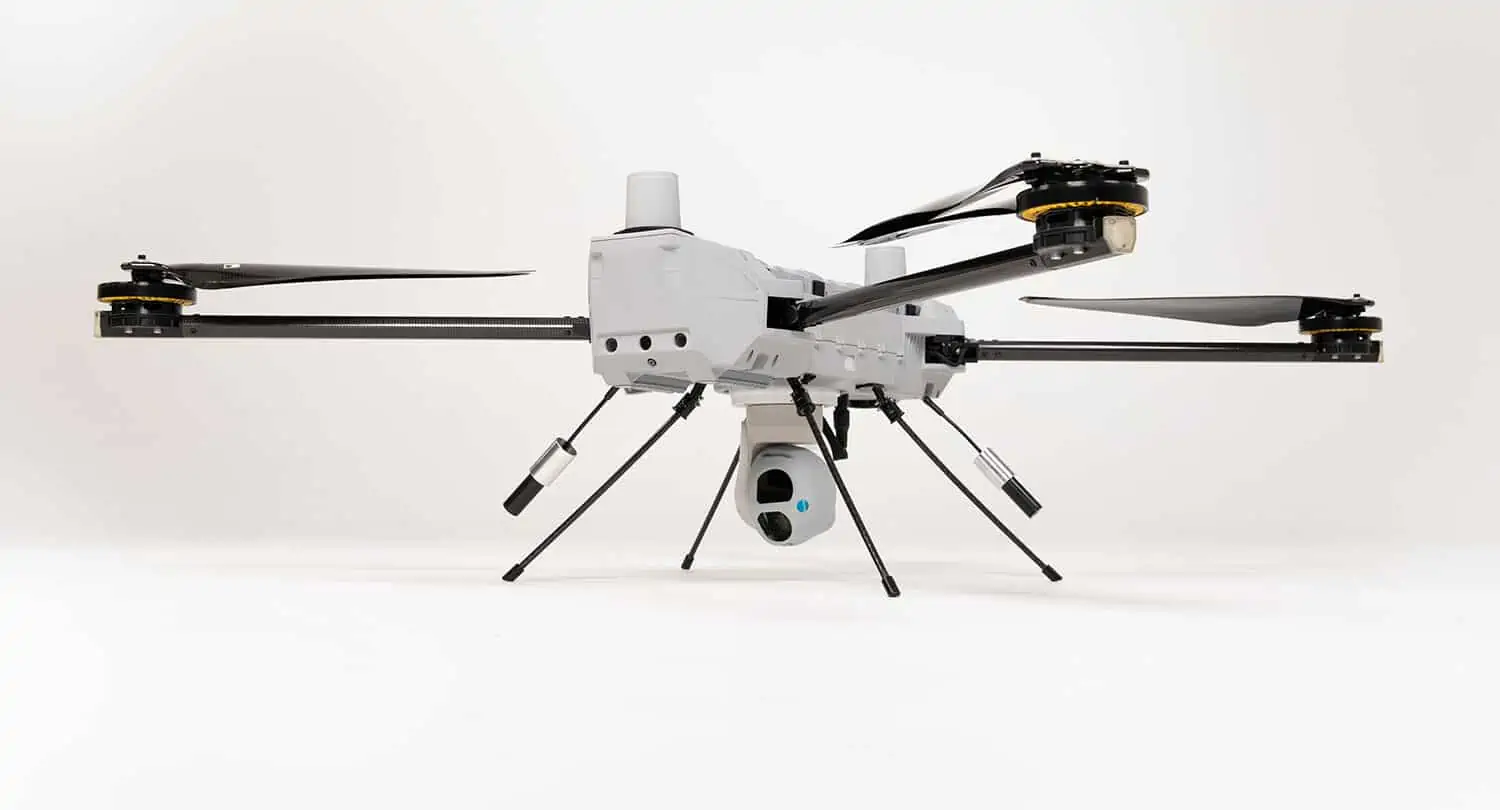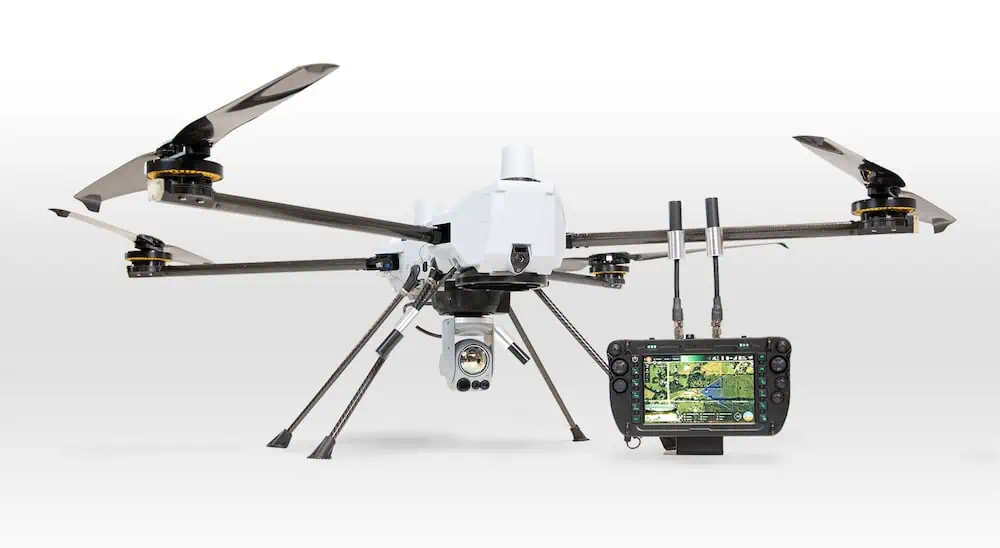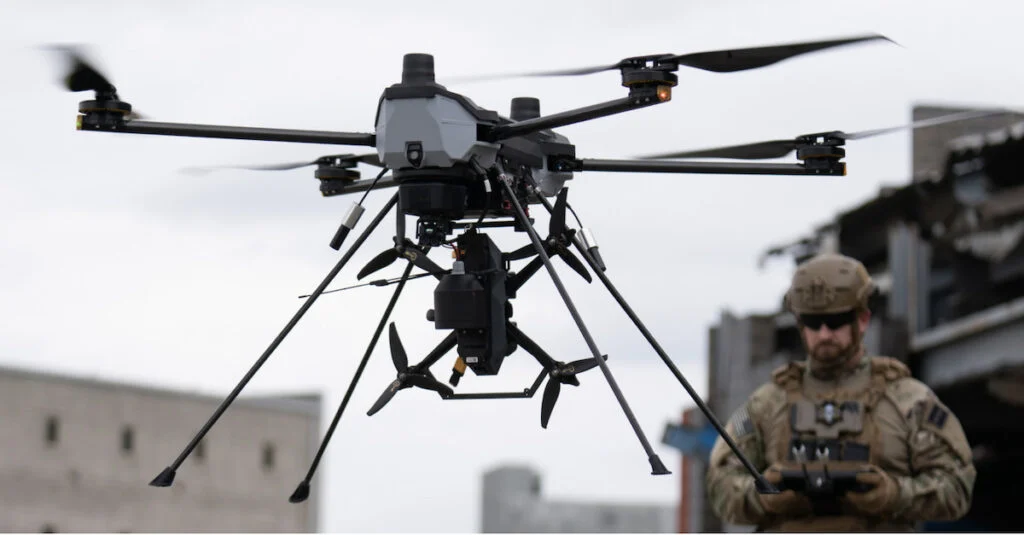


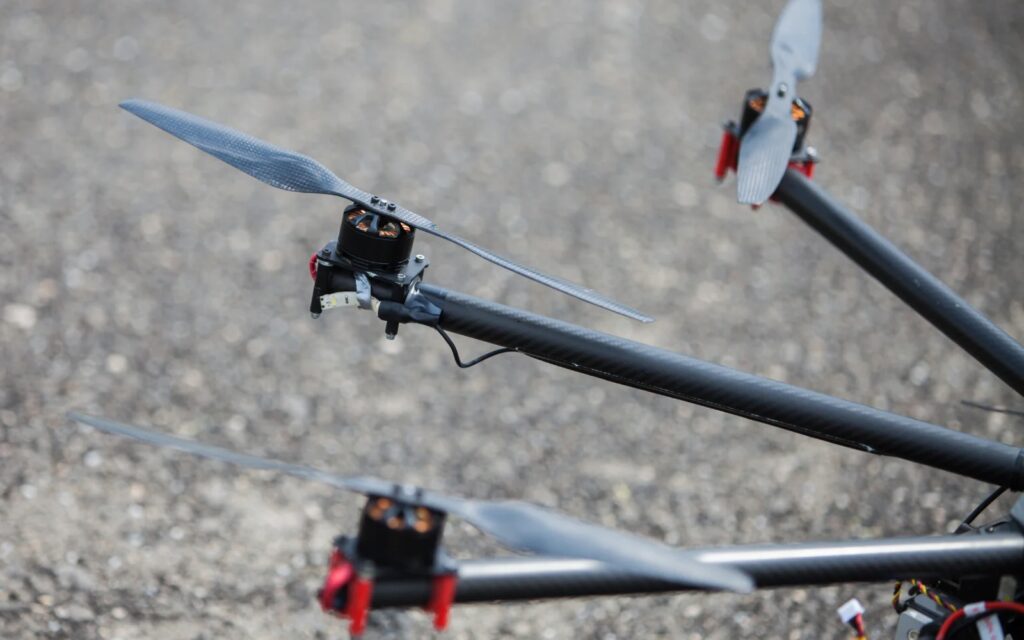
Propellers on a hexacopter drone.
Achieving optimal balance in drone propellers is essential for enhancing UAV efficiency, reliability, and longevity. Tyto Robotics emphasizes the meaning of effective propeller balancing and delves into two primary methods: static and dynamic balancing.
Unbalanced propellers can lead to excessive vibrations, diminishing thrust efficiency, increasing noise levels, and accelerating wear on bearings, sensors, and other critical components.
Propeller balancing can be accomplished through three methods: static, dynamic, or aerodynamic. Static and dynamic techniques focus on correcting mass distribution, either when the propeller is at rest (static) or in motion (dynamic). Aerodynamic balancing, frequently enough termed tracking, aims to equalize thrust output across blades by modifying physical attributes like blade pitch or alignment.
This article will concentrate on static and dynamic balancing, which should be performed prior to any aerodynamic modifications.
The Importance of Propeller Balancing
Imbalanced propellers are a leading cause of vibrations in UAV systems. These vibrations can result in increased wear on bearings and flight controllers,diminished flight stability,and heightened noise levels. Properly balanced propellers considerably mitigate these issues, leading to smoother operation, enhanced flight control, and extended system lifespan.
While many commercial UAVs come with rotors balanced to ISO standards, custom-built or larger drones may necessitate manual balancing to prevent performance decline.
Static Balancing: An Economical Approach for Small UAVs
Static balancing is a straightforward, cost-effective method frequently employed in small or hobbyist UAV applications. This technique involves positioning the propeller on a stand and adjusting it until both blades are evenly weighted.
How It Functions
Utilizing tape for static drone propeller balancing.
The propeller is placed on a low-friction balancer, often supported magnetically, allowing it to rotate freely.If one blade consistently falls, it indicates an imbalance. Material is then added or removed from the propeller to achieve balance.
A well-balanced propeller will remain stationary in any position without rotating.
Methods for Adjusting Balance
to Add weight: Utilize materials such as nail polish, glue, tape, paint, or small screws.
To Remove Weight: Carefully sand the underside, trim the blade tips or trailing edge, or drill out small amounts of material.
Benefits:
- Affordability: equipment is inexpensive and readily available.
- User-amiable: Ideal for beginners and hobbyists.
- Swift Process: Once set up, balancing can be completed swiftly.
Drawbacks:
- Lower Precision: Static balancing does not yield a measurable balance grade.
- Manual Process: Results can vary based on operator skill and propeller design, especially with foldable blades.
Dynamic Balancing: precision for Commercial UAVs
Dynamic balancing is commonly utilized in professional UAV advancement due to its capability to assess and rectify imbalances under actual operating conditions.
How It Functions
The motor and propeller are mounted on a test stand equipped with vibration and RPM sensors. For instance, the Tyto Robotics Flight stand includes integrated tools for ISO-compliant propeller balancing. Data collected during operation is analyzed by software,which provides detailed instructions for correcting the imbalance.
Balancing Steps
- Mount the Propeller: attach the propeller and motor to the stand and connect the sensors.
Dynamic propeller balancing using tape corrections.
- Input Rotor Data: Enter parameters such as rotor mass, target RPM, and desired balance grade.
- Initial Test Spin: Run the propeller to gather baseline vibration data.
- Calibration Step: Add a temporary weight, such as tape or glue, as directed by the software.
- Apply Correction: Follow the software’s guidance to add or remove material at specific locations to achieve the target balance grade, typically below G 6.3.
- Verification Spin: Conduct a final test to ensure that the balance meets the desired standard. Further adjustments may be recommended if necessary.
Benefits:
- High Accuracy: Delivers precise, repeatable results based on real-time operating data.
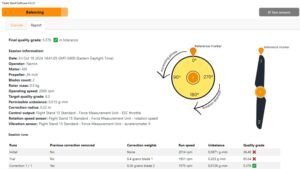
Dynamic propeller balancing software interface.
- standards-Based: Complies with industry specifications such as ISO 21940-11:2016.
- Time Efficient: Modern systems can complete balancing in under five minutes per propeller.
Drawbacks:
- Higher Cost: Requires more advanced and costly equipment.
- Technical Knowledge: Operators must understand key parameters such as target RPM and G values to ensure accurate results.
Final Thoughts
Both static and dynamic balancing techniques are vital in UAV development and maintenance. Static balancing is an economical, user-friendly method ideal for smaller drones and hobbyist projects.
Dynamic balancing, while more intricate and resource-intensive, provides the precision and compliance necessary for commercial and industrial UAV applications. Choosing the right method guarantees enhanced flight performance, reduced wear, and increased reliability throughout the UAV’s operational lifespan.
Read the original article >>