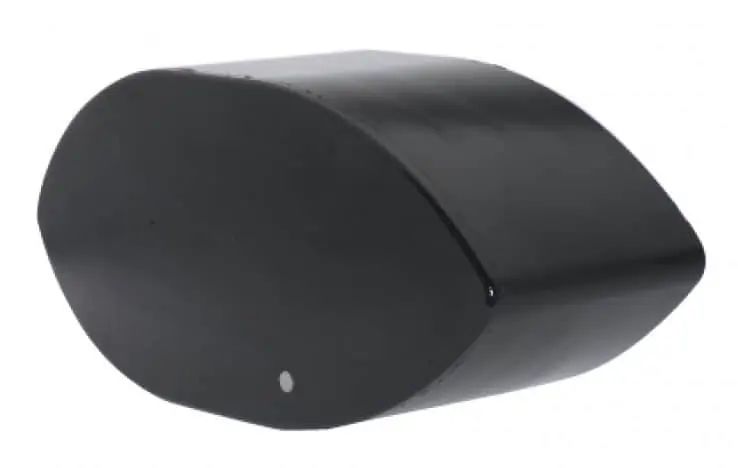


AIRMAR® Technology Corporation has announced that its ultrasonic WeatherStation® Instruments have been chosen by the UK’s national Oceanography Center (NOC) for deployment on their fleet of autonomous surface vehicles (ASVs).
These robotic marine vessels, which can be powered by solar or wind energy, are capable of conducting extended missions that can span several months, making them exceptionally suited for collecting oceanographic data.
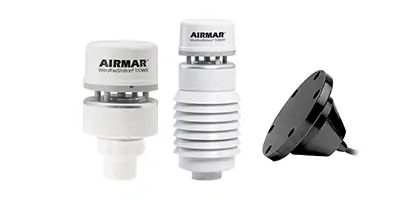
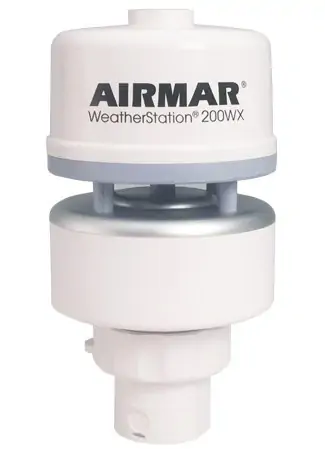
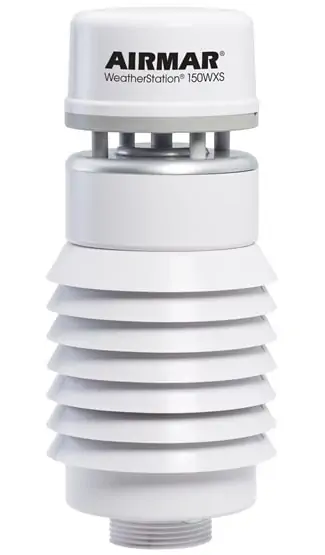
ASVs are equipped with a range of instruments, and their continuous presence on the water’s surface enhances their ability to monitor and collect weather data.the NOC has opted for airmar’s 150WX WeatherStation Instrument to be installed on each of its ASV units.
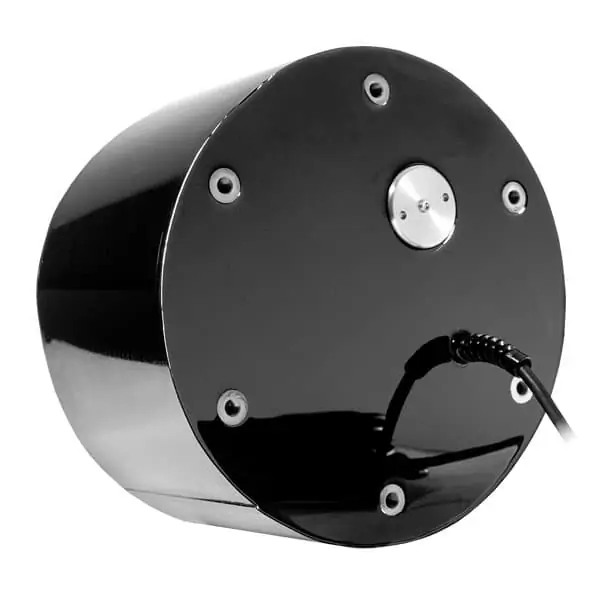
the 150WX WeatherStation Instrument is a robust, compact ultrasonic multisensor designed for both stationary and mobile applications, including ASVs and unmanned ground vehicles (UGVs). It features an integrated GPS and a self-aligning two-axis compass, enabling it to calculate theoretical wind speed and direction based on the apparent wind and the vehicle’s speed and heading.
Additionally, the 150WX WeatherStation Instrument is housed in an IPX4 or IPX6 rated enclosure and includes various sensors that measure pitch and roll, air temperature, barometric pressure, and relative humidity, making it a versatile tool for atmospheric condition assessment. Data can be transmitted using NMEA 0183/ASCII Serial protocol over RS232 or RS422 interfaces, or via NMEA 2000 protocol over CAN.
The NOC’s fleet consists of three ASVs, each equipped with the Airmar 150WX WeatherStation Instrument, including a Liquid Robotics SV3 Waveglider, an ASV-Global C-Enduro, and a Seiche AutoNaut.
Discover more about the National Oceanography Centre’s ASV fleet and their research initiatives:
https://www.noc.ac.uk/facilities/marine-autonomous-robotic-systems/asv
Explore airmar Technology’s complete range of compact, durable WeatherStation Instruments:
http://www.weatherstationwx.com/