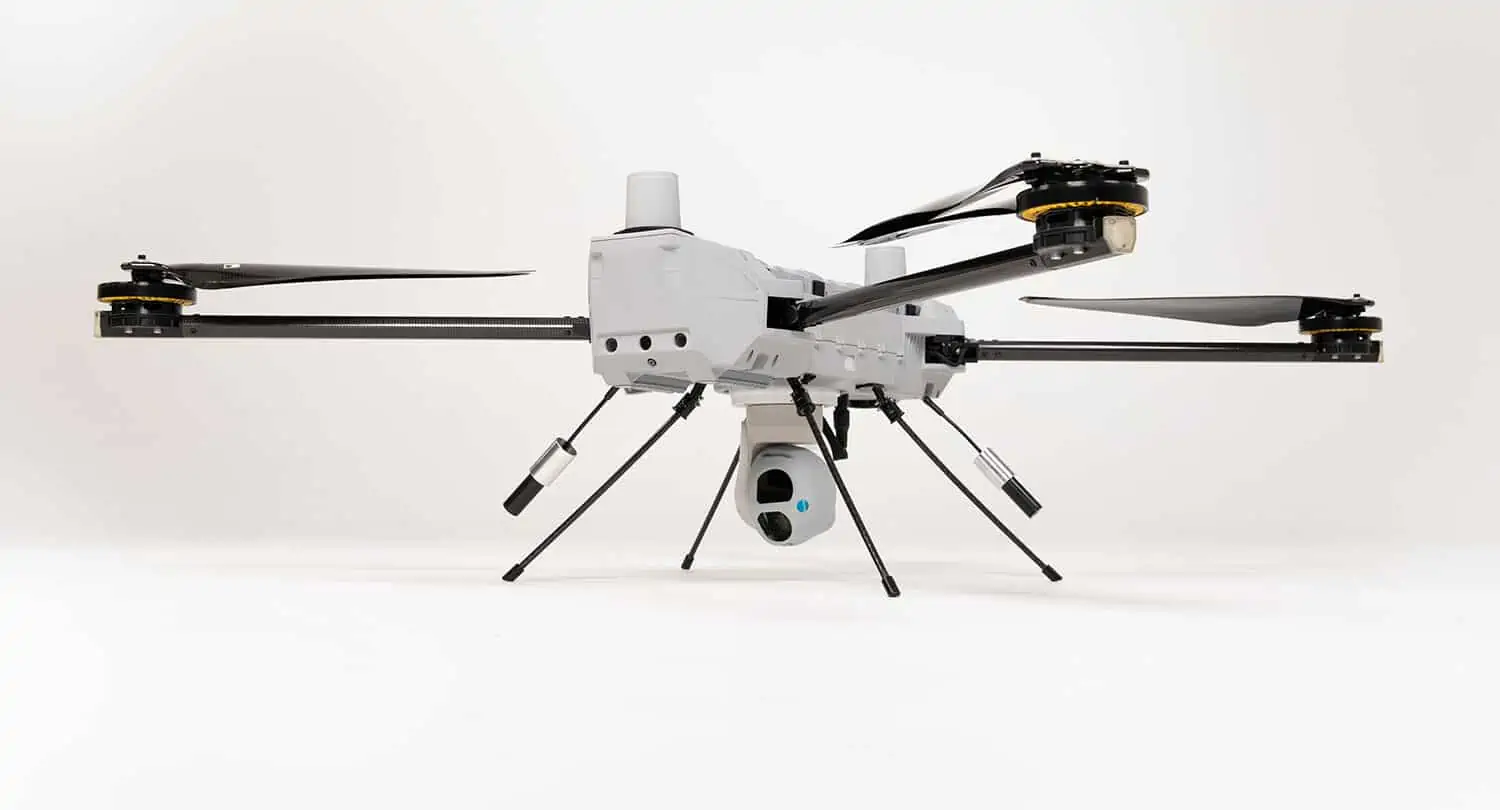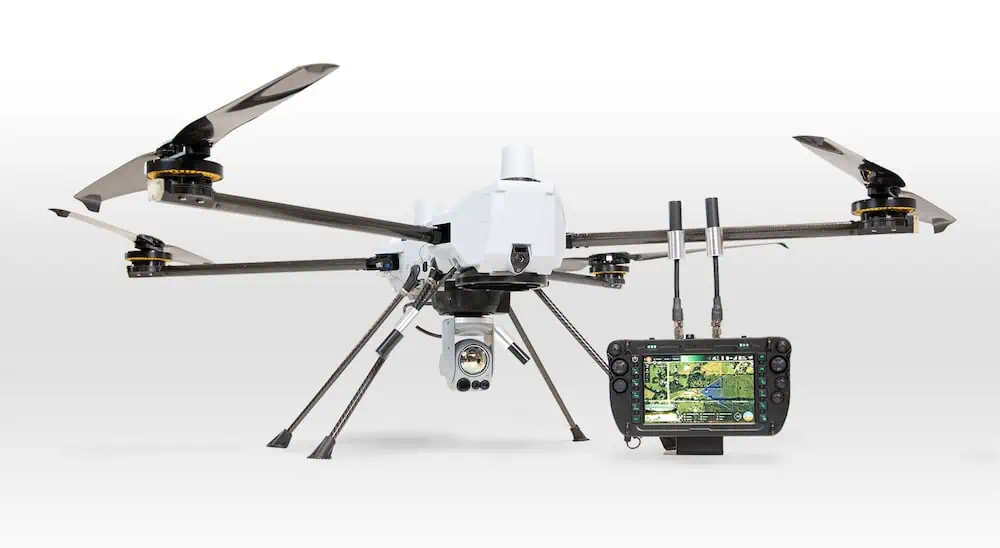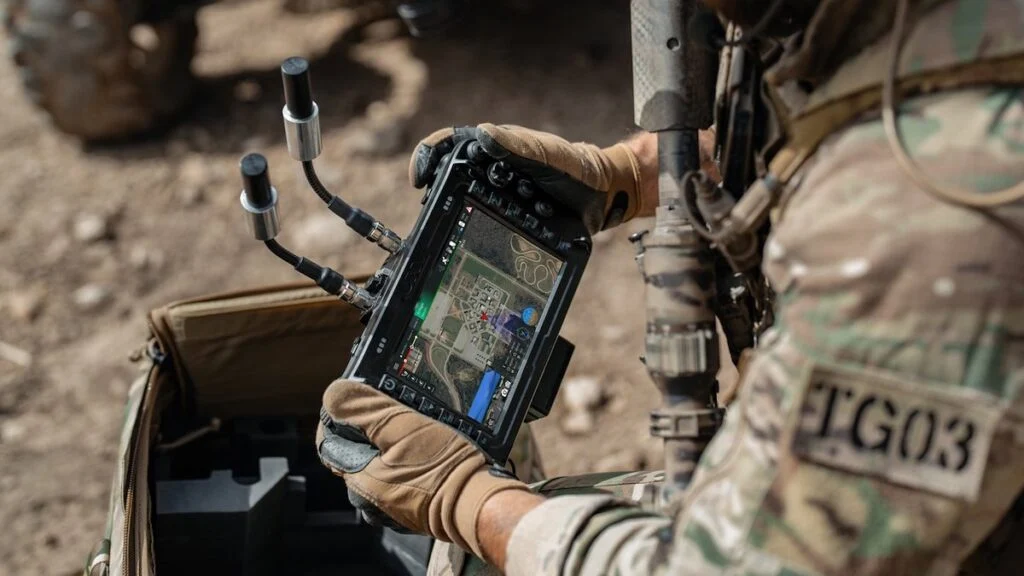


This article discusses how Ophir integrates its advanced long-range infrared (IR) thermal imaging lenses into Counter unmanned Aerial systems (C-UAS) to enhance the detection, identification, and tracking of aerial threats.
The rapid increase in drone usage poses meaningful security challenges for both civilian and military sectors. This has led to the advancement of innovative Counter-Unmanned Aerial Systems (C-UAS) technologies designed to detect, identify, and neutralize these threats. Infrared (IR) imaging technology, often combined with other sensors, plays a crucial role in identifying and tracking small unmanned aerial systems (sUAS).
Ophir specializes in creating high-precision, long-range IR continuous zoom lenses tailored for top-tier C-UAS platforms. These lenses provide a competitive edge in both target acquisition and identification.
INTRODUCTION
Unmanned Aerial Vehicles (UAVs), commonly known as drones, come in various shapes, sizes, and payload capacities, each with unique capabilities regarding stealth, altitude, and speed. Consequently, the distance from a C-UAS platform to its target can vary widely. Accurate identification hinges on obtaining precise visual data that can be interpreted by either a human operator or the onboard Artificial Intelligence (AI) systems of the C-UAS.
Small UAVs can be challenging to detect,even at close distances. Larger, more advanced UAVs can operate at higher altitudes and carry heavier payloads, complicating visual detection further. C-UAS radar systems, paired with infrared cameras, provide essential data for identifying UAVs and assessing their potential threat level.The risks posed by UAVs can range from benign surveillance to serious attacks involving missiles, explosives, or Weapons of Mass Destruction (WMDs), including biological, chemical, or radiological threats.
C-UAS platforms typically employ various methods to neutralize UAVs, including radio jamming to disrupt dialog with the base station, GNSS jamming to confuse the UAV’s navigation, or spoofing to take control of the UAV by overpowering its original signal. Some systems may resort to kinetic destruction or net deployment, while others utilize air defense systems to target uavs with missiles. Regardless of the method, precise targeting necessitates accurate identification, making Ophir lenses vital for long-range identification both day and night.
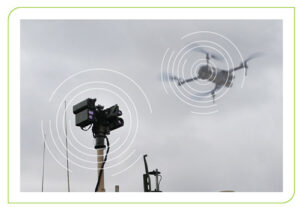
Fig. 1.C-UAS system utilizing a combination of electro-optical and infrared sensors.
TECHNICAL SOLUTIONS
Specifications for C-UAS Lens Integration
The primary objective of any electro-optical (EO) or infrared (IR) system is to deliver sufficient, focused pixels on the target. According to estimates from Sandia National Labs, an operator requires a minimum of eight (8) pixels on a target to accurately assess the threat level of a UAV*. To achieve this, an imaging system must adhere to specific criteria:
- Field of View (FOV) / Focal Length: C-UAS systems necessitate lenses that offer multiple fields of view, ideally achieved through continuous zoom lenses. These lenses enable AI programs to optimize the field of view for specific scenarios,enhancing system responsiveness without requiring operator intervention. Proper FOV ensures the imaging system captures the necessary number of pixels on the target, calculated using instantaneous FOV (iFOV) to determine pixels per meter (PPM) at a given distance.
- Focus: Maintaining focus during changes in field of view and quickly refocusing on rapidly moving objects is crucial for effective tracking.
- Image Quality: Delivering sharp, clear images across the entire field of view and throughout the zoom range is essential for tracking UAVs and identifying potential threats.
- Interface: A robust mechanical interface with the sensor and an effective electronic interface with the control system are vital for seamless integration into a C-UAS infrared sensor.
ophir’s Lens Features for C-UAS
Ophir is renowned for its exceptional optics design and manufacturing capabilities. Beyond standard designs,Ophir collaborates with system integrators to create customized lens solutions tailored to specific applications,including C-UAS. Two of Ophir’s solutions are particularly well-suited for long-range identification in current C-UAS systems: the SupIR® 60 – 1200mm f/4 and the SupIR® 80 – 1200mm f/5.5.
Field of View / Focal Length:
- The SupIR® 60 – 1200mm f/4 features a narrow FOV capable of identifying a small quadcopter from over 3 kilometers away, making it ideal for MWIR 10μm SXGA sensors.
- The SupIR® 80 – 1200mm f/5.5 can identify the same quadcopter from more than 2.5 kilometers, designed for MWIR 15μm VGA sensors. these options allow integrators to customize C-UAS platforms for specific customer needs, ensuring operators have sufficient pixels on target for quicker threat response.
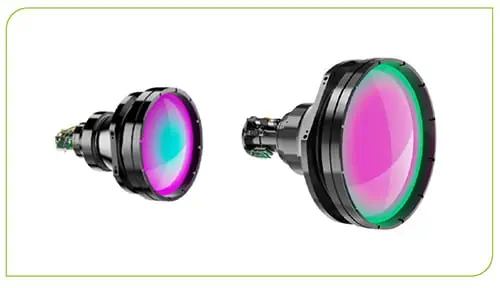
Fig. 2. Ophir’s long-range continuous zoom lenses for C-UAS: SupIR 80-1200mm f/5.5 (left),SupIR 60-1200mm f/4 (right).
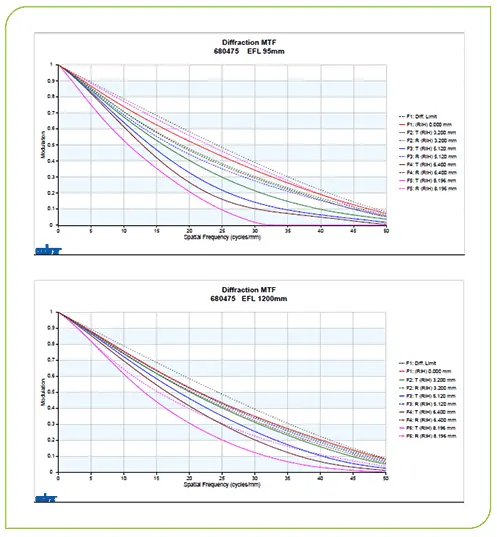
Fig. 3. MTF performance of the SupIR 60-1200mm f/4 lens.
- Fig. 3 illustrates the MTF charts for the 60-1200mm f/4 lens at both narrow and wide fields of view. These charts depict the Sagittal (S) and Tangential (T) components of the MTF across various spatial frequencies at different field positions.The Sagittal MTF for both fields of view approaches the diffraction limit across the focal plane, while the Tangential component is comparatively lower, especially in the wide field of view.
- Fig. 4 presents the MTF graphs for the SupIR 60-1200mm f/5.5 lens, showing similar performance characteristics as the 60-1200mm f/4 lens, with the Sagittal MTF nearing the diffraction limit across the focal plane.
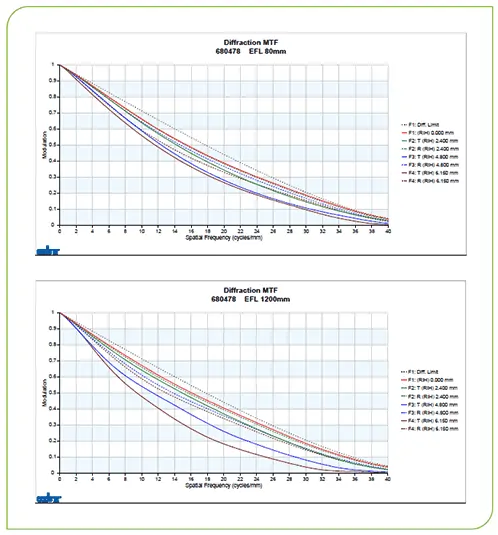
Fig. 4. MTF performance of the SupIR 80-1200mm f/5.5 lens.
- Focus: All Ophir lenses maintain focus throughout the zoom process, allowing systems to keep acquisition lock on targets and enhancing UAV threat identification. The lenses also ensure line of sight (LOS) is preserved during zooming.
- Image Quality: Ophir is celebrated for its lens designs, which provide exceptional off-axis clarity and high-quality imagery across the zoom range. The company’s designs effectively eliminate issues like narcissus and vignetting, which can hinder an AI system’s ability to identify threats.
- Interface: Ophir includes OphirSIM™ software with all continuous zoom and multi-FOV lenses to streamline integration and communication with the lens.
Ophir’s Offerings for C-UAS Applications
ophir provides a range of long-range IR continuous zoom lenses suitable for C-UAS applications. Depending on the specific scenario—such as drone size, altitude, and distance—the appropriate lens must be selected. The following chart outlines the identification ranges of our lenses for various drone targets.
FINAL THOUGHTS
drones and uavs represent a growing threat in contemporary conflict zones. Critical infrastructure is increasingly becoming a target for malicious actors intent on disrupting civilian life. While these targets may lack military protection, they can be safeguarded by C-UAS systems against swarm attacks from micro and mini-drones. Thermal imaging technologies are highly effective for C-UAS applications,and Ophir offers a diverse selection of high-quality long-range IR lenses that can be seamlessly integrated into these systems.

*Scott Brooks, “Physical Security Center of Excellence (PSCOE) Emerging UAS and Counter-UAS Technologies”, presentation for sandia National Lab, 2019.