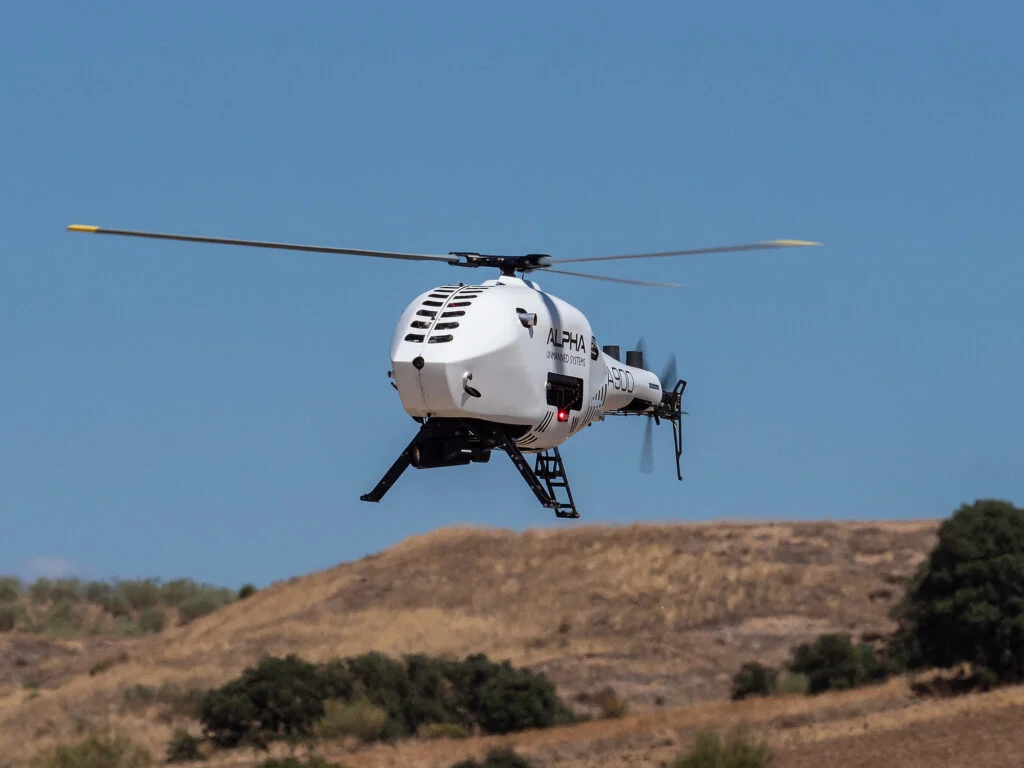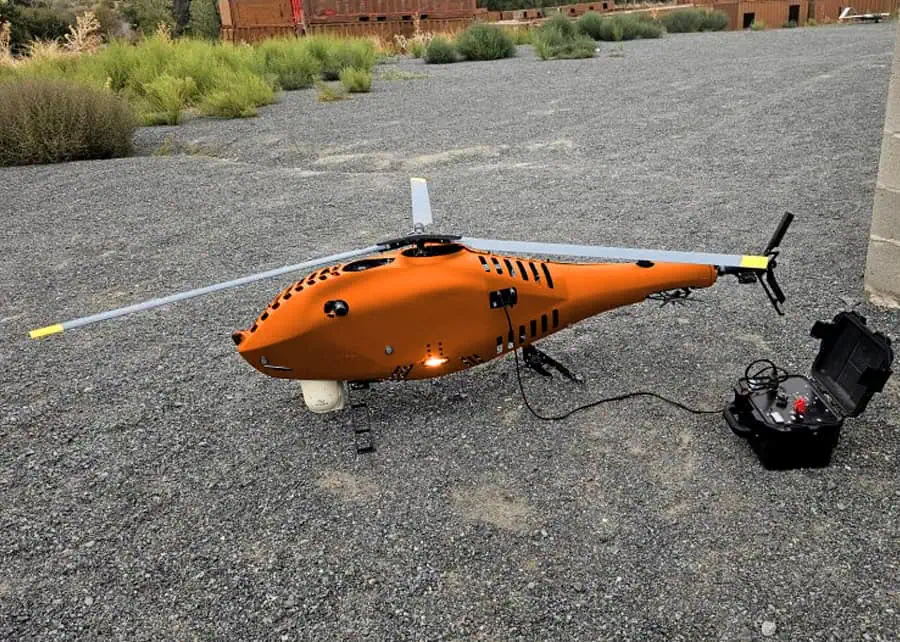



Edge Autonomy specializes in cutting-edge power solutions for unmanned aerial systems (UAS),enhancing their adaptability for critical missions.
The requirements for missions are in a constant state of flux,changing not just over extended periods but often within hours or even minutes.A UAS that can adapt quickly is better equipped to meet these evolving demands.
An effective UAS must facilitate long-range and prolonged missions while being lightweight,portable,and silent—essential attributes for ensuring readiness and success in operations.
The Importance of Versatility
As the logistical demands of aerial intelligence, surveillance, and reconnaissance (ISR) operations shrink, the range of mission requirements continues to broaden. Small uncrewed aircraft systems (sUAS) and group 2 UAS are increasingly being assigned tasks that were once the domain of larger aircraft.
This evolution necessitates that these aircraft not only become more compact and lighter but also possess the versatility to handle a diverse array of mission scenarios. These scenarios may include operations in extreme temperatures, nighttime or low-light environments, the integration of various payloads, and targeting distant objectives. A capable sUAS must provide both operational and logistical flexibility to tackle these challenges.
Josh Stinson, Chief growth Officer at Edge Autonomy and a veteran of the Army Special Forces, remarked, “A comprehensive operational picture is crucial for mission success. to enhance situational awareness, today’s warfighter must see further and comprehend more. The adaptability of an uncrewed system and it’s capacity for extended dwell time in the field directly influence the effectiveness of the warfighter.”
Impact of Power Sources on UAS Endurance
Quiet propulsion systems have become a critical component for sUAS platforms, as most ISR missions require stealth. Traditional internal combustion engines are not suitable for this purpose, leading many sUAS to adopt electric propulsion powered by high-capacity batteries.
While battery systems are effective for stealth operations, they come with meaningful drawbacks, particularly in terms of range, endurance, and payload capacity when compared to traditional propulsion methods.
Envision a power system that could quadruple endurance, range, and payload capacity while still operating silently.
Such a system, designed to fit into an sUAS’s existing battery compartment, would provide unparalleled flexibility, including the ability to hot-swap between flights to meet mission demands. Edge Autonomy’s advanced micro-tubular solid-oxide fuel cell (MT-SOFC) achieves precisely that.
Introducing the MT-SOFC Technology
Edge Autonomy’s MT-SOFC,a technology proven in flight at TRL 9,utilizes propane as its fuel source instead of the hydrogen required by traditional fuel cells. Its sophisticated onboard filtration system allows it to efficiently process even low-quality propane.
This means operators can obtain propane from military kitchens, local barbecue outlets, or remote gas stations, ensuring fuel availability anywhere in the world.
Propane is widely available, found in virtually every city and town globally, and the MT-SOFC’s compatibility with this common fuel source eliminates the need for specialized logistics.
Moving beyond Battery Dependence
With nearly four decades of advancements in aeronautics, Edge Autonomy has consistently aligned its innovations with the changing needs of the battlefield.
While maintaining a stronghold in long-endurance and long-range reconnaissance capabilities, its uncrewed aircraft systems adapt effortlessly to various ISR mission requirements.
As the original equipment manufacturer (OEM) of the VXE30 Stalker UAS and its advanced Havoc configuration, Edge Autonomy has outfitted these platforms with cutting-edge batteries that enable up to six hours of electric-only flight.
For missions that require extended range or endurance, the MT-SOFC offers a field-swappable power source that can enhance flight parameters by up to four times. Notably, this fuel cell maintains all-electric functionality, ensuring silent operations throughout the mission.
After 25 years of rigorous testing in diverse operational environments,the propane-powered MT-SOFC has consistently proven its effectiveness in extreme conditions. With hundreds of thousands of flight hours logged across six continents, this technology significantly boosts the endurance and operational flexibility of battery-powered UAS platforms.
Versatility of Dual Power Sources
The VXE30 Stalker enhances mission flexibility by allowing operators to select between battery and fuel cell power for each flight. For shorter missions requiring 4-6 hours of flight time, a battery is sufficient.
For longer missions that demand greater range and endurance, operators can choose the fuel cell option.The MT-SOFC acts not as a replacement but as an additional resource to significantly improve performance when necessary.
Facilitating Mission success with Efficient Refueling
In ISR missions,every second and every gram of payload weight is crucial. dr. tom Westrich, VP of Technology at Edge Autonomy, stated, “Consider a drone operator conducting a long-range mission in a remote area. The combination of a battery and fuel cell—like what we see in the VXE30 Stalker—extends flight time, but if refueling requires specialized fuel, the mission becomes less efficient.”
“However, a soldier can find propane in nearly any environment, and thanks to our unique filtration system, it doesn’t matter how impure that propane is—the UAV operator can simply fill a tank from ANY source and use it to power the VXE30 Stalker. They’ll be airborne again in minutes.”
By integrating a compact and efficient fuel filtration system, Edge Autonomy’s aircraft can utilize propane sourced from virtually anywhere. Whether obtained from a gas station, convenience store, or village kitchen, readily available propane ensures seamless and uninterrupted mission operations.
Understanding Edge Autonomy’s Fuel Cell Filtration System
Edge Autonomy’s innovative filtration system eliminates sulfur and other additives commonly found in propane, which could otherwise impede the electrochemical reactions necessary for power generation. This process guarantees clean and reliable fuel for optimal operational performance.
In contrast, hydrogen-based fuel cells require complex logistical support for producing metal hydrides—a process that is impractical for field operations. The simplicity and efficiency of the MT-SOFC make it ideal for real-world applications.
Changing out the two external fuel tanks and filters on the VXE30’s advanced Havoc configuration is quick and easy, thanks to their strategic placement on the aircraft’s wings. This design ensures easy access and minimal downtime.
Westrich explained, “To hot-swap a single tank on a fuel cell for the VXE30 Stalker, you need about 20 seconds—at most 60 seconds if you’re taking your time.”
Innovations Enhancing Mission Performance
The long-term advantages of a dual-power UAS are significant. extended flight durations, increased range, and improved field efficiency make the VXE30 stalker a leader in ISR operations. Its ability to switch seamlessly between power sources and utilize readily available fuel highlights its operational superiority and adaptability.
Stinson added, “Longer flight times and greater range enhance overall mission efficiency and increase the likelihood of success. Providing operators with the time and flexibility to accurately assess each situation allows for a more effective response to the immediate needs of the battlefield.”
“Every piece of equipment and every pound of weight matters to the warfighter. When you don’t have to account for extra batteries or specialized fuel in your supplies, you have room for other essentials like food, water, and ammunition.”
“We view our customers’ missions as our own, and we are continually innovating to enhance their success and efficiency. Many of our researchers and engineers have firsthand experience in battlefield operations, and we understand the technology required for effective missions.”
Read the original article >>