

Innovative Hydrogen Propulsion Testing by H3 dynamics
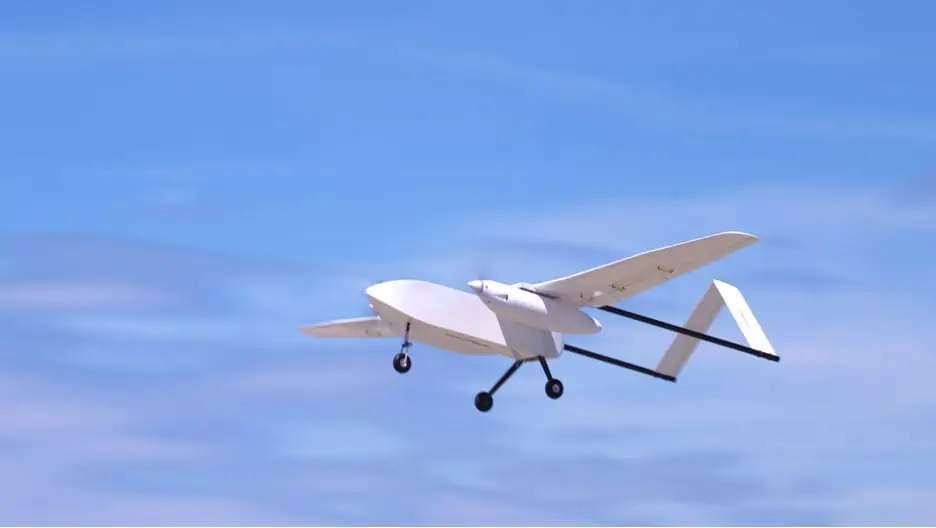
H3 Dynamics has announced the accomplished trial of its distributed hydrogen propulsion nacelles, marking a critically important milestone in UAV (unmanned aerial vehicle) technology. This test flight occurred at the Hub Drones – Systematic airfield near Paris, with the necessary approvals from the French civil aviation authorities (DGAC).
Revolutionizing Hydrogen Aircraft Design
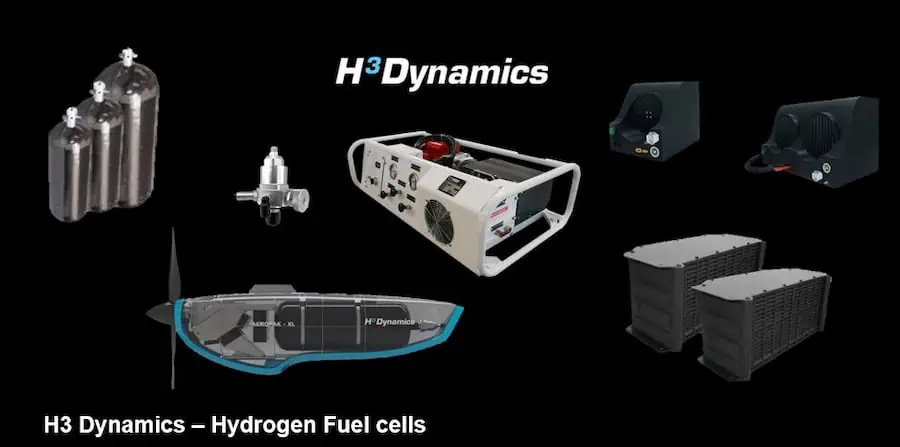
The company’s unique approach to self-contained nacelles tackles various technical, safety, and financial hurdles that hydrogen aircraft developers may encounter in the future. By distributing hydrogen and compact fuel cells across multiple collaborative nacelles positioned beneath the wings,H3 Dynamics enhances both safety and efficiency.
Comparative Approaches in the Industry
While other prominent players in the hydrogen aircraft sector are set to launch larger aircraft sooner, they typically rely on retrofitting existing models with automotive fuel cells and storing significant quantities of hydrogen within the main fuselage.This contrasts with H3 dynamics’ innovative design philosophy.
“Our primary focus is safety, and we aim to prevent hydrogen from encroaching on valuable airfreight and passenger space,” stated Taras Wankewycz, Founder and CEO of H3 Dynamics. The distributed system design alleviates technical challenges, such as thermal management, while enhancing safety through redundancy.
Performance and Design Features
The 25kg test UAV boasts an impressive electric flight range of up to 900 kilometers when utilizing liquid hydrogen, or 350 kilometers with pressurized hydrogen. The external nacelle configuration liberates 30 liters of fuselage space, ensuring that neither hydrogen nor powertrain components occupy the interior. This design could allow H3 Dynamics’ hydrogen propulsion nacelles to serve as “snap-on” retrofits for battery-operated eVTOL or fixed-wing cargo drones.
future Developments and Collaborations
In anticipation of longer-duration unmanned hydrogen flights, H3 Dynamics is collaborating with leading air traffic control firms to enhance airspace safety. The company is also leveraging its experience with high-volume enterprise data services in smart cities like Singapore, gradually integrating these with drone-agnostic charging stations.
Strategic Commercial Pathway
By initiating its regulatory and certification processes at the lower end of the spectrum, H3 Dynamics is positioned to commence its commercial operations well before 2035. “We must start learning today through small-scale commercial applications and progressively scale up aircraft size in collaboration with all stakeholders,especially regulators,” Wankewycz emphasized.
Looking Ahead: Enterprising Goals
H3 Dynamics is already laying the groundwork for its next initiatives. The company is investigating the integration of liquid hydrogen in partnership with ISAE-SUPAERO, aiming for a historic Atlantic crossing powered by hydrogen electric propulsion within the next two years.
Advancing Hydrogen-Electric Technology
With ongoing airfield experiments enhancing its digital twin capabilities for hydrogen aircraft design, H3 dynamics is also developing a next-generation platform featuring six autonomous hydrogen-electric nacelle systems. This aircraft will facilitate rapid refueling and serve as a testbed for advancing H3 dynamics’ hydrogen-electric propulsion technology.