Introducing Lilypad: A Revolutionary Approach to Offshore Wind Farm Inspections
Marshall Futureworx, the innovation and technology division of Marshall of Cambridge, has announced the launch of its latest product line aimed at addressing the growing need for secure and enduring energy solutions.
What is Lilypad?
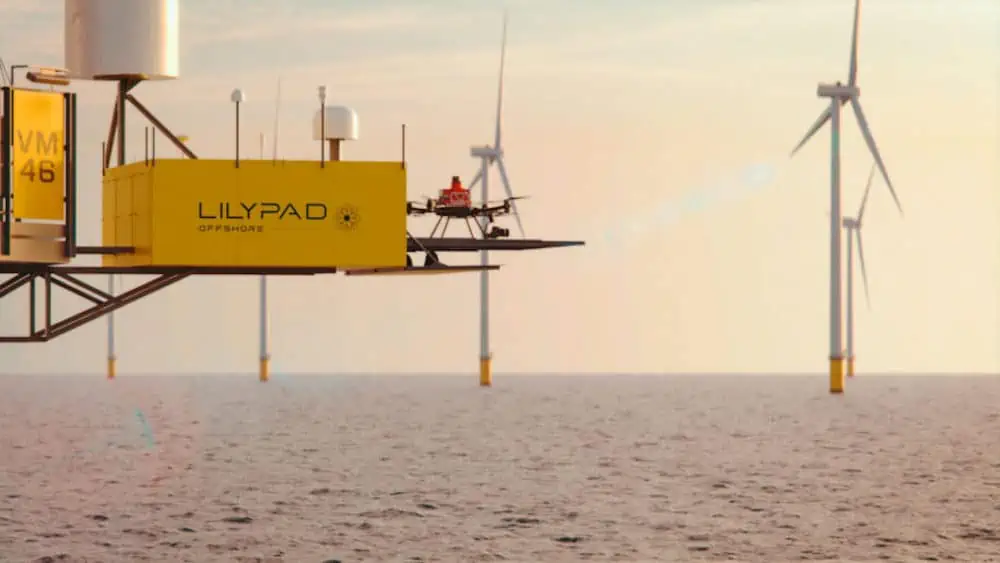
The newly introduced system, named Lilypad, comprises a network of autonomous Beyond Visual Line of Sight (BVLOS) drones. These drones are equipped with advanced artificial intelligence and navigation sensors, designed to deliver real-time offshore inspection services. This innovative approach aims to transform how operators monitor the performance of their wind farms.
Insights from Leadership
Kieren Paterson, Managing Director of Marshall Futureworx, stated, “The escalating demand for secure and renewable energy sources has led to an urgent need for innovative solutions that facilitate the construction and maintenance of offshore wind infrastructure, from the initial setup to ongoing project support.”
He further elaborated, “By harnessing our expertise in integrating cutting-edge technologies and providing essential support services in challenging and regulated environments, we are proud to introduce Lilypad. This offshore wind farm inspection service offers scalable inspection capabilities to accommodate the rapid expansion and increasing remoteness of offshore wind farms.”
operational Efficiency and Cost reduction
Lilypad employs permanently stationed autonomous drones, allowing for both scheduled and on-demand inspections that are strategically timed to minimize economic disruptions to wind farm operations. This system effectively separates inspection costs from factors such as sea conditions, distance from shore, and seasonal variations, while also eliminating the need for personnel to be present offshore during inspections.
Collaborative Partnerships
This announcement follows a memorandum of understanding signed in 2022 with ISS Aerospace, known for its top-tier industrial UAVs, and sees.ai,which specializes in advanced AI drone guidance and control software.
Ryan Kempley, CEO of ISS Aerospace, expressed enthusiasm about the collaboration: “We are excited to partner with Marshall Futureworx to provide a variant of our Sensus ML8-XP UAV for the Lilypad ecosystem. The Sensus UAVs have gained significant traction among our defense, security, and energy clients, demonstrating operational success globally. Our focus is on delivering innovative, customer-centric solutions that integrate multi-modal sensors for high-tempo intelligence gathering.”
John McKenna, CEO of sees.ai, added, “We are thrilled to share more about this initiative. It represents a deep collaboration with Marshall, a leading aerospace firm in the UK, and presents an exciting chance to create a world-class product for a rapidly expanding global market. This project also addresses one of the most critical challenges of our time: achieving net-zero emissions.”
Streamlined data management
The UAVs are launched from specialized offshore charging stations and are overseen by a single remote pilot located in an onshore command center.Essential inspection data and reports are relayed back to wind farm operators, facilitating quicker, more frequent, and reliable maintenance scheduling, as well as enhanced asset utilization.
The Future of Offshore Wind Energy in the UK
The UK currently boasts the second-largest installed offshore wind capacity globally, approximately 12 GW, and is a vital element of the UK Government’s net-zero strategy. The government aims to achieve 50 GW of installed capacity by 2030, with aspirations of exceeding 100 GW by 2050.As both government and industry work to enhance the UK’s offshore wind capabilities, innovative and scalable technologies like Lilypad are essential for inspecting, maintaining, and optimizing wind turbines while minimizing costs for energy consumers.
Environmental and Economic Benefits
Lilypad is anticipated to significantly reduce the need for offshore personnel during inspections,thereby lowering costs and minimizing environmental impact. Additionally, the enhanced frequency and quality of data obtained through Lilypad’s remote inspections will empower operators to substantially increase wind turbine uptime and extend their operational lifespan.