

CHC Navigation
delves into the transformative impact of cutting-edge auto-steering technology on contemporary agriculture, enhancing precision, productivity, and sustainability through innovative GNSS, RTK, and INS systems.
The agricultural landscape is experiencing a notable shift, propelled by the adoption of advanced technologies that are transitioning conventional farming into the realm of precision agriculture. With projections indicating a global population surge to 9.7 billion by 2050, the urgency for enhanced agricultural output and sustainable practices has never been more critical. The escalating demand for precision agriculture technologies, particularly auto-steering systems, reflects the industryS commitment to efficient farming methods that can satisfy the needs of a burgeoning global populace.
Harnessing Technology for Superior Precision and Efficiency in Agriculture
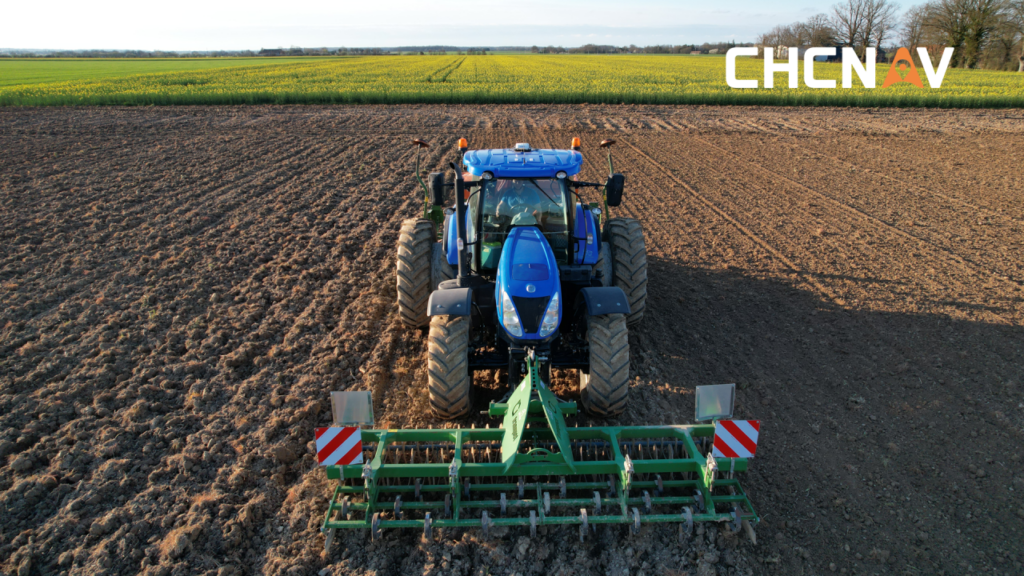
In the ever-evolving agricultural sector, achieving success hinges on efficiency and accuracy. The CHCNAV NX510 auto-steering system represents a groundbreaking solution, offering farmers an aftermarket option that integrates effortlessly with various agricultural machinery. By leveraging advanced Global Navigation Satellite Systems (GNSS) and Inertial Measurement Units (imus),the NX510 ensures remarkable precision and control,maximizing yield while minimizing waste during field operations.
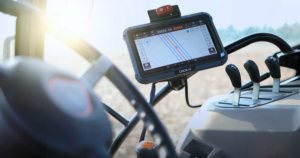
advantages of Auto-Steering Systems for Farmers
The implementation of automated steering systems brings forth numerous advantages that considerably improve farming practices. These systems enhance precision, leading to better crop yields and lower operational costs, while also alleviating the physical demands placed on operators.
-
Enhanced Operational Precision – Every maneuver is executed with meticulous accuracy, ensuring tractors navigate the most efficient routes. this minimizes overlap and gaps typical of manual operations, resulting in uniform crop growth and optimal resource utilization. Such precision not only conserves time but also reduces the quantities of seeds, fertilizers, and pesticides required, thereby lessening environmental impact.
-
Decreased Operator Fatigue – Auto-steering significantly alleviates the mental and physical burden on operators. By automating steering, it allows the operator to concentrate on overseeing the entire operation rather than constantly adjusting the vehicle’s path. This is especially beneficial during peak seasons like planting and harvesting, when extended hours and precision are crucial.
-
Fuel and Time Efficiency – The system optimizes routes and speeds to ensure consistent efficiency, resulting in reduced fuel consumption throughout the farming season. Additionally, by minimizing unnecessary maneuvers and maintaining optimal speeds, the auto-steering system saves considerable time, enabling farmers to accomplish more daily or adapt swiftly to changing weather conditions.
-
Improved Performance in Varied Conditions – Advanced sensors and algorithms adjust to ground irregularities, ensuring machinery operates accurately regardless of environmental challenges, including poor visibility and uneven terrain. This capability sustains productivity year-round,even under less-than-ideal weather conditions.
-
Lower Skill Requirements – Intuitive interfaces and automated features allow less experienced operators to effectively manage complex agricultural machinery. This enables farm owners to hire a broader range of staff, as extensive training becomes less critical.
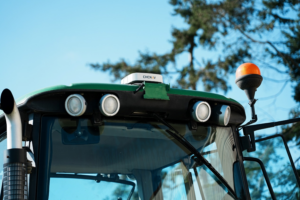
Achieving Precision: Selecting Optimal Technology and Components
Auto-steering systems typically incorporate a sophisticated blend of technologies that enhance precision in farming. The effectiveness of these systems relies heavily on the accuracy of positioning data and the efficiency of route planning, which CHCNAV has perfected to ensure tractor deviation from the intended path remains within 2.5 centimeters, unlocking the full potential of these systems in agricultural operations.
-
GNSS RTK (Global Navigation Satellite System Real-Time Kinematic) for Positioning Precision – The NX510 employs GNSS RTK technology to achieve high-accuracy positioning.This system utilizes satellite signals to pinpoint locations within centimeters. RTK enhances this capability by correcting signal distortions and mitigating errors caused by atmospheric conditions and solar activity, resulting in even greater precision.
-
INS (Inertial Navigation System) for Terrain Adaptation – INS allows auto-steering systems to adjust for uneven terrain. It employs sensors, accelerometers, and gyroscopes to determine position, orientation, and speed without relying on external references.
-
Tightly Coupled GNSS/INS Integration – This advanced method merges GNSS and INS data to provide reliable guidance, especially in areas where GNSS signals might potentially be weak or obstructed. This integration ensures continuous, accurate positioning, even in challenging environments, such as near tall structures, under dense foliage, or on hilly terrain.
-
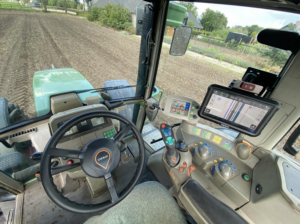
ISOBUS Compatibility for Effortless Integration – ISOBUS is a standardized interaction protocol in agriculture that facilitates compatibility among tractors, implements, and equipment from various manufacturers. This compatibility allows for seamless integration into diverse systems, promoting data exchange and streamlined control across different devices.
-
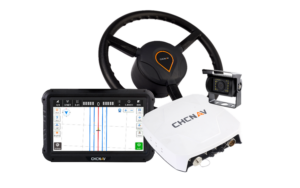
High-Torque Electric Wheel for Effective steering – The high-torque electric wheel component offers robust, responsive steering control. It enables precise adjustments during tight turns or when navigating complex field patterns. Electric steering wheels are engineered for high-demand scenarios while maintaining accuracy and efficiency.
-
User-friendly Display and Software for Enhanced Productivity – The interface is designed for ease of use, allowing farmers to monitor and adjust the system with minimal effort.Real-time data visualization on the display aids operators in making quick, informed decisions.
-
ECU Module for direct Steering Management – The ECU (Electronic Control Unit) module facilitates a direct connection to tractors equipped with steering functions. This allows for the integration of the auto-steering system without replacing the existing steering wheel, preserving the functionality of all original steering controls and maintaining the tractor’s ergonomics while enhancing its navigation capabilities.
These technologies converge to create a robust and versatile auto-steering system that not only meets the diverse requirements of precision agriculture but also expands the possibilities for farmers using their existing equipment. With the NX510, precision and efficiency are significantly enhanced, leading to improved productivity and sustainability.
Boosting Precision with GNSS Reference Stations
GNSS RTK augmentation significantly enhances positioning data accuracy by correcting GNSS signals through local base stations or extensive GNSS RTK networks. Local base stations, often utilizing UHF radio, provide corrections over short distances, while GNSS RTK networks distribute corrections via 4G data transmission, covering broader areas. Both methods ensure accuracy is maintained across various scales and conditions, enabling farmers to achieve consistent centimeter-level precision in their field operations.
The Importance of GNSS Reference Stations in GNSS RTK Networks
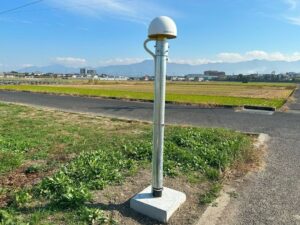
GNSS reference stations serve as the backbone of GNSS RTK networks, providing essential corrections vital for precision agriculture. The CHCNAV P5, with its advanced capabilities, ensures agricultural professionals have access to accurate and timely data.
-
Multi-Constellation Tracking – Tracking multiple GNSS constellations guarantees comprehensive coverage, delivering the most accurate and reliable positioning data, even in challenging conditions where fewer satellites are visible.
-
Enhanced Connectivity – With multiple connectivity options, including a 4G modem and an additional UHF radio modem, GNSS stations are highly adaptable. They can be easily integrated into existing RTK networks or function as the master station in a new setup, providing flexible and reliable service.
-
Durable and secure – GNSS stations are typically built to endure a wide range of environmental conditions, making them suitable for deployment on any agricultural site. Features such as voltage stabilization, lightning protection, and real-time self-diagnosis ensure uninterrupted station operation, free from physical or electrical disruptions.
The CHCNAV P5 GNSS reference station is a crucial component in the framework of advanced precision agriculture, enabling farmers to utilize high-precision GNSS data. By leveraging such technology, CHCNAV enhances the capabilities of auto-steering systems, empowering farmers to achieve optimal results for their equipment and land.
Transforming Agriculture with Accessible High-Tech Solutions
The integration of auto-steering systems into agricultural practices marks a significant advancement in farming technology. These systems, powered by cutting-edge GNSS, RTK, and INS technologies, provide unprecedented precision and efficiency that were previously unattainable for many farmers. The inclusion of GNSS reference stations not only enhances the accuracy of these systems but also underscores the potential of GNSS RTK networks to democratize precision farming.
As the global population continues to rise, precision farming technologies like auto-steering systems are increasingly viewed as essential rather than optional enhancements in agricultural operations. By offering advanced yet accessible technology, CHCNAV is bridging the gap between traditional farming methods and the future of agriculture. Farmers equipped with these systems are well-prepared to meet current agricultural demands and tackle future challenges. The future of agriculture lies in the seamless fusion of traditional practices with innovative technologies, fostering smarter, more efficient, and sustainable agricultural systems.
Discover Autonomous System manufacturers > >