
Innovative Bridge Inspections: The Role of Unmanned Boats in Michigan’s Flood Response
This case study highlights the Michigan Department of Transportation’s (MDOT) innovative use of unmanned remote-controlled vessels for bridge inspections during the historic flooding that affected Michigan in May 2020.
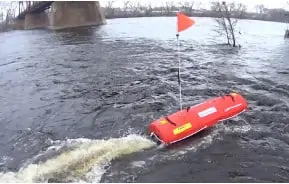
Image credit: MDOT
Emergency Response adn Bridge Inspections
In response to the catastrophic flooding, MDOT deployed the Sonar EMILY (EMergency Integrated LanYard), a remote-controlled boat developed by Hydronalix, to conduct initial inspections of bridges in the affected regions. counties such as Midland, Gladwin, Saginaw, Arenac, and Iosco were declared disaster zones following days of relentless rainfall and multiple dam failures.
At the height of the flooding, over 20 state trunkline and local bridges were compromised, leading to immediate closures to ensure public safety. Additionally, more than 10,000 residents in Midland County were evacuated within a single day.
Restoration Efforts and Rapid Response
MDOT prioritized emergency repairs on highways with the highest traffic volumes, aiming to restore mobility to the impacted communities as swiftly and safely as possible. The EMILY system played a crucial role in this rapid response.
“Even while water levels were still rising in the flooded areas, we were able to deploy EMILY to assess whether scour conditions were worsening in certain locations,” explained Paul Schiefer, MDOT Bay Region Bridge Engineer. “once the water levels stabilized, we utilized the system again to confirm that no scour issues required attention before reopening bridges to traffic.”
Watch the MDOT research spotlight video on the use of unmanned boats for bridge inspections here.
Efficiency and Safety in Inspections
Some structures sustained such severe damage that repairs extended nearly a year.Throughout the flooding and its aftermath, EMILY considerably reduced both inspection time and associated risks.
Scour, the erosion of the streambed around bridge abutments caused by swift water, is a leading factor in bridge failures. Following a 2016 study, MDOT began deploying EMILY units to measure bridge scour and inspect hard-to-reach bridges and culverts. Findings indicated that utilizing unmanned surface vehicles for scour assessments could be safer, less labor-intensive, and, in some instances, more cost-effective than traditional methods.
Specifications and Capabilities of EMILY
EMILY is a robust, maneuverable, water-jet-powered device measuring approximately 4.5 feet in length, 2 feet in width, and 1 foot in height. It can be outfitted with sonar technology for depth measurements and a topside camera to inspect the underside of bridges.
“EMILY is an invaluable resource for MDOT,” Schiefer remarked. “During the flood response, it enabled us to monitor bridge conditions without risking a diver’s safety in perhaps hazardous situations.”
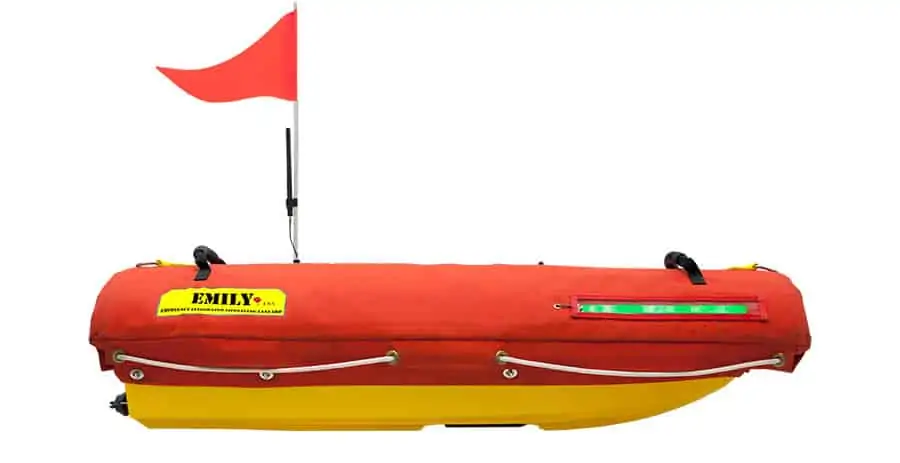
With four EMILY units strategically stationed across the state, MDOT is well-prepared to deploy this technology for both extreme flooding events and routine bridge inspections. The agency also plans to explore additional applications, such as capturing images of submerged bridge structures, inspecting hard-to-view culverts, and documenting bridge performance.
MDOT’s innovative use of drone boats has recently earned a spot on The American Society of Civil Engineers (ASCE) list of “Infrastructure Gamechangers” for 2021.