

As the demand for advanced and dependable unmanned aerial vehicles (UAVs) escalates, CRP Technology recognizes the necessity for innovative materials and manufacturing techniques to address these challenges.
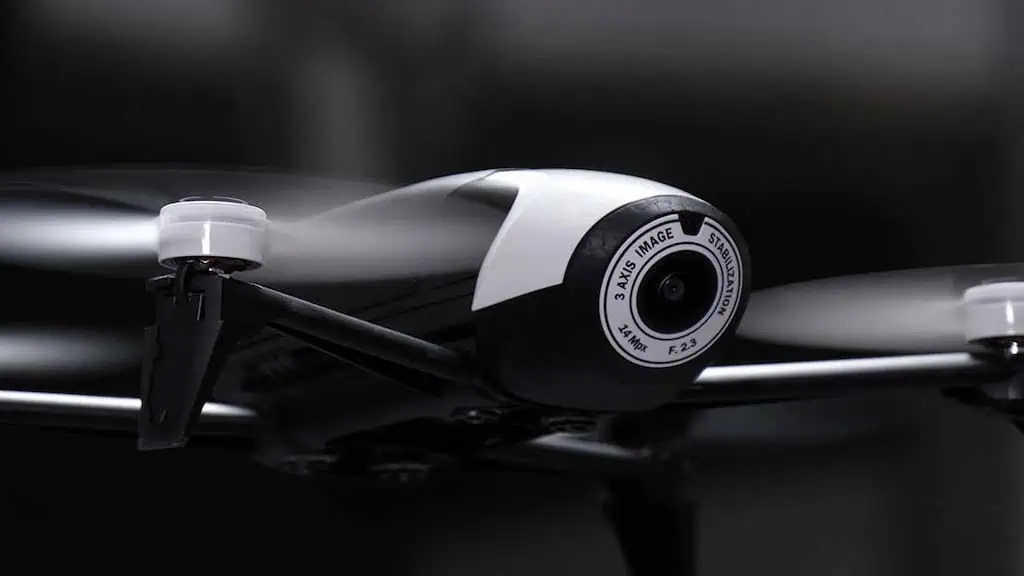
A notable instance of this is the partnership between CRP Technology and parrot in developing the Bebop 2 drone. This case study explores how their collaboration harnessed the capabilities of additive manufacturing, particularly Powder Bed Fusion (PBF) and the high-performance windform® GT composite, to create a durable, flight-ready prototype that redefined standards in the consumer drone sector.
innovations in drone Manufacturing
In 2015, Parrot, a leader in the civil drone market, launched the Bebop 2 — a lightweight and compact drone celebrated for it’s stability, agility, and intuitive controls. The integration of cutting-edge materials and manufacturing methods was pivotal in achieving the drone’s exceptional performance and reliability.
The collaboration with CRP technology represented a notable leap in drone component manufacturing.By employing Windform GT, a composite material reinforced with glass fibers, and utilizing professional 3D printing through PBF technology, Parrot successfully developed a functional prototype for the Bebop 2 that was not only robust and flexible but also conducive to rapid testing and iteration.
Drone Design & Additive Techniques
Historically, drone structures were crafted using injection-molded components made from glass-reinforced polyamide composites. However, this approach often entails lengthy lead times and significant costs linked to the creation of injection molds.
To address these issues, Parrot shifted to the Powder bed Fusion method, specifically Selective Laser Sintering (SLS), in partnership with CRP technology.
This transition led to notable enhancements in several critical areas:
-
Improved Structural Integrity: The main body and arms of the Bebop 2 were manufactured using Windform GT, ensuring the drone was both lightweight and resilient.
-
Faster Iteration Processes: Additive manufacturing allowed parrot to swiftly produce and evaluate multiple design iterations, considerably shortening development timelines.
-
Increased Manufacturing efficiency: The capability to produce small batches with consistent mechanical properties enabled Parrot to quickly adapt to design modifications and functional testing requirements.
The submission of Windform GT was particularly significant. Parrot’s engineers conducted thorough testing to ensure that the natural frequencies of parts made from this material matched those produced by conventional injection molding methods.
This validation was essential for preserving the drone’s stability and minimizing vibrations that could compromise video quality during flight.
Addressing Performance & Design Challenges
A primary objective in developing the Bebop 2 was to enhance the quality of video captured during flight — a challenge often complicated by drone vibrations. Parrot tackled this by implementing intelligent design choices that minimized weight while preserving structural strength.
The effective use of Windform GT in achieving these goals showcased the material’s superior performance, particularly regarding durability and resistance to the rigorous testing conducted by Parrot’s team.
For a consumer drone like the Bebop 2, which is highly likely to endure frequent drops, especially by novice users, the toughness of Windform® GT was crucial. It was the only SLS material that passed stringent testing protocols, ensuring the drone’s structure could withstand real-world demands.
Benefits of Additive Manufacturing
The collaboration between Parrot and CRP Technology underscored several advantages of employing additive manufacturing and Windform GT in drone development:
-
Production Versatility: The ability to create small batches with dependable mechanical properties allowed Parrot to deliver functional prototypes and support the development of additional product features, such as flight performance.
-
Aesthetic and Functional Quality: The material provided not only the necessary strength but also an appealing aesthetic, which is vital in consumer products.
-
Manufacturing Efficiency: Utilizing PBF technology eliminated the need for support structures and complex post-processing. CRP Technology’s expertise in conventional finishing ensured that the parts were smooth and polished where necessary,further enhancing the product’s quality.
CRP Technology’s role extended beyond mere manufacturing; their quick response times, collaborative approach, and ability to deliver high-quality results were crucial in the triumphant development of the Bebop 2. the drone’s body structure was processed in less than 24 hours from the receipt of the CAD file, highlighting the efficiency and speed of this advanced manufacturing method.
the partnership between CRP Technology and Parrot in creating the Bebop 2 drone exemplifies the transformative potential of additive manufacturing and advanced composite materials like Windform GT. By adopting these technologies, Parrot was able to redefine the boundaries of drone design and production, delivering a product that established new benchmarks in the consumer drone industry.
As unmanned systems continue to advance, the integration of innovative materials and manufacturing techniques will be essential to meet the ever-increasing demands of the sector.
Explore the original case study or learn more on the CRP Technology website.